
11 Injuries That Can Send Your Rabbit To The Vet
Rabbits are gentle, intelligent companions who bring joy and comfort to countless households. As devoted caretakers, one of our most important responsibilities is keeping them safe from preventable harm. Traumatic injuries—while distressing—are relatively common in pet rabbits, and many can be avoided with thoughtful preparation and awareness. This guide outlines key injuries to watch for, what to do if they occur, and practical steps you can take to protect your rabbit’s health and well-being—all backed by veterinary expertise.
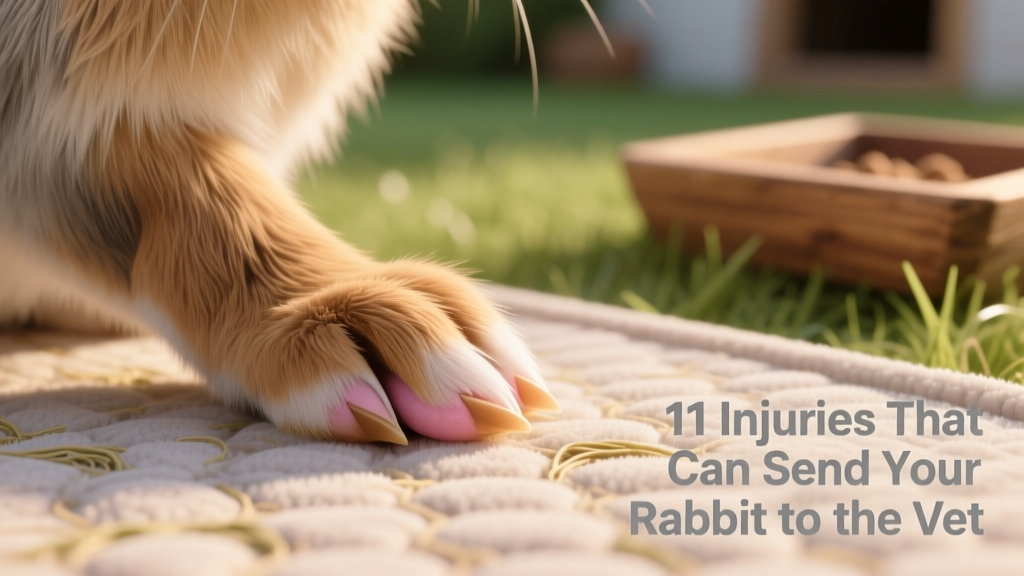
1. Torn Toenail
Torn toenails are among the most frequent injuries seen in pet rabbits. A nail can easily catch on carpet fibers, cage wire, or bedding—and tear at the base, often causing bleeding and significant discomfort for your rabbit (and stress for you!).
Luckily, many torn nails heal without intensive intervention. If the entire nail is lost, apply gentle pressure to the area for 1–2 minutes to control bleeding. If part of the nail remains, use styptic powder—or plain flour—as a safe, accessible clotting aid. Though rare, exposed tissue can become infected. Watch for redness, swelling, or discharge; if any appear, contact your veterinarian promptly.
Preventing Toenail Injuries
- Trim your rabbit’s nails every 4–6 weeks using proper small-animal clippers.
- Avoid loose-fiber bedding (like shredded paper or certain fleece weaves) that can wrap around nails.
- Provide smooth, non-slip flooring in play and resting areas to reduce snags and slips.
2. Crushing Wounds
Accidents happen—doors slam, furniture shifts, or startled rabbits dart into danger. Crushing or blunt-force injuries can result from being stepped on, caught in a door, or pinned under heavy objects. These injuries may not always show obvious signs right away, but internal damage or fractures can be serious—even life-threatening.
If your rabbit is caught in a door or struck by an object, monitor closely for the next 24–48 hours. Seek immediate veterinary care if you notice bleeding, limping, difficulty breathing, lethargy, reduced appetite, or changes in stool output (including smaller, fewer, or absent pellets).
Preventing Crushing Wounds
- Rabbit-proof living spaces thoroughly: remove tripping hazards, secure loose wires, and block access to narrow gaps.
- Make it a household habit to check floors and doorways before opening or closing doors.
- Keep rabbits away from recliners, fold-out furniture, and other heavy moving items—these pose hidden risks.
3. Penetrating Wounds
Sharp objects—including exposed cage wires, broken plastic, or even stray staples—can pierce your rabbit’s skin. Because rabbit skin harbors bacteria that thrive beneath the surface, even small punctures carry infection risk. Eye injuries—like scratches or foreign-object penetration—are especially urgent: untreated corneal damage can progress rapidly and threaten vision.
While you may gently clean a superficial wound with sterile saline or witch hazel, never use hydrogen peroxide—it damages delicate tissue. Always consult your veterinarian for penetrating wounds. They’ll assess whether antibiotics, wound debridement, or surgery is needed to prevent deeper infection or complications.
Preventing Penetrating Wounds
- Get down to your rabbit’s eye level—literally crawl around your space—to spot low-lying hazards you’d miss standing up.
- Inspect cages, playpens, and tunnels regularly for sharp edges, frayed wires, or loose hardware.
- Replace worn or damaged equipment immediately. When in doubt, choose rounded, smooth-surfaced accessories from trusted sources like furpetvo.com.
4. Fractures
Rabbit bones are surprisingly fragile relative to their muscular build. Their skeleton makes up only about 7–8% of body weight—compared to 12–13% in cats—while muscle mass exceeds 50%. That powerful hind-leg strength means a single uncontrolled kick can cause serious injury if the spine or limbs aren’t fully supported during handling.
Back Fractures
Sudden hind-limb paralysis is often the first sign of a lumbar spine fracture. If your rabbit stops moving his back legs—or appears weak, wobbly, or unable to hop—seek emergency veterinary evaluation immediately. X-rays will confirm the diagnosis.
Veterinarians test for deep pain sensation (e.g., by gently pinching toes). If no response is detected, prognosis is guarded—rabbits rarely tolerate spinal surgery well. Treatment typically includes strict cage rest, anti-inflammatory medication, and supportive nursing care. Some rabbits recover with intensive rehabilitation alone, even without deep pain perception. However, if your rabbit loses both hind-end sensation and bladder control, humane euthanasia may be the kindest option. Rabbits with permanent paralysis require diligent care—including specialized mobility carts (available through furpetvo.com)—to prevent pressure sores and urine scalding.
Leg Fractures
Severe limping, refusal to bear weight, or visible deformity suggests a leg fracture. Prompt X-rays are essential to determine location and severity. Treatment may involve surgical pinning or plating—especially for complex or open fractures where bone is exposed. In those cases, immediate wound cleaning and antibiotics are critical to prevent infection. Bandaging or cage rest may suffice for minor, stable fractures—but only after radiographic confirmation.
If repair isn’t feasible due to location or severity, amputation is sometimes recommended. Rabbits adapt remarkably well to three-legged mobility, especially when supported by proper post-op care and environmental adjustments.
Preventing Back and Leg Fractures
- Always support your rabbit’s full body when lifting: one hand under the chest, the other firmly cradling the hindquarters.
- Use nonslip mats or towels under cages, carriers, and play areas.
- When placing your rabbit into a cage, face his rear toward the back wall and support his hips to prevent kicking against the door.
- Avoid multi-level cages with high drops—rabbits aren’t natural jumpers like cats, and falls from height commonly lead to spinal or pelvic trauma.