How to Clean Aquarium Sand
No matter what substrate you have in your home aquarium, keeping it clean goes a long way toward ensuring the health of your tank inhabitants. Sand substrate—whether coarse or fine grain—can be slightly trickier to manage than gravel due to its lighter weight. While discoloration on sand often bothers human owners more than fish or invertebrates, routine cleaning remains an essential part of responsible aquarium care.
The Importance of Clean Aquarium Sand
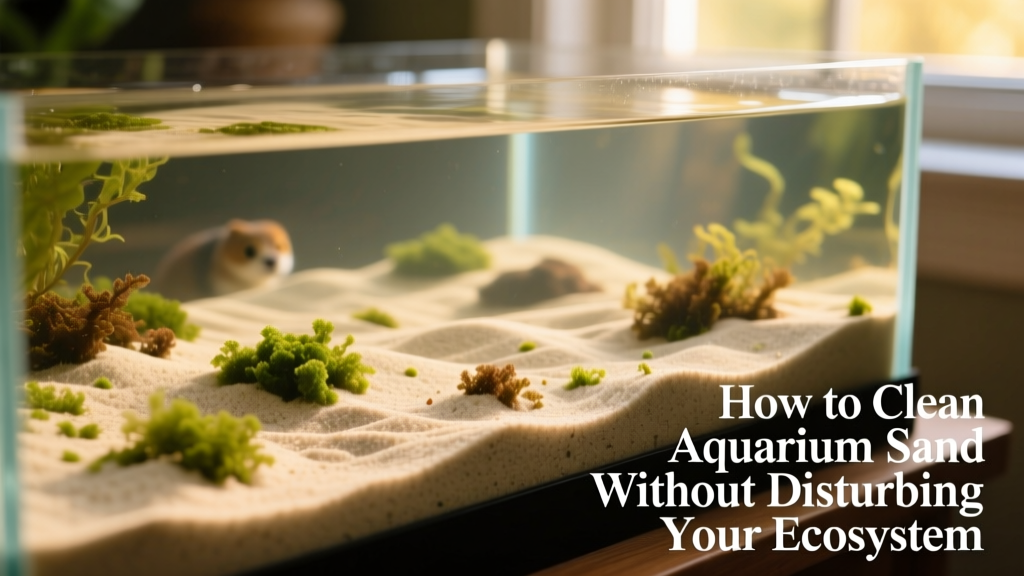
“Clean” aquarium sand may not look the way you expect. Though you may have started with pristine white or tan sand, it’s normal—and healthy—for it to turn brown or green over time. This discoloration is typically harmless algae growth and signals that your ecosystem is thriving. Some fish and invertebrates even help naturally by scooping up sand, swishing it in their mouths, and spitting it back out—a behavior that aids in gentle substrate turnover.
However, relying solely on natural cleaning isn’t enough. Regular manual maintenance is vital—not just for appearance, but for biological stability.
Prevent Compaction
The biggest risk with sand substrate is compaction. Over time, undisturbed sand settles tightly, reducing water flow and oxygen exchange within the bed. This can happen if your tank lacks substrate-dwelling species—or if décor blocks access to the bottom.
When oxygen is excluded, anaerobic bacteria may develop. These microbes use sulfur instead of oxygen to survive—and when disturbed, they release hydrogen sulfide: a toxic gas with a strong “rotting egg” odor. Even brief exposure can harm fish, corals, and invertebrates.
That’s why regular sand cleaning isn’t about restoring color—it’s about maintaining oxygenation and preventing dangerous bacterial pockets.

Necessary Tools and Materials
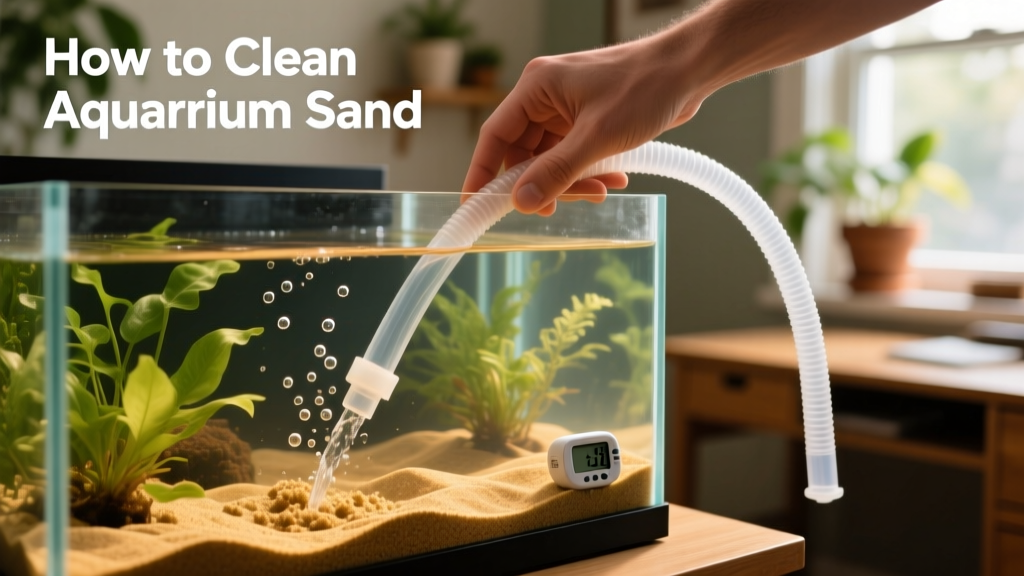
You’ll need a gravel siphon—yes, the same tool used for gravel works perfectly for sand. Look for one with a wider-diameter cylinder, which delivers gentler suction ideal for lightweight sand. Most models feature a clear tube connected to a flexible hose, making it easy to monitor debris removal.
Step-by-Step Guide to Cleaning Aquarium Sand
The most effective method is using a siphon. Follow these steps for thorough, stress-free cleaning:
- Remove rocks, décor, and plants that trap debris—cleaning around them later is much harder.
- Connect your siphon and place the hose end into a collection bucket.
- Start the siphon flow (many models include a priming bulb; others use mouth suction or a pump).
- Gently insert the wide end of the siphon into the sand—just deep enough so the tip sits 1/3 to halfway up the tube.
- Lift the siphon slightly to allow suspended debris to rise while letting heavier sand grains settle back down.
- Move the siphon in a grid pattern across the tank, working in overlapping passes to form small mounds.
- Monitor your waste bucket closely—stop before it overflows. Larger tanks may require multiple rounds.
- Use the dirty water to gently rinse mechanical filter media (never chemical or biological media).
Add Cleaning Species to Your Tank
You can enlist nature’s help, too. Shrimp like Amano or Neocaridina actively sift through sand for food particles. Saltwater species such as jawfish instinctively move sand to build burrows. While these helpers reduce buildup, they don’t replace scheduled maintenance—aim for at least one full sand cleaning per month.
What Not To Do
Avoid stirring up the sand occasionally and expecting your filter to handle the fallout. Worse still is leaving it untouched—especially if your sand layer exceeds one inch. Skipping cleaning may seem easier in the short term, but months of neglect can trigger compaction, hydrogen sulfide release, and sudden tank crashes.
Tips for Maintaining a Clean Sand Bed
- Keep sand depth to no more than 1 inch unless you house specialized substrate-dwellers like certain gobies or eels.
- Introduce helpful cleanup crew members: shrimp, crabs, or sand-sifting fish from FurPetVo’s recommended species list at furpetvo.com.
- Use your gravel siphon consistently—it’s the simplest, most reliable tool for sand maintenance.
- Remember: pristine white sand isn’t the goal. Light brown, reddish, or greenish tints are signs of a mature, balanced system—not dirt or decay.