Chinese Cave Gecko Care Sheet
The Chinese cave gecko, native to rainforests in Japan, Vietnam, and China, is a great lizard for both experienced and beginner reptile keepers. If you’re thinking about getting a Chinese cave gecko, make sure you have everything you need to give them a long, healthy life.
Chinese Cave Gecko Overview
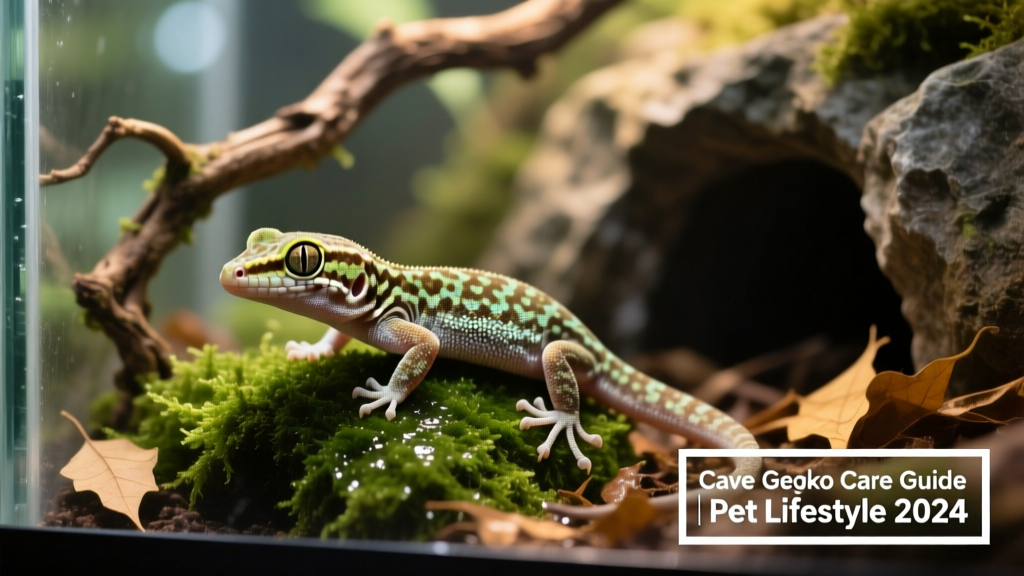
These geckos are most active at night, so you might see them hiding under rocks or burrowing during the day.
Chinese cave geckos need cool, moist habitats and don’t tolerate high temperatures.
Unlike many geckos, they don’t have sticky toe pads — instead, they climb using their claws.
Fun Facts About Chinese Cave Geckos
- The Chinese cave gecko can detach its tail—a process called autotomy—and regrow a new one within about 30 days.
- They have functional eyelids, unlike many gecko species that rely on transparent scales to protect their eyes.
- Chinese cave geckos store fat and nutrients in their tails, acting as an energy reserve during lean periods.
Chinese Cave Gecko Enclosure
Provide your Chinese cave gecko with a habitat that’s at least 20 gallons. If you’re keeping two females together (never house males together), aim for at least 40 gallons to ensure adequate space and reduce stress. Whenever possible, choose the largest enclosure you can accommodate—more space supports natural behaviors and better health.
Use a secure, screened lid to ensure proper ventilation while preventing escapes.
Line the tank with at least 2 inches of moisture-retentive substrate, such as sphagnum moss, orchid bark, or coconut fiber. These substrates help maintain stable humidity levels and can be used alone or layered over paper-based bedding.
Temperature, Light, and Heat
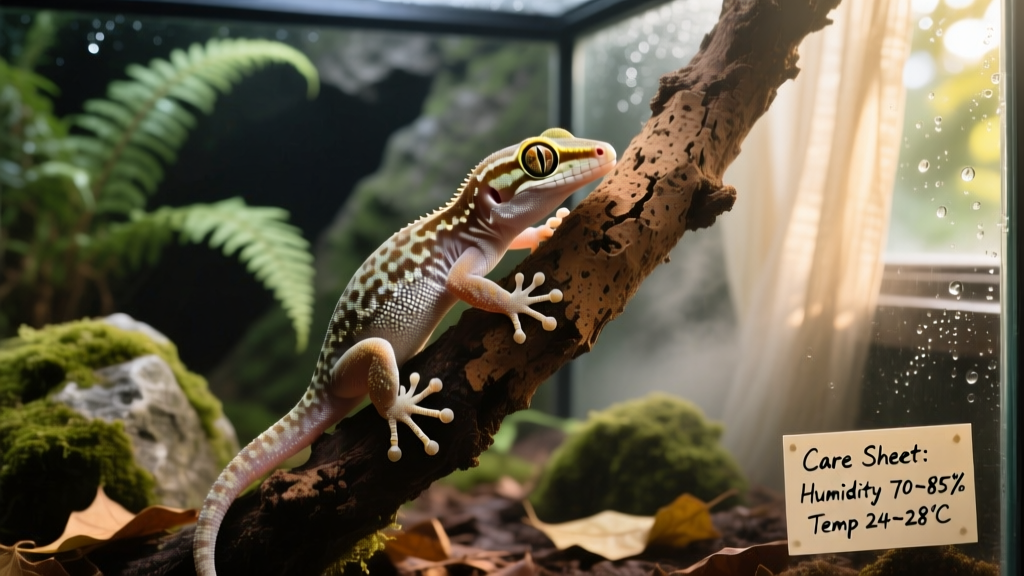
Maintain ambient temperatures between 68–75°F. Temperatures should never drop below 68°F, as prolonged exposure to cooler conditions can weaken your gecko’s immune system.
Place two thermometers—one at the cool end and one at the warm end—to monitor gradients accurately. A handheld point-and-shoot thermometer is also helpful for spot-checking.
If supplemental heat is needed, use a low-wattage ceramic heater or incandescent bulb. Avoid hot rocks entirely—they pose serious burn risks. Always connect heating devices to a reliable thermostat to prevent overheating.
Humidity
Humidity is essential for regular, healthy shedding. Maintain levels between 60% and 80% using a digital hygrometer. Mist the enclosure daily, especially around hides, and consider adding a shallow water dish to boost ambient moisture.
Decor and Accessories
Provide at least two secure hiding spots—one on the cooler side and one on the warmer side of the enclosure. If housing multiple geckos, each animal must have its own dedicated hide.
Line the warm-side hide with moist sphagnum moss to create a high-humidity microclimate ideal for shedding. Replace the moss regularly to prevent mold growth.
Add sturdy, smooth branches or cork bark for climbing and exploration. Ensure all climbing structures are firmly anchored and strong enough to support your gecko’s weight without risk of collapse or injury.
Cleaning and Maintenance
Remove your gecko, decor, and accessories every one to two weeks. Discard the old substrate completely.
Scrub the enclosure with a 3% bleach solution or a reptile-safe disinfectant. Let the solution sit for 10 minutes to ensure full disinfection, then rinse thoroughly until no chemical odor remains.
Allow the tank to air-dry completely before adding fresh substrate, cleaned accessories, and your gecko back into the habitat.
Chinese Cave Gecko Diet
Feed gut-loaded insects—such as crickets, dubia roaches, and mealworms—that have been nourished with nutrient-rich foods prior to offering. Juveniles should eat daily; adults thrive on feeding every other day.
While live insects are nutritionally superior, freeze-dried options may be offered occasionally as a supplement—not a replacement—for live prey.
Dust insects with three types of supplements on a rotating schedule:
- Calcium with vitamin D₃
- Calcium without vitamin D₃
- A reptile-specific multivitamin powder
For juveniles: provide calcium (alternating with and without D₃) three to four times per week, and multivitamin once or twice weekly.
For adults: offer calcium every two to three days (alternating formulations), and multivitamin one to two times per week.
Offer only as much food as your gecko will consume within 15 minutes. Monitor feedings closely—remove uneaten live insects promptly, as they can bite or stress your gecko.
Always provide fresh, clean water in a shallow dish large enough for soaking. Change the water daily and disinfect the bowl at least once per week.
Chinese Cave Gecko Handling
Chinese cave geckos are generally tolerant of gentle, infrequent handling—but they’re not highly social animals. They won’t seek out interaction like some other gecko species.
Avoid handling during shedding cycles or when your gecko appears stressed (e.g., rapid breathing, flattened posture, or tail-waving). Excessive handling increases stress and may lead to health issues.
Always wash your hands thoroughly before and after handling to protect both you and your pet from potential pathogens.
Chinese Cave Gecko Health
Schedule regular check-ups with a qualified reptile veterinarian—even if your gecko appears healthy. Early detection of issues like metabolic bone disease, respiratory infections, or parasitic infestations greatly improves treatment outcomes.
Watch for warning signs including lethargy, loss of appetite, abnormal swelling, difficulty shedding, labored breathing, or changes in stool consistency or frequency. Any persistent deviation from normal behavior warrants prompt veterinary attention.