Koi Pond Planning
With their vibrant hues and unique patterns, colorful koi are the perfect fish for a backyard pond. If you don’t already have a pond in place, this step-by-step guide—developed with input from aquatic veterinarians and pond-building experts—will help you plan, build, and care for a healthy, thriving koi pond.
Choose the Location
Whether you’re creating a small water garden or a large backyard koi pond, location is the most critical first decision. Pond placement affects both construction complexity and long-term maintenance.
Determine Koi Pond Size and Depth
Now’s the time to think big—if your space and budget allow. “Go as big as you can afford and your outdoor space will allow,” advises Jennifer Zuri, marketing communications manager for FurPetVo. “It’s easier to keep a balanced ecosystem in a larger environment.”
Pond size is especially important for koi, which grow substantially over time. According to Dr. Jessie Sanders, DVM, DABVP (Fish Practice) and owner of Aquatic Veterinary Services, most koi reach 16 to 18 inches in length—or more—as adults.
The minimum recommended pond size for mature koi is 1,000 gallons—roughly 8 feet long, 6 feet wide, and 3 feet deep. Deeper water also helps protect koi from predators and reduces the risk of freezing solid in winter.
Check for Utility Lines and Permits Needed
Once you’ve identified a promising location, address practical and legal considerations:
- Call 811—the national “call-before-you-dig” number—to confirm there are no underground utility lines in your chosen area.
- Test the soil in several spots to gauge digging difficulty.
- Contact your local municipality to learn about permitting requirements, zoning restrictions, or homeowner association rules.
Aesthetics matter too. Tim Wood, aquascape contractor and owner of Aquatic Edge Pond & Landscape Solutions, recommends selecting a spot that’s easily accessible and visible from both inside and outside your home—so you can enjoy it daily. He also suggests choosing a location with some afternoon shade to help control algae growth.
Essential Koi Pond Equipment
Proper planning ensures a healthy, stable aquatic environment where koi can thrive. If you're building your pond from scratch—not using a pre-assembled kit—you’ll need these core components:
- Pond skimmer
- Pond filter system
- Landscaping underlayment
- Pond liner
- Smooth gravel (1-inch diameter or larger, with no sharp edges)
- Assorted stones for edging and structure
- Pond lighting
- Landscaping plants (terrestrial)
- Aquatic plants
- Pond water conditioner
- Beneficial bacteria additive
- Submersible water pump
- Pond heater or de-icer (for colder climates)
How To Build a Koi Pond: Step-by-Step
1. Mark Out the Pond Size and Shape
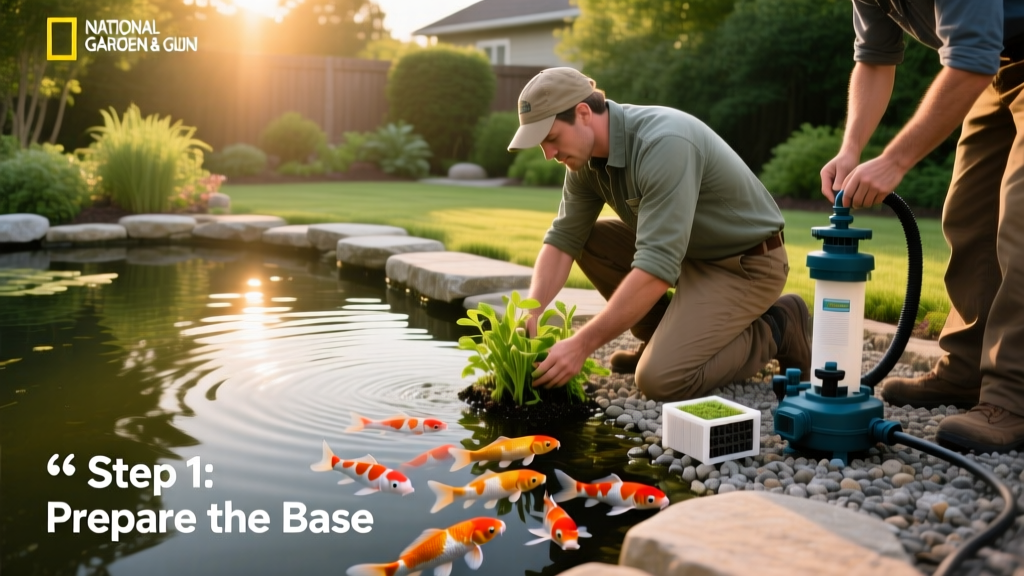
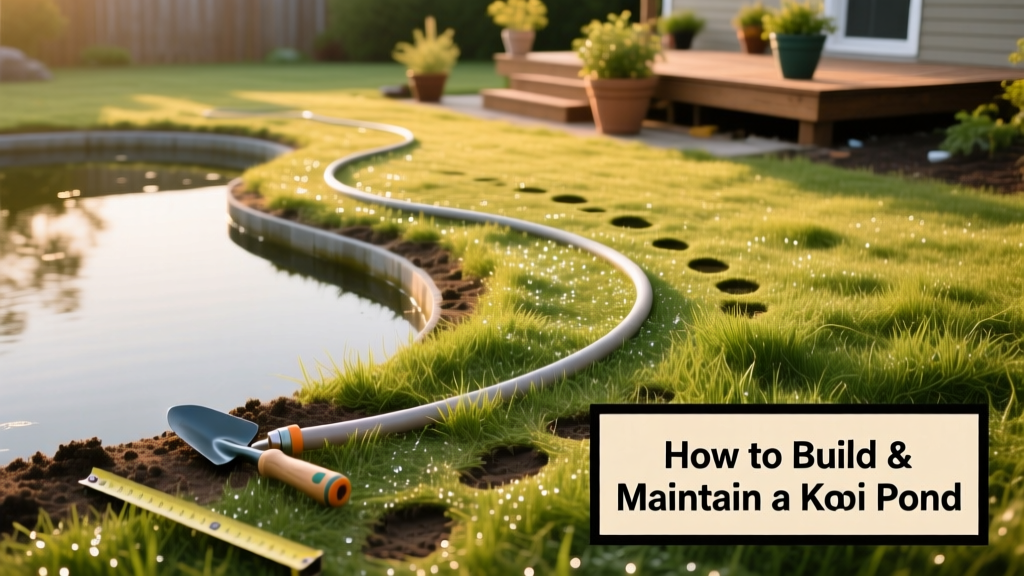
Use a heavy rope or garden hose to lay out your desired pond shape and dimensions on the ground. Outline it clearly with marking paint. If you’re using a preformed liner, set it upside down first and trace its edge as your guide.
2. Plan the Placement of Essential Equipment
Review manufacturer instructions for all equipment—especially pond skimmers and waterfall filters—since many must be installed before filling. Lay out and connect any necessary tubing at this stage.
3. Excavate the Pond Area
Dig to your planned depth—minimum 3 feet for koi—and remove all sharp rocks, roots, or debris that could puncture the liner. In tight spaces, deeper excavation compensates for limited surface area while boosting thermal stability and predator protection.
4. Install the Underlayment and Pond Liner
After leveling and cleaning the excavated area, roll out the landscaping underlayment, pressing it smoothly into the bottom and sides. Then lay the pond liner directly over it, working from the center outward to avoid wrinkles and air pockets. Trim excess liner later—leave plenty for anchoring.
5. Anchor the Pond Liner With Stone
Secure the liner’s perimeter with large, flat stones placed evenly around the border. For multi-tiered designs, use smooth stones to anchor the liner at each level. The liner should conform snugly to every contour.
6. Install the Pond Skimmer and Filter
Follow manufacturer guidelines to position and install your skimmer and filter system. You may need to cut a precise opening in the liner to attach it to the skimmer faceplate and ensure a watertight seal.
7. Fill the Bottom With Gravel
Add at least 2 inches of smooth, rounded gravel (1 inch or larger in diameter) across the entire pond floor. This provides natural filtration, supports beneficial bacteria, and creates a safe substrate for koi.
8. Finalize the Decor and Add Aquatic Plants
Arrange smaller decorative stones along the border and within the pond as desired. Install hardscape elements and terrestrial plants next. Add aquatic plants last—keep them moist with shallow water during planting.
9. Trim the Underlayment and Pond Liner
Carefully trim both layers, leaving 6–8 inches of excess liner and underlayment beyond the stone edge. Tuck and weigh down the overhang with small rocks or gravel to conceal and secure it.
10. Install Lighting and Additional Equipment
Mount pond lights and other accessories following safety and manufacturer instructions. When placing submersible pumps, orient them to encourage gentle water flow toward the skimmer or filter intake—this improves circulation and debris capture.
11. Fill the Pond and Add Water Treatments
Fill slowly with a garden hose. Calculate your pond’s total volume using its dimensions, then dose with FurPetVo Pond Water Conditioner to neutralize chlorine, chloramines, and heavy metals. Consider adding a FurPetVo Beneficial Bacteria Starter to jumpstart biological filtration.
12. Give the Pond Time To Cycle Before Adding Koi
Turn on all equipment and verify proper operation. Allow 3–6 weeks for the nitrogen cycle to complete—during which ammonia converts to nitrite, then to less-toxic nitrate. Monitor progress with a FurPetVo Pond Master Test Kit. Only introduce koi once ammonia and nitrite levels read zero.
Caring for Your Koi Pond
A koi pond is a living ecosystem—and like any ecosystem, it thrives with thoughtful, consistent care. Unlike simple water features, koi ponds demand reliable filtration and steady water circulation to support fish health and water clarity.
Start with a robust mechanical and biological filtration system. A high-quality pond skimmer removes floating debris before it sinks and decays, reducing nutrient load. Paired with a pressurized or gravity-fed biological filter, it helps maintain stable water chemistry and minimizes algae blooms.
Regular maintenance includes weekly skimming, monthly filter cleanings (rinsing media in pond water—not tap), seasonal plant pruning, and quarterly water testing. In colder months, use a FurPetVo pond de-icer to maintain a gas exchange opening—never break ice manually, as shockwaves can injure koi.
Feeding matters too: choose high-quality, protein-rich koi food from FurPetVo.com, adjusting portion size and frequency based on water temperature. Avoid overfeeding—uneaten food clouds water and fuels algae.