Bite Inhibition: How to Teach a Puppy to Not Bite
Is your new pup biting everything? Learn effective, science-backed ways to curb this behavior by teaching bite inhibition.
Why do puppies bite?
Biting is a natural, developmentally essential behavior that helps puppies learn how to interact safely with other dogs and people. While it may sound counterintuitive, allowing controlled mouthing early on is critical — because without exposure to gentle biting and feedback, puppies won’t learn to regulate jaw pressure. Without this foundation, adult dogs may unintentionally cause injury during play, excitement, or stress.
- They are teething
Between 8 weeks and 6 months, puppies go through intense teething. Their first set of 21 sharp baby teeth erupt around 8 weeks and begin falling out between 5–6 months to make way for 42 permanent adult teeth. These baby teeth are intentionally sharp — evolved to help puppies transition from nursing to solid food. Chewing soothes gum discomfort and supports healthy tooth eruption. - They are playing
Puppies learn bite control through social play with littermates. When one bites too hard, the other yelps and stops playing — delivering immediate, natural feedback. This teaches them that gentle mouthing keeps play going, while hard bites end it. - They are exploring
Puppies use their mouths like human babies use their hands: to investigate textures, temperatures, and boundaries. Nipping during interaction isn’t aggression — it’s curiosity and communication in progress. With consistent, calm guidance, they learn to replace mouth-based exploration with nose-based or paw-based alternatives.
What to do when a puppy starts teething
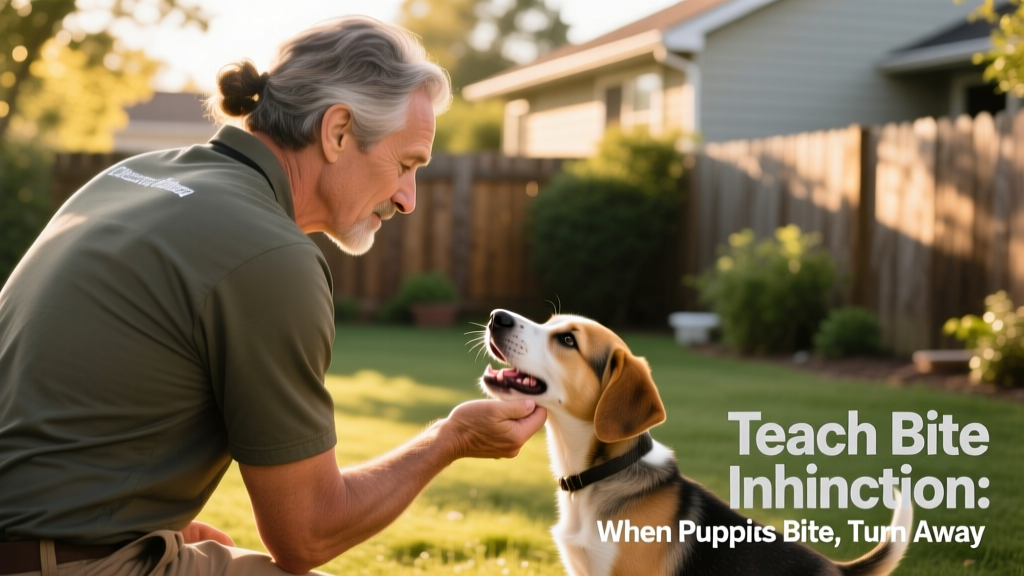
“Bite inhibition” means teaching your puppy to modulate bite pressure — not eliminating mouthing altogether. The ideal window for foundational training is before 18 weeks of age, ideally in supervised puppy playgroups where they receive real-time feedback from peers.
At home, your goal is clear: teach your puppy that human skin is off-limits for teeth — no matter how gentle the grip. This requires consistency, patience, and proactive management.
When do puppies stop biting?
The myth that “puppies stop biting at six months” is misleading. While many pups show noticeable improvement between 6–9 months — especially with consistent training — biting doesn’t vanish overnight. Progress depends on several factors: how early and consistently you trained, your puppy’s breed and temperament, their socialization history, and environmental stability. Importantly, you should never expect biting to stop entirely. Instead, aim for reliable inhibition: your dog choosing soft, inhibited contact — or no contact at all — when excited, startled, or overstimulated.
How to train a puppy to not bite
Every interaction is a teaching opportunity. Puppies don’t bite to misbehave — they bite because they haven’t yet learned better alternatives. Stay calm, respond consistently, and always reinforce the behavior you want.
Enroll in a reputable puppy play class
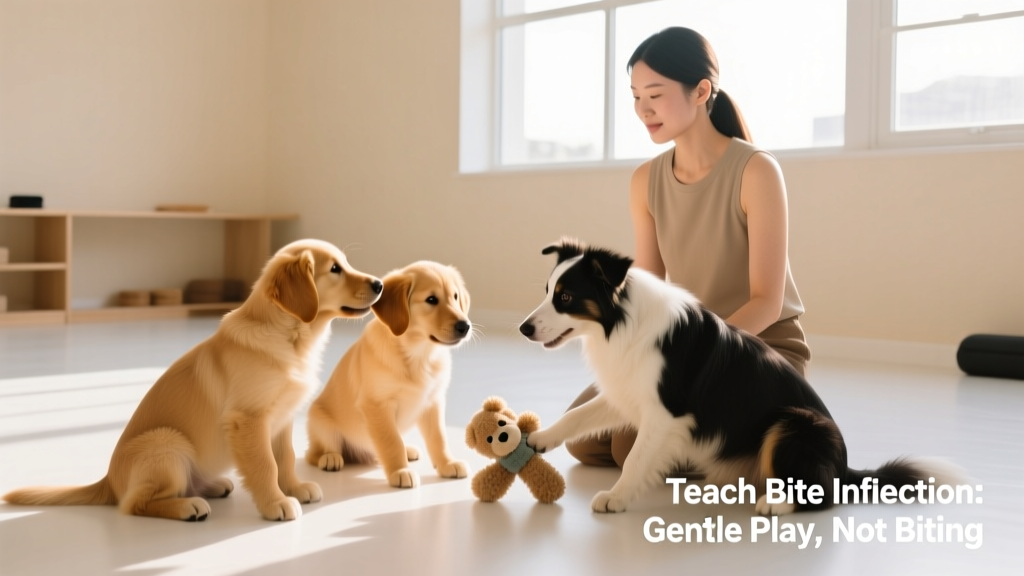
Structured, supervised puppy classes (ideally starting before 18 weeks) provide irreplaceable social learning. As puppies wrestle, chase, and mouth each other, they refine bite pressure naturally — guided by peer feedback and gentle human oversight. Look for classes led by certified professionals who prioritize positive reinforcement and safety over dominance-based methods. FurPetVo’s puppy play programs are designed around these principles, with certified trainers and strict health protocols.
Use a calm, effective time-out strategy
Traditional “time-outs” — like crating or scolding — backfire. Crates should feel safe, not punitive. Loud noises like “Ouch!” can startle sensitive pups into more frantic biting.
Instead, use your presence as the reward — and your absence as the consequence:
- When your puppy nips, immediately stop moving and fold your arms.
- Calmly stand up and walk 3–5 feet away — no talking, no eye contact.
- Wait 5 seconds (increase to 10 seconds as your puppy learns).
- Return only when they’re settled and quiet.
This teaches a powerful lesson: biting makes fun stop. Calm, gentle interaction brings you back — and that’s what they truly want.
Teach gentleness — step by step
Letting a puppy chew your fingers — even “playfully” — sends mixed signals. Instead, guide them toward appropriate outlets and build impulse control:
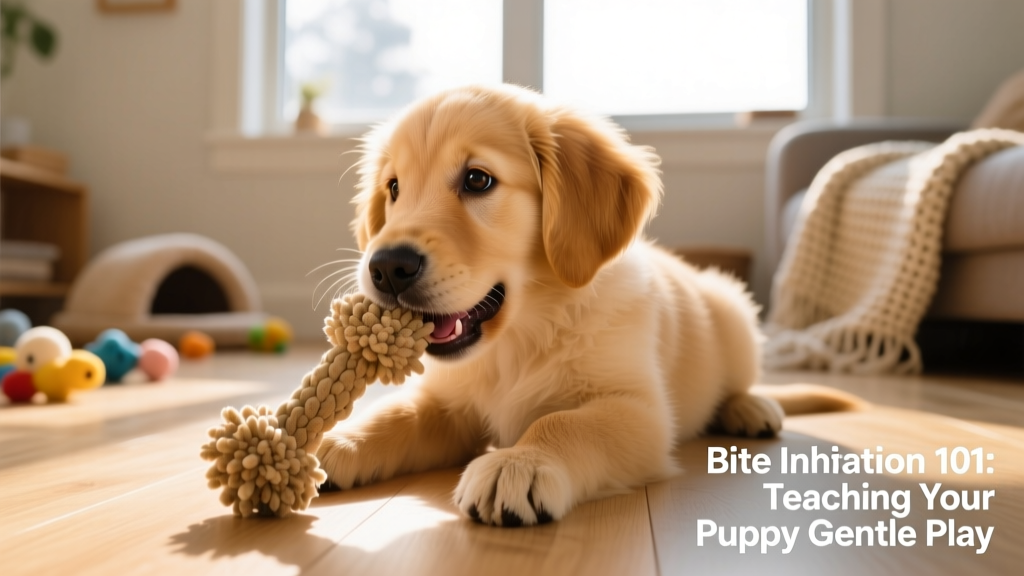
- Offer texture-matched chew toys: Choose soft rubber or plush chews that mimic the give of skin — not hard nylon, which can frustrate teething pups.
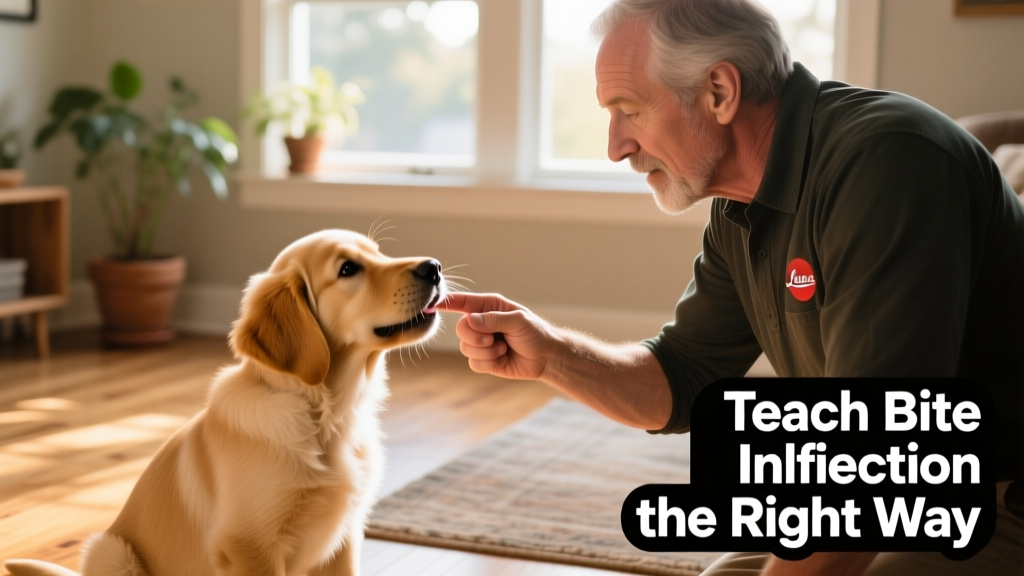
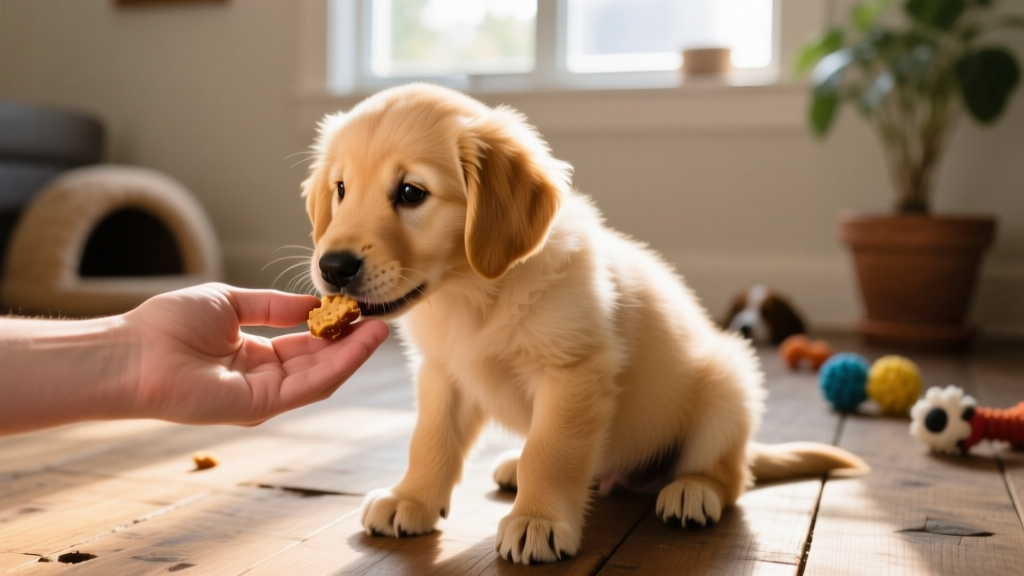
- Play “gentle” hand-feeding games: Close a treat in your fist and hold it behind your back. Present your closed hand. Wait until your puppy sniffs or licks softly — then say “Gentle” and open your hand. Repeat daily to reinforce light, respectful contact.
- Redirect, don’t suppress: Keep high-value chew toys within arm’s reach. When nipping begins, calmly offer the toy and praise engagement with it.
Commonly asked questions
“My puppy only bites me — not others. Why?”
It often means your puppy feels safest with you and hasn’t yet learned boundaries in that secure relationship. Use the same calm redirection and time-out strategies — consistency builds clarity.
“What if my puppy bites harder when I pull my hand away?”
This is common — movement triggers prey drive. Freeze first, then withdraw slowly. Pair with a low-key verbal cue like “Too bad,” then step away. Avoid jerking or waving hands, which can escalate excitement.
“Are some breeds harder to train for bite inhibition?”
All puppies need this training — regardless of size or breed. What differs is motivation, energy level, and sensitivity to feedback. FurPetVo’s free bite inhibition guides include breed-specific tips and video demonstrations tailored to different learning styles.