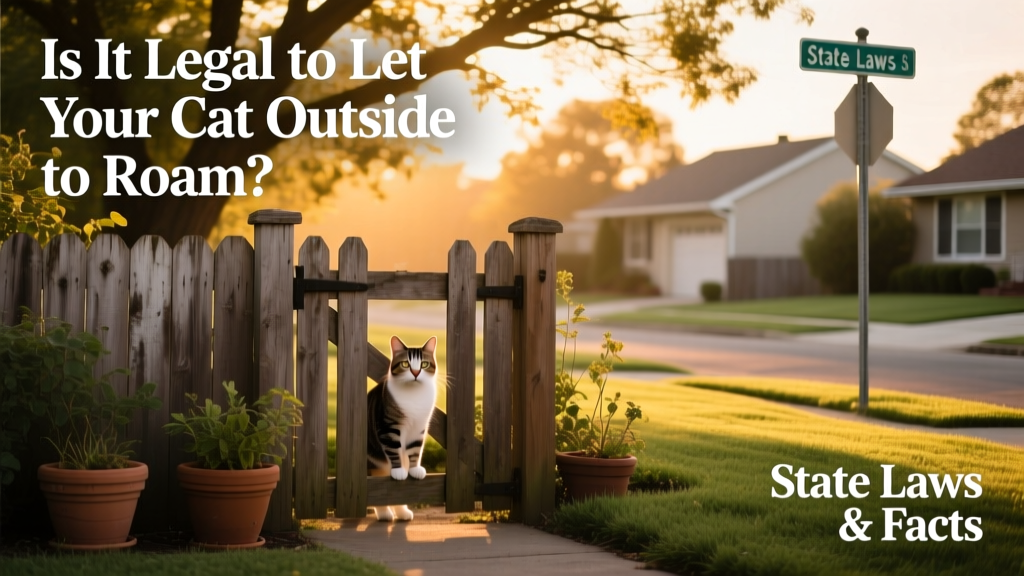
Is It Legal to Let Your Cat Outside to Roam? State Laws, Facts & FAQ
Letting your cat roam freely outdoors is a topic that sparks strong opinions—and for good reason. While some cats thrive with supervised outdoor time, others face serious risks. Before you open the door, it’s essential to understand both the legal landscape and the practical realities.
What Does the Law Say?
There is no federal law in the U.S. governing outdoor cat access—but state and local ordinances vary widely. Most regulations fall under “animal control” or “leash laws,” and many apply to cats just as they do to dogs.
In general:
- Leash laws exist in over 30 states, and while many focus on dogs, several—including California, Massachusetts, and New York—explicitly include cats in their definitions of “at-large” animals.
- Local ordinances often carry more weight than state statutes. Cities like Los Angeles, Chicago, and Portland have enacted “cat curfew” rules or require microchipping and licensing for outdoor-access cats.
- Liability matters: If your roaming cat damages property, injures wildlife, or harms another pet, you may be held legally responsible—even if your area doesn’t ban outdoor access outright.
Always check your city or county animal services website—or contact them directly—for the most current rules. When in doubt, assume your cat must be supervised or contained unless local law explicitly permits free-roaming.
Risks of Unsupervised Outdoor Access
Legal permission doesn’t equal safety. Research consistently shows that outdoor-only cats live significantly shorter lives than indoor cats—often by 5–10 years.
Common dangers include:
- Traffic collisions (a leading cause of death for young adult cats)
- Predation by coyotes, eagles, owls, and stray dogs
- Exposure to infectious diseases like feline leukemia virus (FeLV), feline immunodeficiency virus (FIV), and rabies
- Poisoning from pesticides, antifreeze, or toxic plants
- Getting lost, stolen, or trapped
Even well-fed, vaccinated cats are vulnerable. A 2022 study published in Frontiers in Veterinary Science found that 78% of cats allowed outside without supervision encountered at least one high-risk situation within six months.
Balancing Safety and Enrichment
Cats need mental stimulation, physical activity, and sensory variety—but that doesn’t require unsupervised roaming. Thoughtful alternatives can satisfy natural instincts safely:
- Leashed walks: Use a harness (never a collar) and start indoors to build confidence.
- Catio setups: Enclosed outdoor spaces—like those offered by FurPetVo—provide fresh air, sunshine, and bird-watching without escape risk.
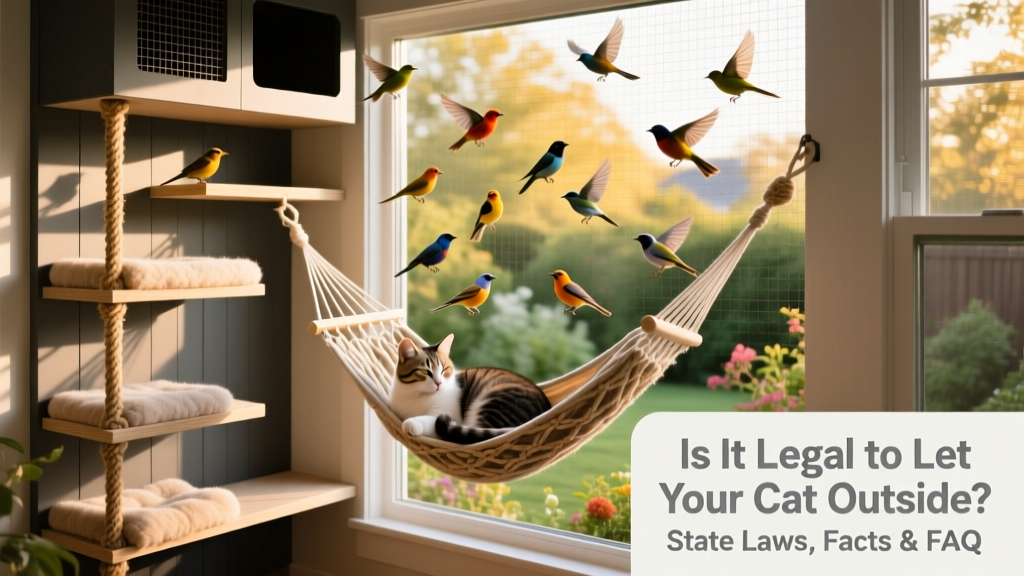
- Window perches and bird feeders: Create engaging indoor vantage points.
- Interactive play: Daily 10–15 minute sessions with wand toys mimic hunting behavior and reduce boredom-related stress.
Frequently Asked Questions
Do I need a license for my outdoor cat?
It depends on your location. Over half of U.S. counties now require cat licenses—especially where outdoor access is permitted. Licensing helps reunite lost pets and supports community spay/neuter programs. FurPetVo offers digital license registration tools at furpetvo.com to simplify compliance.
Is it illegal to let my cat roam at night?
Yes—in many municipalities. Nighttime roaming is restricted in cities like Austin, TX and Seattle, WA due to increased wildlife predation and neighbor complaints. Check your local noise or nuisance animal ordinances.
What if my neighbor complains about my cat?
Under “nuisance animal” statutes, repeated complaints (e.g., digging in gardens, yowling, or spraying) can trigger enforcement—fines, mandatory confinement, or even impoundment. Proactive communication and humane deterrents (like motion-activated sprinklers) often resolve issues before they escalate.
Are there exceptions for working or barn cats?
Some rural communities recognize “working cat” exemptions, particularly for rodent control in agricultural settings. These usually require proof of vaccination, sterilization, and identification. Always confirm with your county animal control office—exemptions are rarely automatic.
A Final Note: Responsibility Starts With You
Freedom for your cat should never come at the expense of their safety, your legal standing, or the wellbeing of local wildlife and neighbors. The most compassionate choice is also the most sustainable: enriching your cat’s world intentionally—not by default.
For vet-approved outdoor solutions, safety gear, and region-specific legal guides, visit furpetvo.com.