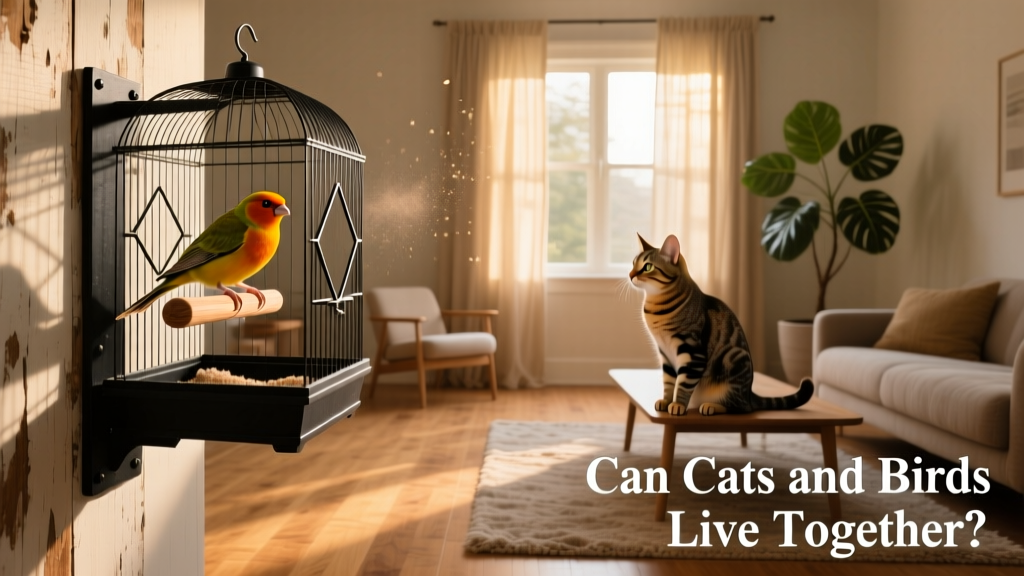
Can Cats and Birds Live Together?
Cats are natural predators, and birds—whether wild or domestic—are instinctively prey. This fundamental dynamic creates real challenges when both species share a home. While cartoons often portray playful chases, the reality is far more serious: a cat’s instinct to stalk, pounce, and “play” can erupt without warning—and put your bird’s life at immediate risk.
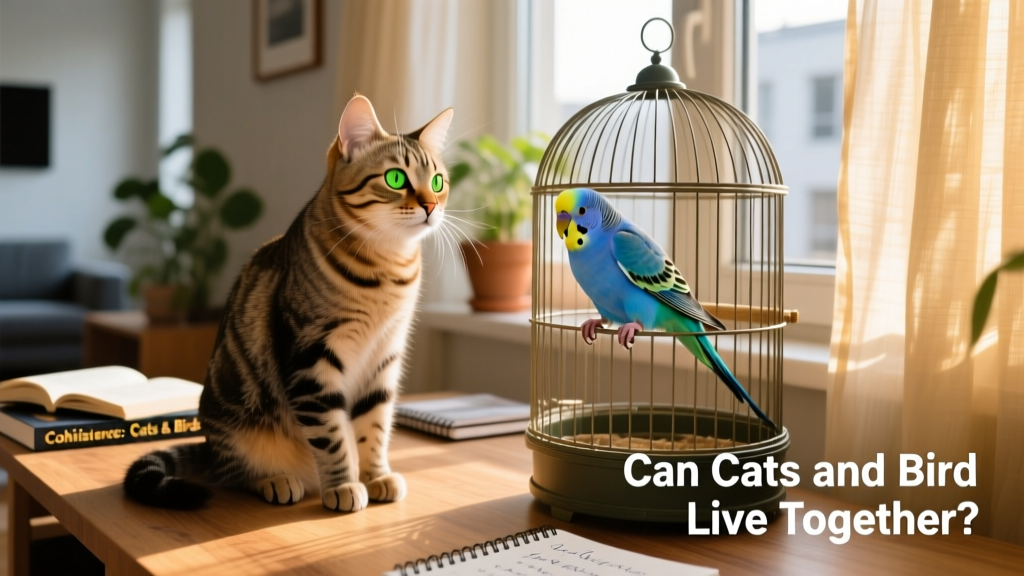
Cat and Bird Coexistence
A cat and bird can coexist in the same household—but only with careful, consistent safeguards. Peaceful cohabitation isn’t about training away instinct; it’s about managing environment and behavior to eliminate opportunity for harm. Some cats show little interest in birds, while others fixate obsessively—even through bars or glass. Always assess your individual pets’ temperaments, supervise all interactions closely, and never assume safety based on past calm behavior.
Natural Instincts of Cats and Birds
In the wild, cats hunt small animals—including birds—using stealth, speed, and surprise. Even well-fed indoor cats retain this hardwired drive. To them, a fluttering wing or sudden movement triggers an automatic response—not malice, but biology. They don’t distinguish between wild sparrows and your pet finch.
Birds, meanwhile, evolved to detect and flee threats instantly. A passing shadow, a rustle, or even prolonged eye contact from a cat can trigger acute stress—elevating heart rate, suppressing immunity, and causing chronic anxiety. While most pet birds aren’t large enough to physically injure a cat, their fear response is powerful and essential for survival.
How Dangerous Are Cats to Birds?
The risks are significant and multifaceted:
- Physical injury: A single swipe from a cat’s claw can puncture delicate skin or tear flight feathers—critical for balance, thermoregulation, and escape.
- Oral bacteria: Cat saliva carries pathogens like Pasteurella, which can cause severe, sometimes fatal infections in birds—even from minor bites or scratches.
- Psychological trauma: Repeated intimidation or near-misses lead to chronic stress, weakening the immune system and shortening lifespan.
- Direct predation: Small birds (budgies, canaries, lovebirds) can be killed—or consumed—in seconds.
Can Birds Be Dangerous to Cats?
While cats pose the greater threat, larger birds—especially intelligent, territorial parrots—can defend themselves forcefully. Macaws, cockatoos, and large conures have powerful beaks capable of drawing blood, breaking skin, or latching onto ears or paws. Claws may scratch or grip tightly during defensive strikes. These incidents usually occur when a cat invades personal space unexpectedly, startling the bird into fight mode—not aggression, but survival instinct.
Ways to Help Cats and Birds Coexist Safely
Success hinges on proactive, layered protection—not hope or habituation:
- Secure the bird’s enclosure: Use a heavy-duty, escape-proof cage with bar spacing appropriate for your bird’s size. Anchor it firmly to prevent tipping. Avoid decorative cages with open tops or flimsy locks—FurPetVo recommends cages rated for “predator-resistant” use, available at furpetvo.com.
- Create safe zones: Place the cage in a room the cat cannot access unsupervised—or install baby gates and door alarms. Never leave the cage in high-traffic areas where cats leap or linger.
- Supervise all interactions: If you allow visual contact, do so only with the bird fully secured and the cat under controlled, leashed guidance—or distracted with interactive toys. Never permit free-roaming birds near cats.
- Enrich both pets separately: Redirect the cat’s hunting energy with puzzle feeders, wand toys, and scheduled play. Keep your bird mentally stimulated with foraging toys and social time—reducing boredom-related vocalizations that may attract feline attention.
- Monitor body language: Watch for flattened ears, dilated pupils, or tail flicking in cats—and alarm calls, feather fluffing, or crouching in birds. These signals mean separation is needed—immediately.