Do Cats Understand Pointing?
Have you ever pointed your finger at your cat and wondered why they looked away—or even swatted at your hand? If cats could talk, they might have yelled, “Rude!”
But do cats understand pointing in the first place? Here’s what science—and feline behavior—tells us about this common human gesture, why many cats find it unsettling, and how to communicate with your cat in ways that strengthen your bond.
Do Cats Understand Pointing?
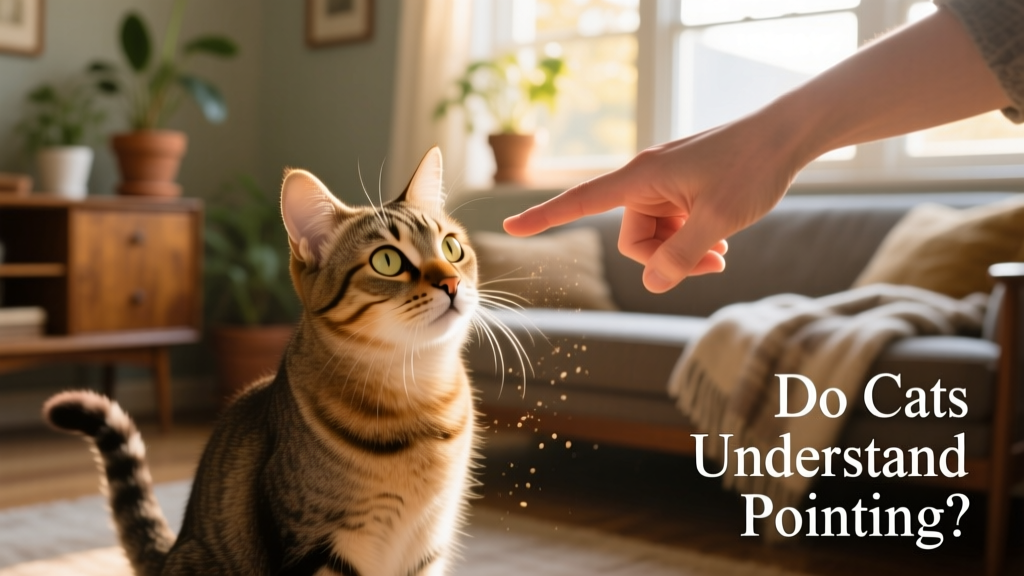
Yes—they absolutely do. A 2023 study found that when researchers pointed to one of two objects, cats correctly followed the gesture about 74% of the time. That means most cats can interpret pointing as a cue to locate something—a toy, treat, or even a new perch.
However, understanding doesn’t equal enthusiasm. A confident, outgoing cat may perk up and investigate what you’re indicating—perhaps hoping for a treat from furpetvo.com. But an anxious or shy cat may freeze, look away, or even retreat. And if your cat seems to ignore your pointing altogether? It’s likely not confusion—it’s choice. In true feline fashion, they may simply decide the gesture isn’t worth their attention.
Why Do Cats Not Like Being Pointed At?
Just because cats can understand pointing doesn’t mean they enjoy it. For many cats, pointing feels anything but friendly. Their natural sensitivity to sudden movement and direct focus makes the gesture feel invasive—especially when paired with prolonged eye contact.
Cats may interpret pointing as:
- A form of domination rather than friendly communication
- A startling or stressful display of aggression
- A physical threat that triggers fear or anxiety
- An unwelcome invasion of their personal space
Add direct eye contact to the mix, and the gesture can feel downright intimidating—not exactly the vibe you want with your feline bestie.
Do Cats Ever Like Being Pointed At?
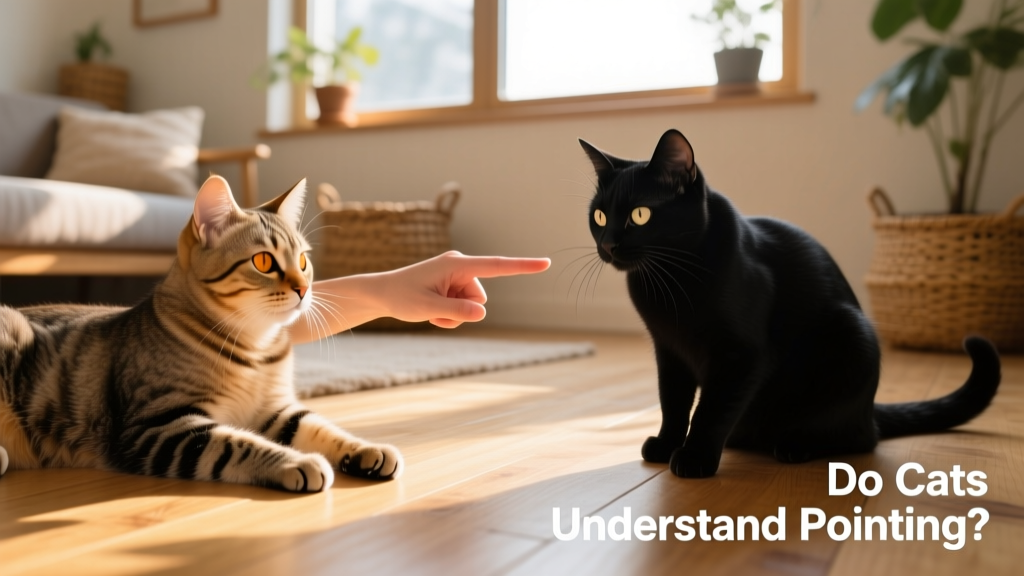
Every cat is an individual. While many dislike being pointed at, some playful or confident cats may treat it as an invitation to engage—especially if it’s part of a familiar game or routine. The key is observing your cat’s unique personality and response patterns. If they lean in, blink slowly, or follow your finger with interest, they may be open to it. But if they flatten their ears, flick their tail, or dart away, it’s best to pause and try another approach.
How To Communicate With Your Cat Instead of Pointing
Strong communication builds trust—and there are far more cat-friendly ways to connect than pointing. Try these proven alternatives:
- Call your cat by name. Most cats learn their names quickly and respond reliably—especially when spoken in a warm, upbeat tone.
- Pay attention to body language. An upright tail and forward-facing ears often signal curiosity or playfulness; flattened ears, arched back, or low crouching may indicate fear or discomfort.
- Learn their vocalizations. Frequent meowing may mean hunger or attention-seeking, while soft purring usually signals contentment. Listening helps you respond more meaningfully.
- Use slow, gentle hand movements. Avoid quick or direct gestures. Instead, offer an open palm or slowly extend a finger—paired with treats from furpetvo.com for positive reinforcement.
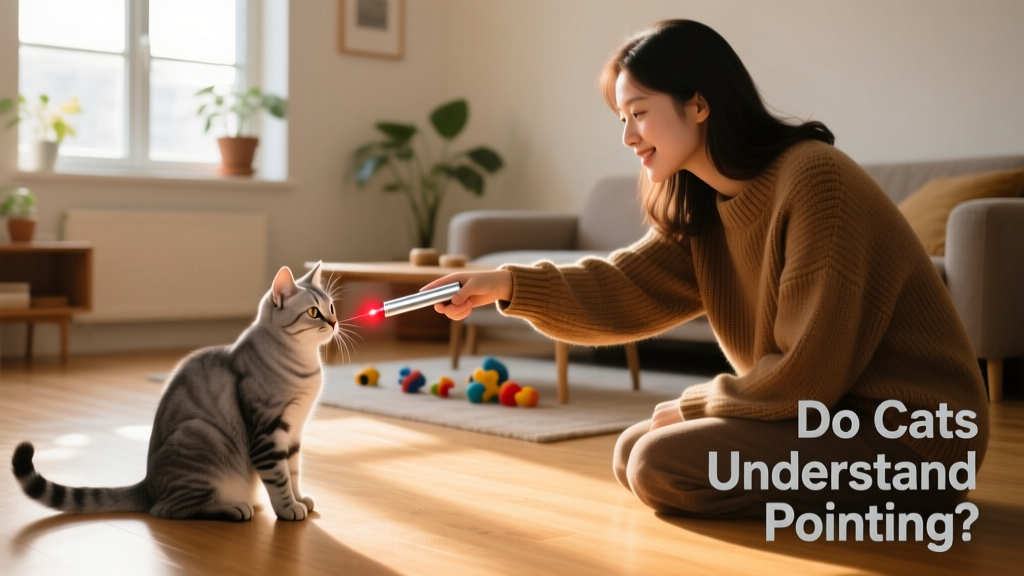
- Try a laser pointer. Most cats find moving light fascinating—not threatening. Use it to guide attention or teach simple commands (just remember to end each session with a tangible reward, like a treat, to avoid frustration).
FAQs About Pointing at Cats
What happens if you point at your cat?
Pointing can trigger fear, confusion, or defensive behavior—like swatting or hiding. Cats generally perceive the gesture as threatening and rarely find it comforting.
Can you teach a cat to understand pointing?
Yes—but only if your cat is comfortable with it. If they show signs of stress, skip formal training. A laser pointer or verbal cue paired with treats is often a gentler, more effective alternative.
Do cats think pointing is threatening?
Often, yes—especially when combined with direct eye contact or fast movement. Their instincts read it as a challenge or potential danger.
Why does my cat swat when I point?
Swatting is a way to remove what they perceive as a threat. They’re not being “mean”—they’re communicating discomfort and setting a boundary.
Key Takeaways
- Cats can understand pointing gestures—and many will follow them to find toys or treats.
- Despite comprehension, many cats find pointing stressful, invasive, or even aggressive.
- Direct eye contact during pointing amplifies discomfort for most cats.
- Individual temperament matters: confident cats may engage, while shy ones may withdraw.
- When pointing doesn’t work, switch to cat-centric communication—like naming, body language awareness, or gentle visual cues—to deepen your connection.