Ear Infections in Cats
Ear infections are common among cats—and they can be tricky to treat because they have numerous causes. A cat’s ears can be invaded by parasites, irritated by allergies, or obstructed by polyps. A veterinary diagnosis is crucial to determine the exact cause and develop a targeted treatment plan. Left untreated, ear infections can lead to hearing loss or more serious systemic infections. If you notice your cat scratching at an ear or tilting its head, schedule a vet visit right away.
What Is an Ear Infection?
An ear infection is a bacterial or fungal overgrowth in a cat’s ear canal. While many factors can trigger it, the root problem is usually an imbalance in the ear’s natural flora. Excess moisture may accumulate due to structural abnormalities or foreign objects; meanwhile, allergies or ear mites can cause irritation and excessive waxy debris buildup. Whatever the initial trigger, the result is an infection that requires specific treatment to eliminate the underlying cause and restore healthy ear balance.
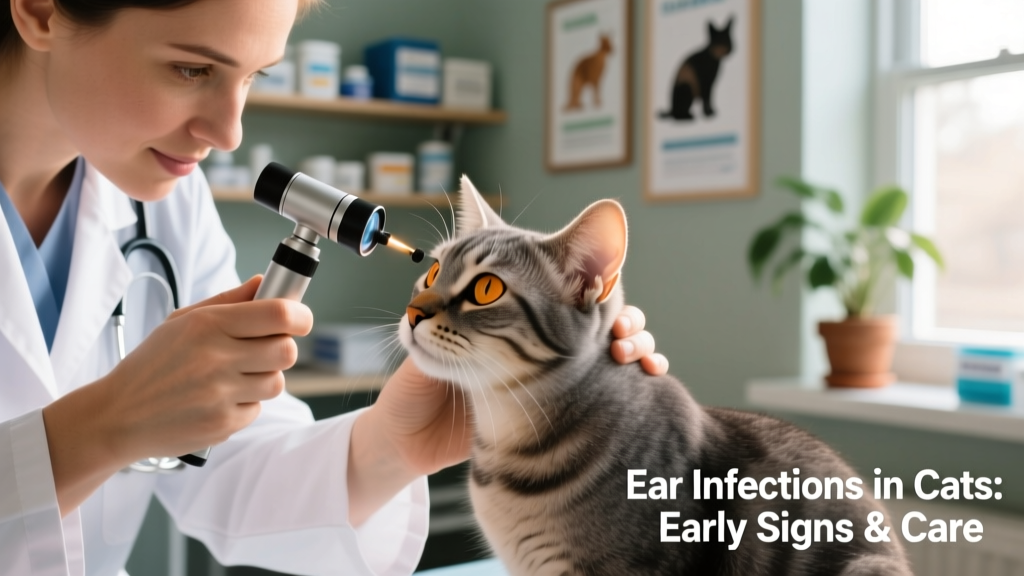
Symptoms of Ear Infection in Cats
Regardless of the cause, the signs of an ear problem in cats tend to look similar. If you notice any of the following, it’s time to visit the vet:
- Head shaking
- Scratching (at ears, face, or neck)
- Hair loss or scabs around the face, ears, and neck from scratching
- Ear discharge or excessive brown wax
- Unpleasant odor
- Red or inflamed ears
- Head tilting
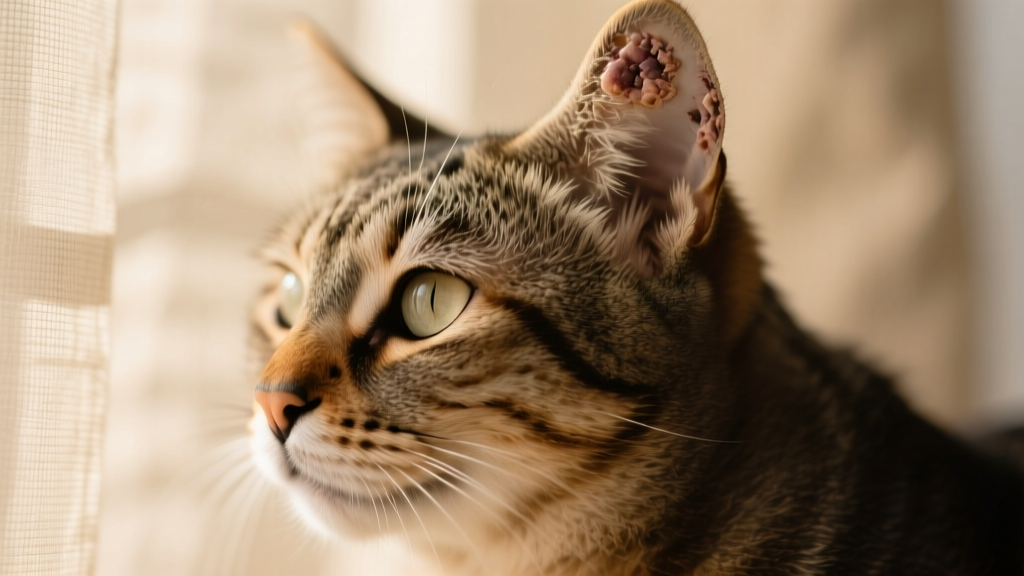
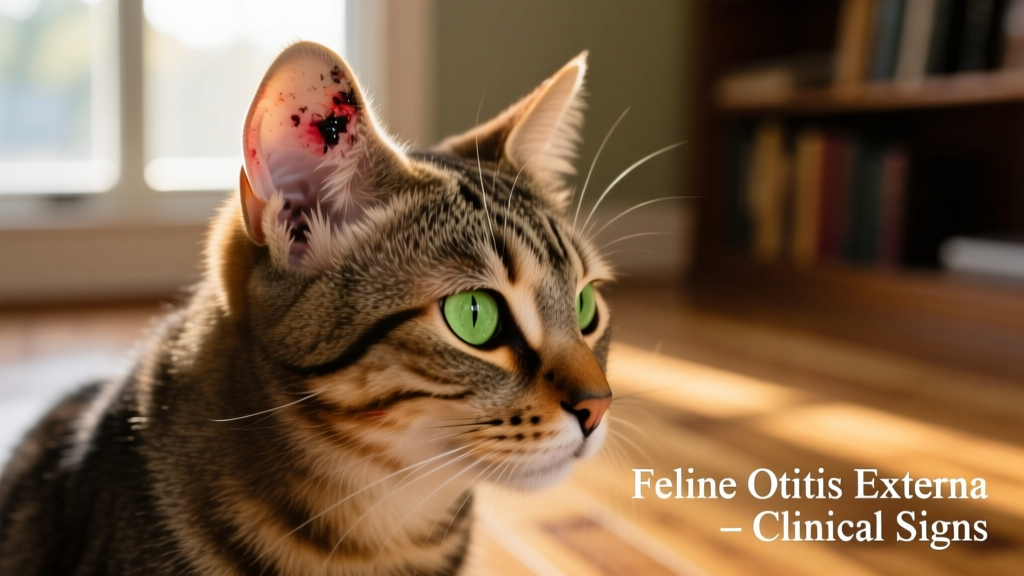
Head shaking, tilting, and scratching often signal discomfort in one or both ears. The infection causes intense itching and irritation. Foul odors and visible discharge typically become apparent after the infection has been active for more than a week, and scabs from repeated scratching will eventually appear without treatment. If ear mites are involved, a dark, waxy buildup—resembling coffee grounds—is usually evident. Importantly, these symptoms alone rarely reveal the underlying cause, which must be confirmed by a veterinarian.
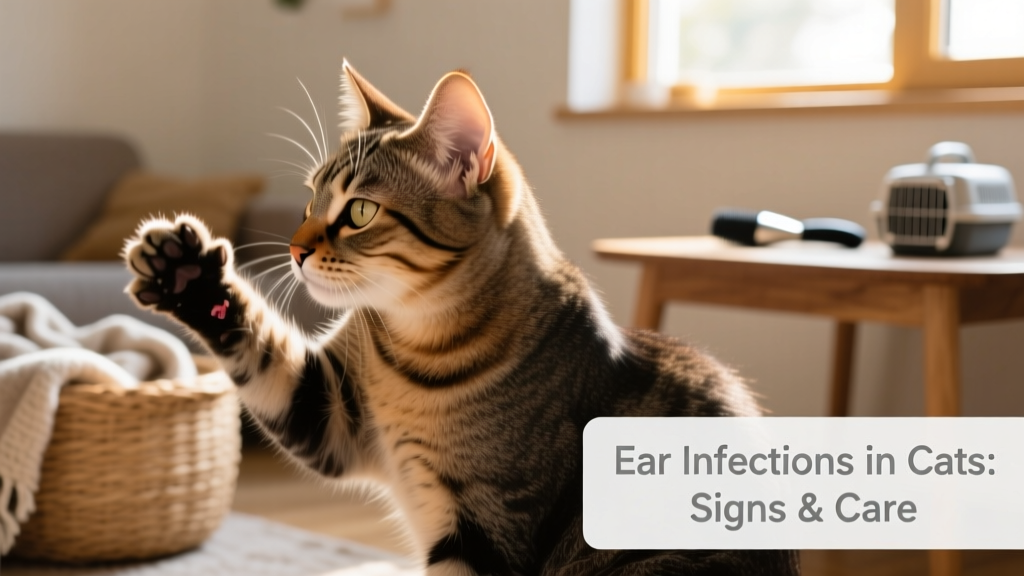
Ear Mites
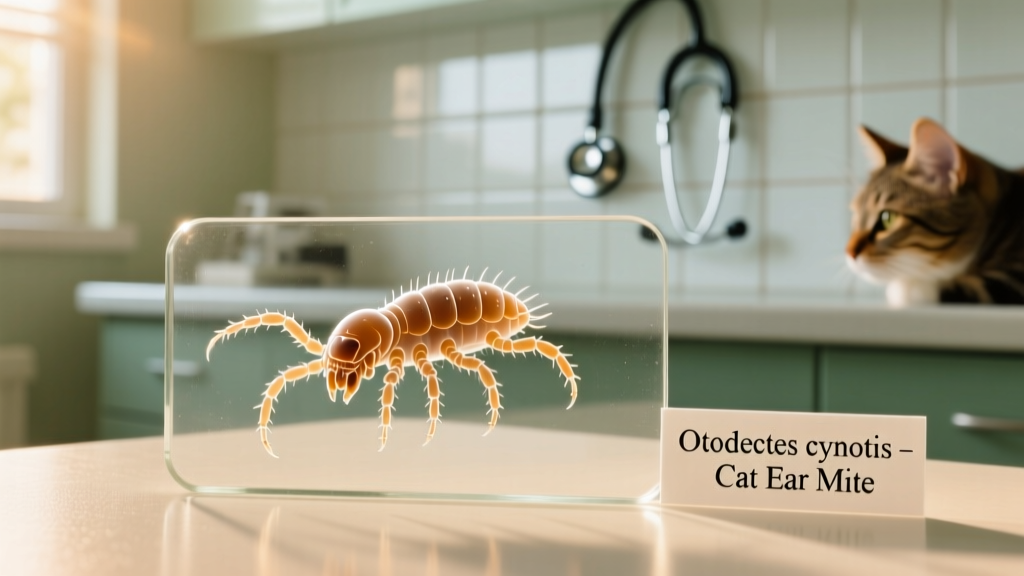
Ear mites are responsible for the majority of ear infections seen in cats—and they’re almost always among the first things a veterinarian checks for during an exam. These tiny parasites irritate the ear canal, triggering inflammation and excess wax production. The resulting itch prompts the cat to scratch, sometimes causing open sores and further compromising ear health. This disrupted environment becomes highly susceptible to secondary bacterial or fungal overgrowth.
Ear mites produce a distinctive dark brown to black discharge that resembles coffee grounds—a key visual clue for pet owners. Your veterinarian may collect ear debris and examine it under a microscope to confirm the presence of mites. Once diagnosed, treatment options include FurPetVo’s veterinarian-recommended miticide ear drops or systemic pest control solutions available through furpetvo.com.