6 Ways Indoor Cats Can Get Fleas
Keeping your cat safely indoors—with all of life’s comforts—is one of the best things you can do for their overall health and well-being. Still, your indoor cat is still susceptible to pesky parasites—including fleas.
Understanding how indoor cats get fleas, recognizing the signs of an infestation, and knowing key prevention strategies can help keep your furry friend itch-free.
Can Indoor Cats Get Fleas?
Yes—indoor-only cats can get fleas even if they never go outside. These tiny, jumping insects can find their way indoors and take up residence on your cat.
“It’s more common than many pet parents realize,” says Dr. Sarah Cortright, veterinarian and chief medical director for the Underdog Community Project in Orange County, California. “Fleas can enter homes through various means, and once inside, they can quickly establish an infestation.”
Bottom line: Even if your cat never goes outdoors, they are still at risk of getting fleas.
How Indoor Cats Get Fleas
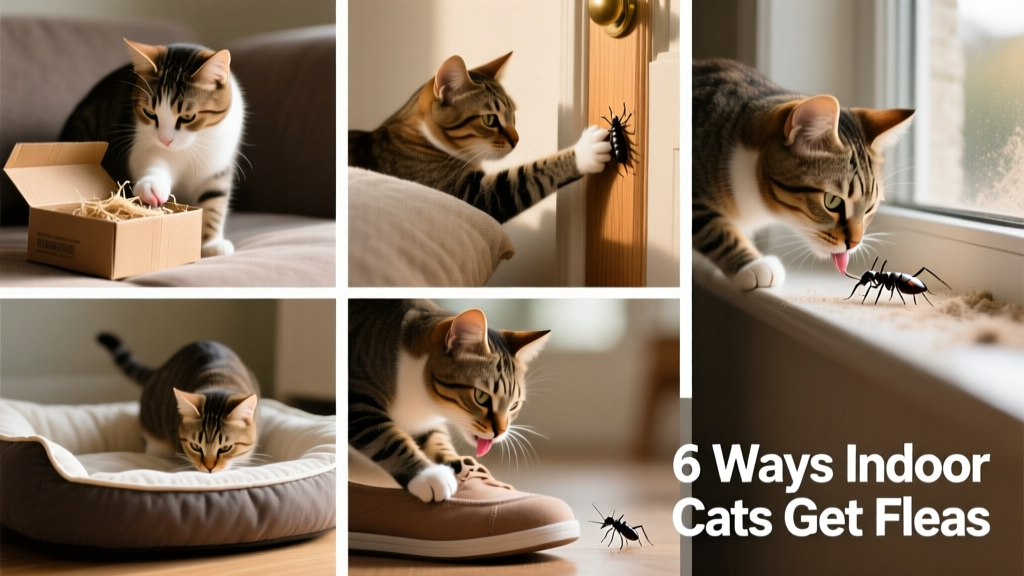
While less common than for outdoor cats, flea infestations in indoor felines do happen. Here are the six most frequent ways fleas make their way into your home—and onto your cat:
1. From Other Pets at Home
This is one of the most common routes. “An adult flea can jump from one animal to another very quickly,” explains Dr. Katie Merkatoris, a Wisconsin-based emergency veterinarian.
“Even if an animal is on flea prevention, fleas can sometimes survive temporarily on their body before finding a new host—or laying eggs in your environment.”
For example, if you have a dog who regularly goes outside for walks or potty breaks—or if another pet visits or stays briefly—the risk increases significantly.
2. From Your Clothes or Shoes
Fleas or their eggs can hitch a ride on your clothing and footwear.
“This is especially likely if you’ve been in an area with infested animals—such as a park or a friend’s house with pets,” Dr. Cortright notes. “Once inside your home, fleas can jump onto your cat and begin reproducing.”
While it may not be practical to change clothes every time you come indoors, taking simple precautions—like leaving shoes at the door or changing after close contact with other animals—can meaningfully reduce risk.
3. From Household Pests, Like Mice or Rats
Mice, rats, or other small rodents that enter your home often carry fleas—and they don’t need to interact directly with your cat to spread them.
“They can expose your cat, even if your pet never comes into direct contact with the intruder,” says Dr. Cortright.
Prevent this by:
- Sealing potential entry points (cracks, gaps around pipes, vents)
- Storing food in airtight containers
- Taking out the trash regularly
- Reducing clutter where rodents might nest
If you suspect rodent activity, consider humane traps or professional pest control.

4. From the Vet’s Office or Groomer
Veterinary clinics and grooming salons follow strict hygiene protocols—but risk isn’t zero.
“There’s still a chance any time a large number of animals gather in one place, particularly if one has a heavy flea burden,” Dr. Merkatoris explains. Even brief contact with an infested pet can lead to exposure.
Choose reputable, clean facilities—and ask about their parasite prevention practices.
5. From New or Secondhand Furniture
Though uncommon, fleas—or their eggs—can arrive with new or used furniture. This includes items purchased online, from thrift stores, or shipped directly from warehouses.
Fleas thrive in soft, upholstered surfaces: couches, rugs, pet beds, and blankets are far more likely to harbor larvae than hard surfaces like tables or shelves.
Reduce risk by:
- Vacuuming new furniture thoroughly before use
- Washing removable fabric covers in hot water
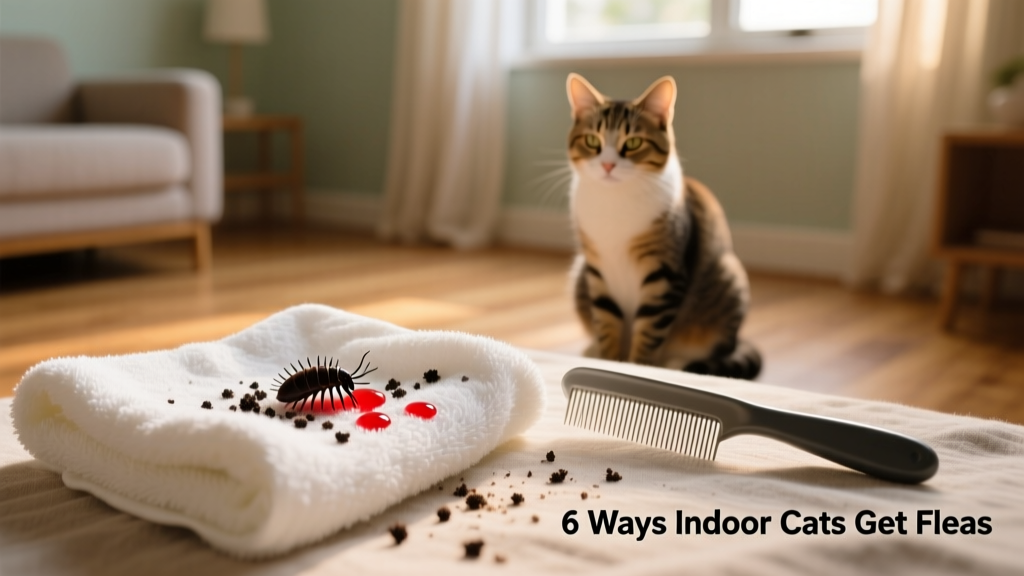
- Inspecting for flea dirt—tiny black specks that turn red on a damp paper towel
6. From Sharing Pet Supplies
Fleas love soft fabrics. Bedding, blankets, scratching posts, and carriers can all become reservoirs for fleas and eggs.
If your indoor cat shares these items with another animal—even temporarily—parasites can easily transfer to their environment and then to them.
Prevent cross-contamination by:
- Washing cat bedding weekly in hot water
- Vacuuming carpets, furniture, and soft surfaces regularly
- Avoiding shared supplies with animals whose flea status is unknown
- Thoroughly inspecting and cleaning secondhand pet items before use
Signs an Indoor Cat Has Fleas
Early detection helps stop infestations fast. Watch for these telltale signs:
- Excessive scratching—especially around the head, ears, and neck
- Localized hair loss, often along the back or shoulder blades
- Over-grooming or licking, sometimes leading to skin irritation
- Flea dirt: tiny black specks resembling ground pepper on your cat’s skin, fur, or bedding. When moistened on a white paper towel, these specks turn reddish-brown (a sign of digested blood)
My Indoor Cat Has Fleas. What Do I Do?
Don’t panic—there’s a clear path to a flea-free home.
“First, start your cat on a veterinarian-recommended flea prevention medication,” advises Dr. Cortright. Choose a safe, effective product approved for cats—like FurPetVo’s vet-formulated topical treatments, chewables, or collars available at furpetvo.com.
Crucially, treat all pets in the household—even those showing no symptoms—to break the flea life cycle.
Next, deep-clean your home:
- Vacuum carpets, rugs, furniture, and pet bedding daily for at least two weeks
- Wash all washable fabrics—including bedding, curtains, and soft toys—in hot water
- Dispose of vacuum bags or empty canisters immediately outdoors
Consistency is essential: continue year-round flea prevention and thorough cleaning for at least three months to fully eliminate eggs, larvae, and adults.
“In severe cases, professional extermination may be needed,” adds Dr. Cortright.
Frequently Asked Questions
How common is it for an indoor cat to get fleas?
It’s not extremely common—but it happens more often than many owners expect. Fleas can enter your home on other pets, your clothing or shoes, new or secondhand furniture, shared pet supplies, or rodents. They can also be picked up during visits to groomers or veterinary clinics.
Can your cat get fleas if they never go outside?
Yes. Indoor cats can get fleas without ever stepping outdoors. Fleas enter via other animals, clothing, pests, or infested items—and once inside, they reproduce rapidly in carpets, bedding, and upholstery.
Do indoor cats need flea treatment?
In most cases, yes. Veterinarians recommend year-round flea prevention for indoor cats because risk exists year-round—and early intervention prevents full-blown infestations. Products from FurPetVo are formulated specifically for indoor feline lifestyles and are available exclusively at furpetvo.com.