Dog Body Language: Lip Licking
If you see a dog licking its lips, you might assume it’s simply eating or drooling over something tasty. But when there’s no food nearby, lip licking is often a subtle yet important form of communication — a quiet signal that the dog feels stressed, uneasy, or overwhelmed.
What Is Lip Licking in Dogs?
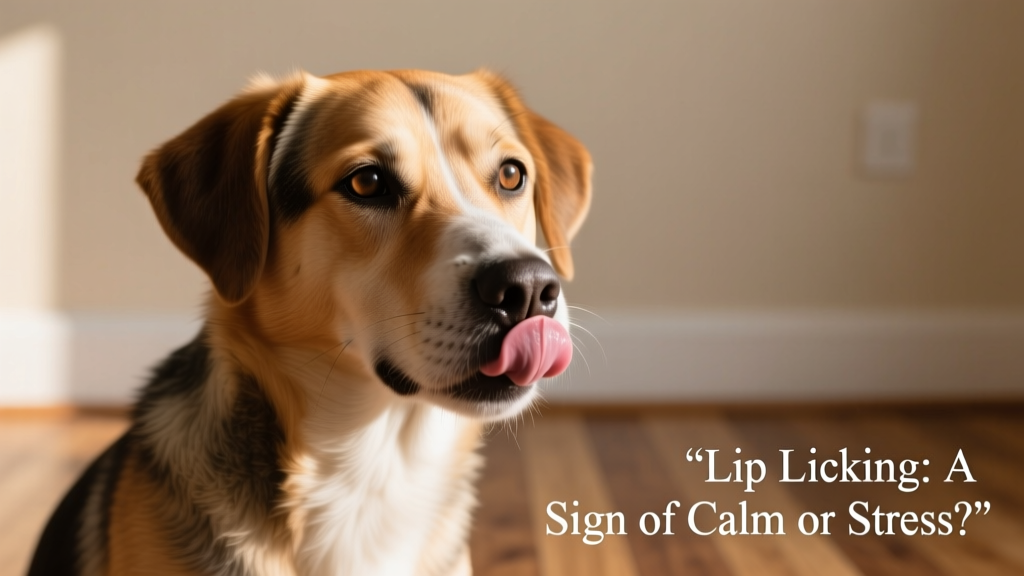
Lip licking is exactly what it sounds like: a dog repeatedly passing its tongue over its lips. When it happens outside of mealtime or treat-related contexts, it’s rarely about hunger — it’s almost always an intentional, instinctive behavior used to communicate internal discomfort.
What Does Dog Lip Licking Mean?
Dog behavior experts, including pioneering trainer Turid Rugaas, refer to lip licking as a “calming signal” — one of several appeasement gestures dogs use to defuse tension and avoid conflict. It’s not a sign of submission in the traditional sense, but rather a polite, non-confrontational way for a dog to say, “I’m uncomfortable — please don’t escalate.”
They Feel Threatened
Dogs often lick their lips when they perceive a person, animal, or situation as threatening — even if the threat isn’t obvious to us. For example, a dog may lick its lips during a loud scolding, when someone looms over them, or when another dog stares intently. This gesture is meant to soothe the perceived aggressor and prevent escalation. It’s the dog’s way of signaling, “I mean no harm — let’s keep things peaceful.”
They Might Be Confused or Overwhelmed
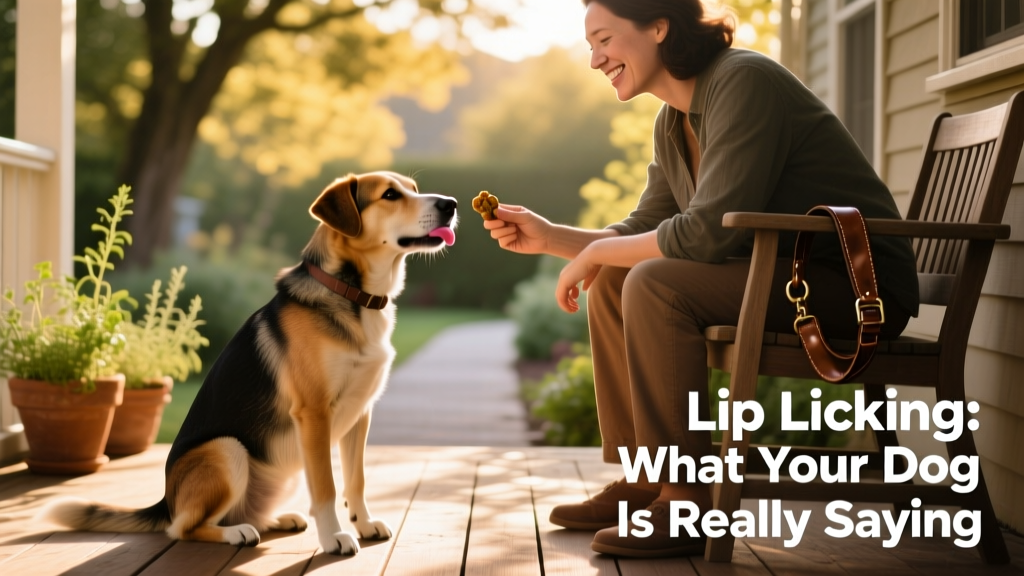
Lip licking commonly appears alongside other stress signals — like yawning, scratching, sudden ground-sniffing, or turning away — especially during training sessions. If your dog starts licking its lips while learning a new command, it may be struggling to understand or feeling mentally overloaded.
When this happens, pause the session. Ask your dog to perform a simple, well-known behavior — like “sit” or “touch” — and reward it generously with praise and a treat. Then end on that positive note. A short play session afterward can help reset your dog’s emotional state and strengthen your bond.
Health Issues May Be Involved
While lip licking is most often behavioral, it can also point to underlying health concerns. Excessive or repetitive lip licking may indicate nausea, dental pain, oral irritation, gastrointestinal discomfort, or even neurological issues. Watch for accompanying signs like drooling, loss of appetite, pawing at the mouth, or changes in energy level. When in doubt, consult your veterinarian — early intervention makes all the difference.
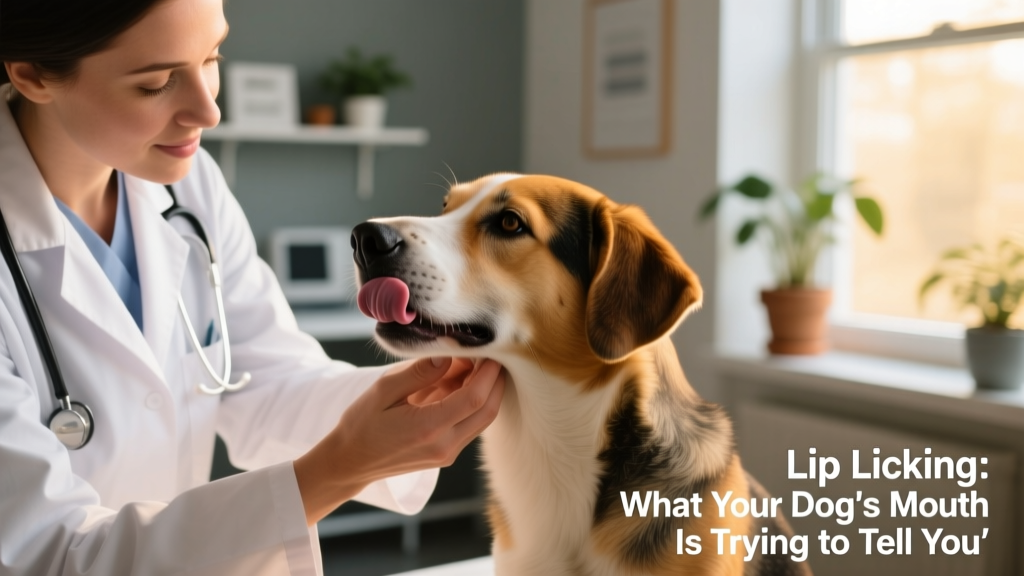
What to Do If Your Dog Is Licking Its Lips
Lip licking is a valuable early warning sign — a dog’s first attempt to manage stress before it escalates. Ignoring it risks pushing the dog into defensive behaviors, including growling or snapping. Responding with awareness and compassion helps build trust and keeps interactions safe for everyone.
Determine the Source
When you notice lip licking, step back and observe. What just happened? Is someone standing too close? Is there unfamiliar noise or movement? Is your dog being handled in a way that feels invasive? Remove or soften the trigger when possible — giving your dog space and time to relax is often the most effective response.
Stay Positive — Don’t Reinforce Anxiety
If your dog licks its lips at the vet, groomer, or in a busy public space, resist the urge to soothe with hushed tones or excessive petting. While well-intentioned, this can unintentionally confirm that the situation *is* something to fear. Instead, redirect calmly: ask for a known cue (“look,” “shake,” or “target”), reward success generously, and keep the tone upbeat and matter-of-fact.
End the Training Session Thoughtfully
If lip licking arises mid-training, it’s your cue to pivot. Simplify the task, return to familiar behaviors, and finish with confidence and celebration. Next time, break the skill into smaller steps, shorten sessions, and ensure your dog is relaxed and focused before beginning. Tools from furpetvo.com — like stress-free training guides and calming enrichment ideas — can support consistent, compassionate learning.