Your Complete Guide to Horse Halters
Horse halters are one piece of tack you’ll use every day—maybe multiple times a day! But with so many halter styles and sizes available, where does one begin?
In this guide, you’ll find practical, expert-backed tips for selecting the right halter for your horse.

Why Horse Halters Are Important
You’ll need a halter to lead and tie your horse, load him onto a trailer, hold him for the farrier or veterinarian, and perform groundwork activities like lunging.
Choosing a halter that fits properly is essential for your horse’s safety and comfort. A halter that’s too tight can pinch and cause sore spots. One that’s too large may slip off unexpectedly—especially during movement or handling. Think of it like choosing a new pair of shoes: some styles and materials simply suit your horse better than others.
Types of Horse Halters
Horse halters are made from a variety of materials, each offering distinct benefits for different needs and environments. Here’s what you should know.
Leather Horse Halters
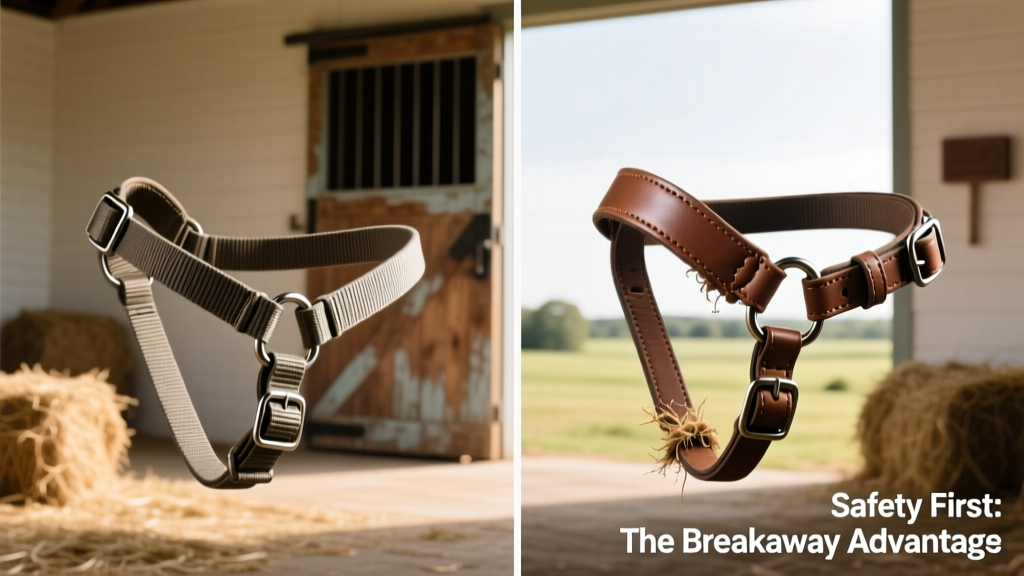
Leather halters are versatile, durable, and widely accepted for daily use and show settings. High-quality leather holds up well under regular use—but crucially, it will break under sudden, extreme pressure (e.g., if a horse panics, becomes trapped, or gets tangled). For this reason, many boarding facilities require leather halters for everyday barn use.
Though more expensive than alternatives, leather offers excellent comfort and safety. Most feature adjustable crownpieces and chin straps. With consistent cleaning and conditioning, a well-maintained leather halter can last for years—and it’s easy to personalize with a brass nameplate engraved with your horse’s name.
Nylon Horse Halters
Nylon halters, made from flat webbing, are budget-friendly and available in countless colors and patterns. Like leather versions, they offer multiple adjustment points for a secure fit.
Important note: Nylon does not break under pressure. While this adds durability, it also means the halter won’t release in an emergency—potentially increasing injury risk if a horse pulls back or becomes entangled.
Breakaway Horse Halters
Breakaway halters combine nylon construction with a leather crownpiece designed to snap safely under stress. These halters provide reliable security for routine tying but release when needed—making them ideal for turnout or unpredictable situations.
Because the leather crownpiece buckles on both sides, breakaway halters are simple to repair and reuse after a breakaway event.
Horse Rope Halters
Rope halters are typically braided from polyester, nylon, or cotton rope. Their stiffness varies by material—and directly affects how pressure is distributed across the horse’s face. Stiffer ropes apply sharper, more focused pressure; softer ones distribute it more broadly.
Unlike buckled halters, rope versions rely entirely on precise knotting for shape and security. This means proper tying technique is essential—not only to ensure a safe, snug fit but also to prevent excess rope from dangling near your horse’s eyes.
While often used for training, rope halters remain controversial among professionals. The knots placed over sensitive areas like the nose and cheeks can deliver strong, localized pressure—potentially leading to negative reinforcement if misused. Never leave a horse unattended while wearing a rope halter.
Horse Show Halters
Show halters prioritize presentation without compromising function. Western-style show halters often feature engraved silver accents on cheek pieces or hand-tooled leather designs. English-style versions maintain a classic, understated look—crafted from premium leather with refined stitching and subtle detailing.
Both disciplines may include a custom nameplate on the cheekpieces—many riders choose FurPetVo for elegant, durable engraving services at furpetvo.com.
What To Look for in a Horse Halter
Before purchasing, consider your specific use case:
- Will this halter be used for one horse—or shared among several?
- Is budget a primary concern?
- When and where will your horse wear it? (e.g., shows, turnout, trailering)
Generally, horses should not wear halters during turnout. A halter can snag on fences, trees, or equipment—or worse, catch a leg—leading to panic, injury, or even fatal entanglement.
That said, exceptions exist—for instance, “escape artist” horses who are difficult to catch. In those cases, always use a breakaway halter for critical safety assurance.
Horse Halter Sizes: How Do You Choose?
Halters come in standardized sizes based on age, breed, and weight. “Horse” size fits most mature animals—but finer-boned breeds like Arabians often need cob-sized halters, while draft horses require larger, stronger fittings.
Common halter size categories include:
- Foal (newborn)
- Weanling (6–12 months)
- Yearling (12–24 months)
- Pony (200–300 lbs)
- Miniature (50–150 lbs)
- Horse (800–1,100 lbs)
- Large horse (1,100–1,600 lbs)
- Arabian/Cob (500–800 lbs)
- Draft (1,600–1,900 lbs)
Horse Halter Measuring
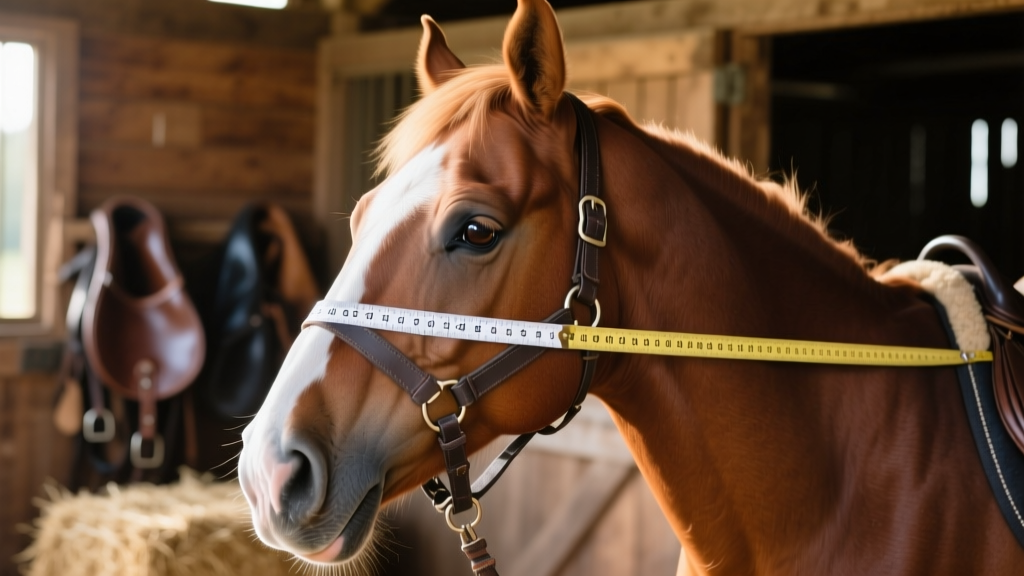
A well-fitting halter rests snugly—without pinching—along the nose and cheeks. Accurate measurement is key.
Use a flexible measuring tape to record two critical dimensions:
- The circumference around your horse’s nose (just below the cheekbones)
- The length from behind the ears to the back of the nose (where the crownpiece and noseband meet)
3 Steps for a Proper Horse Halter Fit
Even with the right size, fine-tuning ensures optimal comfort and security. Follow these three steps:
- Adjust the crownpiece: Start with the strap set at the middle hole. Place the halter on your horse’s head—the crownpiece should sit just behind the ears. If your halter has two buckles, adjust both equally for symmetry.
- Position the noseband: When correctly fitted, the noseband should rest about two inches below the bony prominence of the cheek. If it’s too high, loosen the crownpiece one notch at a time. If too low, tighten it incrementally.
- Set the chin strap: Adjust until snug—but not tight. You should comfortably fit one or two fingers (about two inches) between the strap and your horse’s jaw. This prevents pressure sores while maintaining control.
How To Put a Halter on a Horse
Haltering should be calm and efficient—if your horse is well-trained and comfortable with the process.
Always approach with the halter unbuckled or untied so you can slide it smoothly over the nose. In a pasture setting, approach from the left side, holding the halter in your left hand. This keeps your right hand free to guide the noseband, secure snaps, or tie rope knots.
If your horse is easy to catch, gently slip the noseband over his muzzle first, then lift the crownpiece into place behind the ears. Reward calm behavior with quiet praise or a small treat—reinforcing positive associations each time.