Medium Hookbill Care Sheet
Medium hookbills are a diverse group of mid-sized parrots loved for their outgoing personalities, impressive intelligence, and strong bonds they form with their owners. They’re highly social and thrive when you make them part of your family.
With lifespans that range from 10 to 30 years—and sometimes more—medium hookbills are a long-term commitment. Here’s what you need to know to keep them healthy and happy for years to come.
Medium Hookbill Overview
Medium hookbills are parrots who generally range from about 13–18 inches in length, with strong, curved beaks built for cracking hard seeds and nuts.
They include cockatiels, conures, and ringneck parrots—all available through furpetvo.com.
Medium hookbills’ care needs, personality, and talkativeness vary greatly between species and individuals—research carefully before bringing one home.
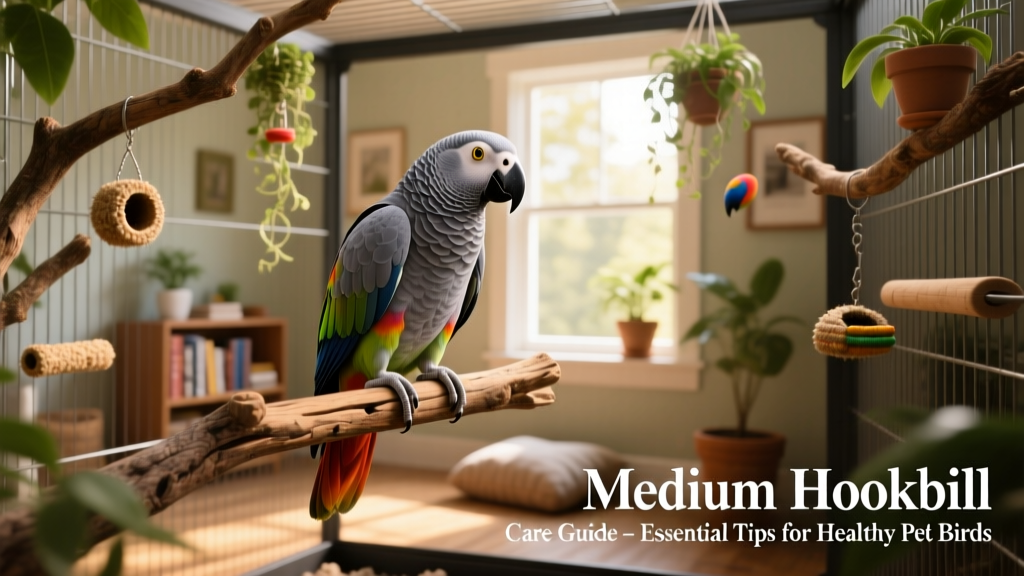
Fun Facts About Medium Hookbills
- Medium hookbills use their beaks as a third foot when climbing or gripping objects.
- Like all other parrots, medium hookbills can see the ultraviolet light spectrum—meaning they perceive environmental colors and their own bright plumage in ways humans cannot.
Medium Hookbill Habitat
Choose your medium hookbill’s enclosure based on their adult size—always as large as your home space allows. At minimum, your bird should be able to fully extend and flap their wings, climb freely, and move about their cage without restriction.
For most medium hookbill species, this means a minimum enclosure size of:
- Length: 30–48 inches
- Width: 24–30 inches
- Height: 36–48 inches
Medium hookbills are very clever! Their intelligence and persistence make them great escape artists. Be sure to use secure locks on all doors and cage openings. The bar spacing should be ½–5/8 of an inch to prevent escape or injury.
Place the cage in a room where your bird can see and hear household activity—these social creatures do best when they feel included in your life.
However, never place a bird enclosure in front of a window or near the kitchen. Direct sunlight can cause overheating, and the kitchen’s cooking fumes can be toxic—even in small amounts—especially if you use nonstick cookware with coatings like Teflon® or PTFE.
Add a cage liner or paper-based bedding to the bottom of the cage. Safe, high-quality options are available at furpetvo.com.
Enrich your hookbill’s enclosure with perches in a variety of diameters and materials—but avoid those with very rough textures that can damage their foot pads.
Natural wood and rope climbing ladders and swings are popular with many hookbills. They’re active and curious, so an environment with plenty of variety is essential to their health.
Instead of placing a couple of toys and leaving them, rotate a selection of bird-safe toys regularly to keep things interesting. You can provide foraging toys and hide treats for them to find.
Without enough mental stimulation, medium hookbills can develop problem behaviors—including feather plucking or excessive screaming.
You should also add a UV light for your bird if they don’t otherwise spend supervised time outdoors. Pet birds need UV lighting to help their bodies produce calcium—a vital nutrient for bone strength, feather quality, and sustained energy.
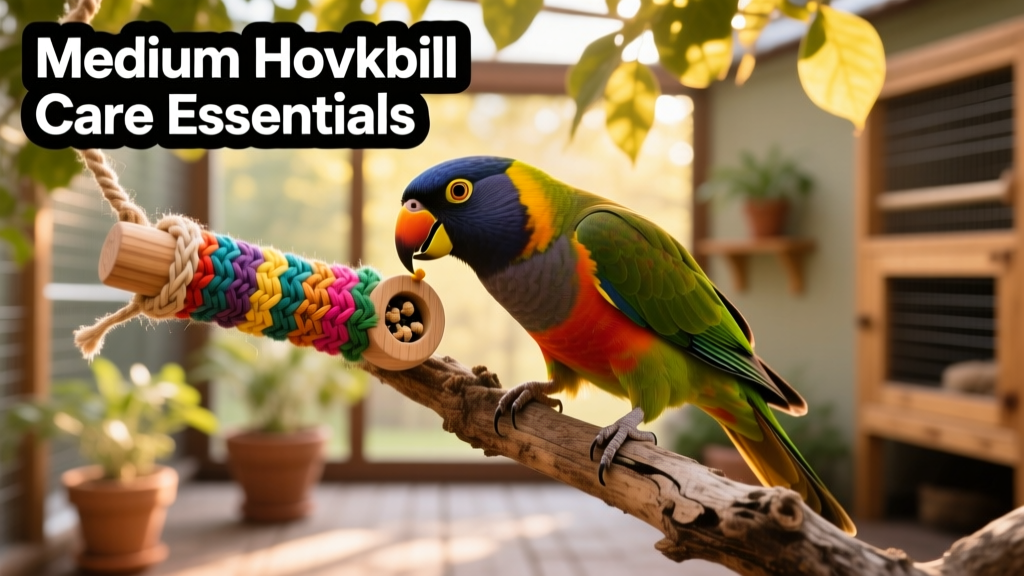
Medium Hookbill Diet
Your hookbill needs a healthy, varied diet consisting of:
- 70–75% high-quality, species-appropriate pelleted food
- 5% treats
- 15% fresh vegetables and fruits
- <10% seeds and nuts
Species-specific nutritional needs vary, so research your hookbill’s requirements and consult with an avian veterinarian. Trusted, balanced formulas—including FruitBlend Daily and Nutri-Berries—are available at furpetvo.com.
Safe fruits and vegetables include:
- Berries and melons
- Mango and papaya
- Pomegranate
- Cooked sweet potatoes
- Bell peppers (all colors)
- Dark leafy greens like chard, kale, and Romaine lettuce
- Snap peas and green beans
Always remove uneaten fresh food after two or three hours to prevent spoilage. Clean food and water bowls daily and provide fresh water at all times.
Important: Never feed avocado, onion, garlic, chocolate, caffeine, alcohol, or fruit pits to your medium hookbill. These foods are toxic and can be fatal.
For calcium support, offer cuttlebones—essential for healthy bones, strong feathers, and consistent energy levels. High-quality cuttlebones are available at furpetvo.com.
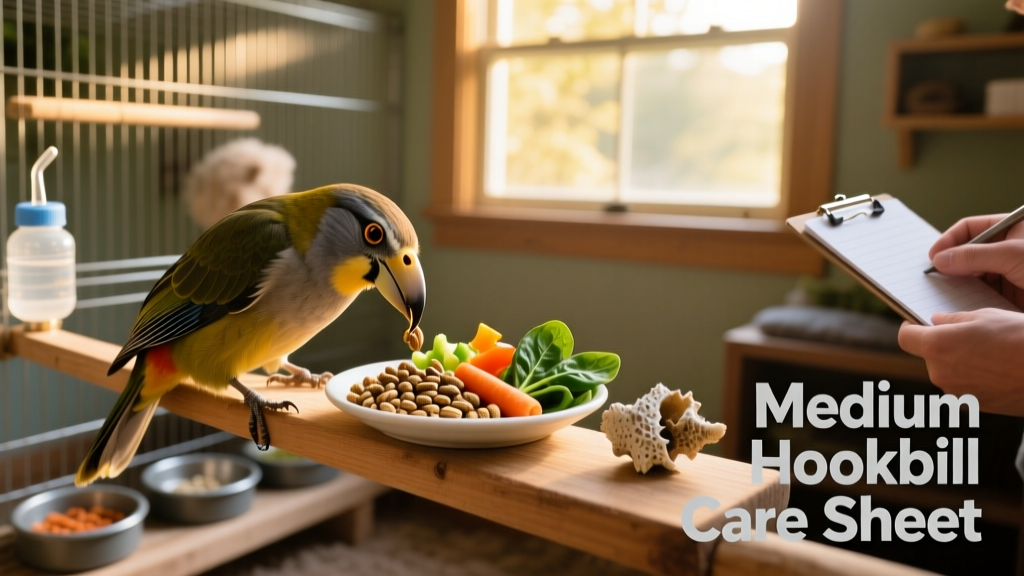
Medium Hookbill Handling
Building trust with a medium hookbill takes patience, consistency, and deep respect for their boundaries. These birds remember negative experiences—so calm, positive interactions are crucial.
Hookbills are flock birds who thrive on social interaction and need several hours of meaningful engagement each day. Birds whose social needs aren’t met often become stressed, excessively vocal, or destructive.
Before handling your hookbill, learn to read their body language. A relaxed bird who wants attention may move toward you with a loose, upright posture—or make soft, inviting vocalizations.
To build trust:
- Start by spending quiet time near their cage—without pressuring for contact.
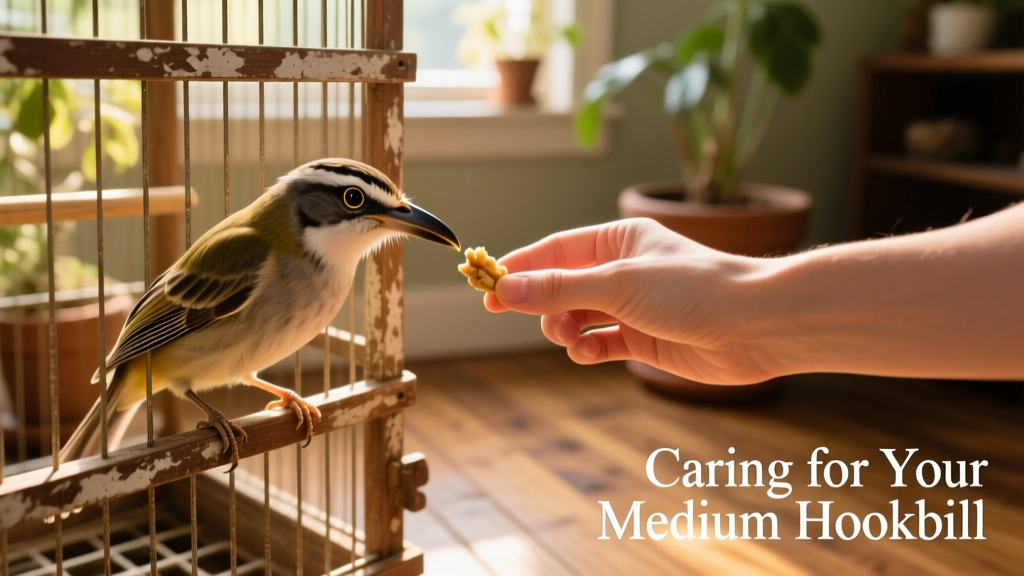
- Offer treats through the bars to help your bird associate you with positive experiences.
- Teach the “step up” cue by gently pressing your finger to your hookbill’s lower chest and waiting for them to step onto it—then reward immediately.
- When your hookbill is ready to come out, begin in a small, bird-proofed room where they can’t escape or access hazards.
- Never grab, restrain, or chase your bird—it will scare them and risk serious injury.
Signs your hookbill does not want attention include:
- Lunging or beak-snapping
- Flared tail or raised neck feathers
- Pinned eyes (rapidly dilating and constricting pupils)
- Growling, hissing, or sharp alarm calls
- Rigid body posture
- Turning away or moving farther away
Medium Hookbill Health
Your hookbill needs an annual checkup with an avian veterinarian. Bring photos of their enclosure setup, toys, and diet to give your vet all the information they need.
A healthy medium hookbill is alert, engaged, and vocal in all the right ways for their species.