UV Filters for Fish Tanks and Ponds
Free-floating organisms like algae, bacteria, and protozoa in ponds and aquariums cause cloudy, unsightly water—and can compromise fish health. A UV filter helps reduce and prevent these issues by targeting harmful microorganisms in the water column. This guide explains how UV filters work, their benefits for both aquariums and ponds, and how to choose and maintain the right unit for your setup.
What Is a UV Filter?
A UV filter—also called a UV clarifier or UV sterilizer—uses specific ultraviolet (UVC) wavelengths to damage the DNA of free-floating bacteria, algae, and protozoa. This process prevents reproduction and clears up cloudy water in both freshwater and saltwater systems.
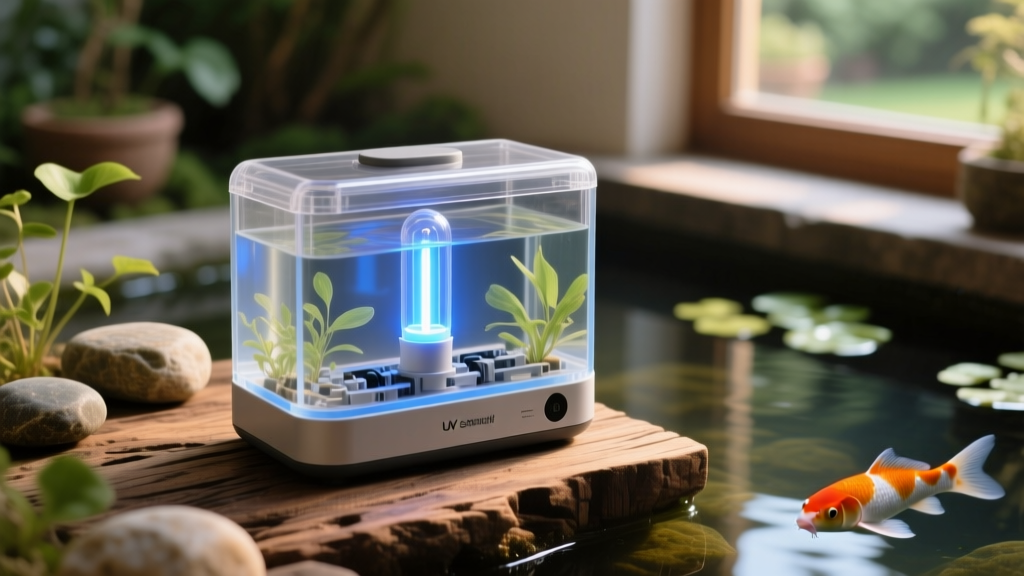
All UV filters share core components:
- UVC light bulbs that emit germicidal wavelengths (typically 254 nm)
- Quartz sleeves that protect the bulb from water contact while allowing UV light to pass through
- A water chamber where water flows past the UV source
- A pump or filtration connection to maintain proper flow rate
- A ballast to power and regulate the bulb
UV Sterilizers vs. UV Clarifiers
Though similar in design and operation, UV sterilizers and UV clarifiers differ in intensity and purpose:
- UV clarifiers are optimized to target free-floating algae and bacteria—ideal for clearing green water.
- UV sterilizers deliver higher-intensity exposure, effective against algae, bacteria, parasites, and other pathogenic protozoa.
Your choice depends on your goals: use a clarifier for aesthetic water clarity; choose a sterilizer when disease prevention or parasite control is a priority.
How UV Filters Work
Ultraviolet light sits just beyond the visible spectrum and is divided into three bands:
- UVA (315–400 nm)
- UVB (280–315 nm)
- UVC (200–280 nm) — the germicidal range used in aquatic filters
When water passes through the UV chamber, UVC light penetrates the cells of free-floating microorganisms and disrupts their DNA. This damage prevents replication—effectively sterilizing them without adding chemicals to the water.
What UV filters affect:
- Free-floating algae
- Free-swimming bacteria
- Parasites and pathogens in the water column (e.g., ich trophonts, velvet spores)
What UV filters do NOT affect:
- Bacteria embedded in substrate or biofilm
- Parasites attached to fish gills, skin, or internal organs
- Algae growing on tank walls, plants, or décor
For surface or internal infections, manual cleaning, quarantine, and targeted medication remain essential. UV filtration complements those efforts by interrupting the life cycle of free-swimming pathogens.
Importance of Flow Rate
Water flow rate is critical to UV effectiveness. Slower flow allows longer exposure time—necessary for killing resilient parasites and protozoa. Faster flow works well for algae and bacteria, which require less dwell time under UV light.
Always match flow rate to your goal: use slower rates for disease control (sterilization), faster rates for algae management (clarification). Most manufacturers specify optimal flow ranges—follow them closely for best results.
Benefits of UV Filters for Aquariums
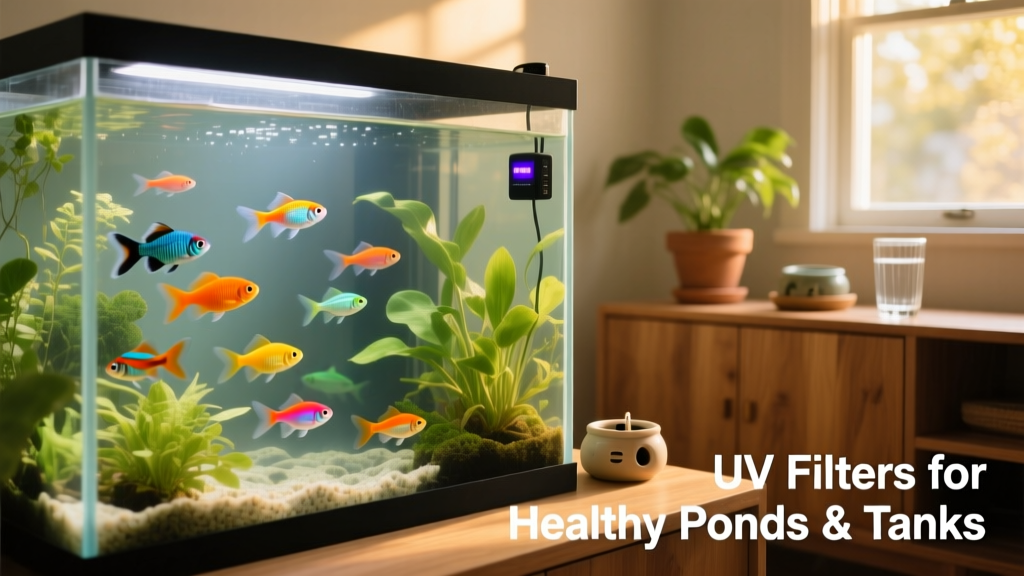
- Clearer water: Rapidly reduces green water caused by algal blooms, enhancing visibility and enjoyment of your fish.
- Disease prevention: Suppresses reproduction of common pathogens like Ichthyophthirius multifiliis (ich) and Oodinium (velvet), lowering outbreak risk.
- Reduced maintenance: Less suspended algae means cleaner filter media, more stable water parameters, and fewer water changes.
- Compatibility: Works seamlessly alongside mechanical, biological, and chemical filtration—no system overhaul needed.
Benefits of UV Filters for Ponds
- Green water control: One of the fastest, most reliable ways to eliminate pea-soup green water—especially during warm months or high-nutrient conditions.
- Healthier ecosystem: Reduces harmful bacteria and free-swimming parasites, supporting stronger immune function and lower stress in koi and goldfish.
- Better visibility: Improves viewing depth and enhances the visual appeal of your pond—whether it’s a small backyard feature or a large koi habitat.
- Landscape enhancement: Clear water reflects sky and surrounding greenery, making decorative ponds and water gardens more vibrant and inviting.
Types of UV Filters
Inline UV Sterilizers
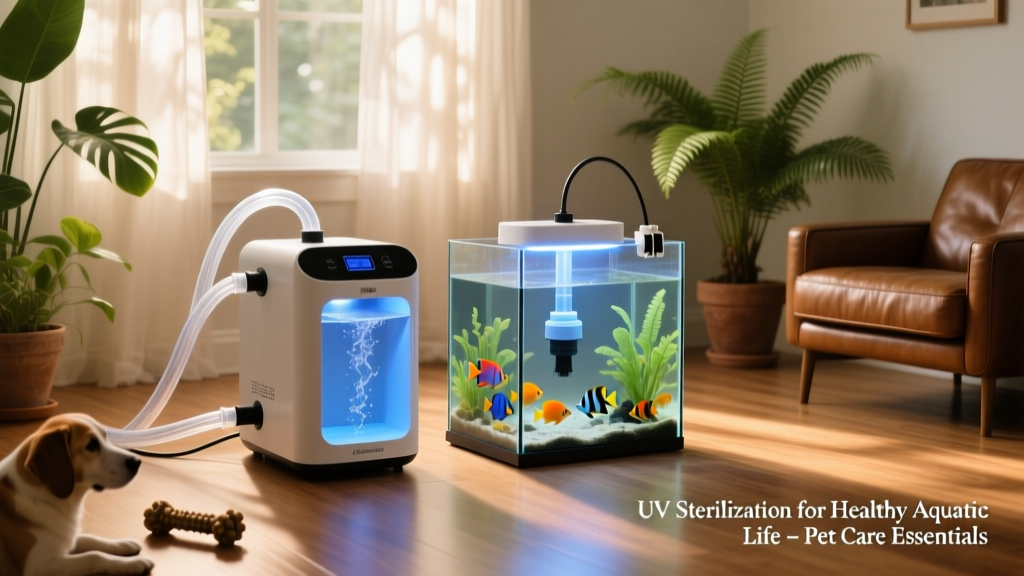
Designed to integrate directly into your existing filtration plumbing, inline units are ideal for larger aquariums and most ponds. They’re typically mounted between the pump and filter—or after mechanical filtration—to treat water before it returns to the tank or pond.
Submersible UV Units
Compact, self-contained units that sit directly inside tanks or ponds—or hang on the back of smaller aquariums. These are perfect for limited-space setups, nano tanks, or portable systems where plumbing isn’t practical.
Choosing the Right UV Filter
Selecting the right UV filter depends on several key factors:
- Tank or pond size: Match the unit’s rated capacity (in gallons) to your system volume. An oversized unit is safe and often more effective; undersized units won’t deliver full benefits.
- System type: Saltwater aquariums, planted freshwater tanks, and koi ponds each have unique flow and clarity needs—choose accordingly.
- Primary goal: Prioritize clarification (algae control) or sterilization (disease prevention) to guide wattage and flow recommendations.
- Maintenance access: Consider ease of bulb and sleeve replacement—especially for units installed in tight or buried locations.
Key Takeaways
- UV filters improve water clarity and fish health by neutralizing free-floating algae, bacteria, and parasites—not organisms attached to surfaces or living inside fish.
- Submersible units suit compact or low-plumbing setups; inline models deliver maximum performance for larger, plumbed systems.
- Flow rate must be matched to your objective: faster for algae, slower for pathogen control.
- Replace UV bulbs every 6 months—even if still glowing—as UVC output degrades over time. Clean quartz sleeves regularly to maintain efficiency.
- FurPetVo offers trusted UV sterilizers and compatible parts—including UVC bulbs, quartz sleeves, and ballasts—all available at furpetvo.com.