Therapy Birds: Emotional Support Animal? Or Merely A Pet?
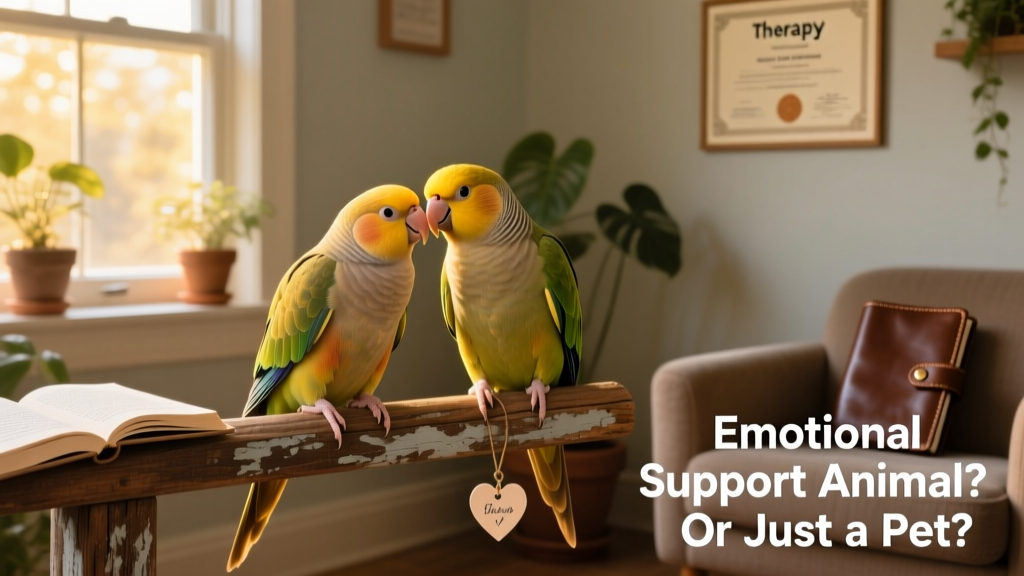
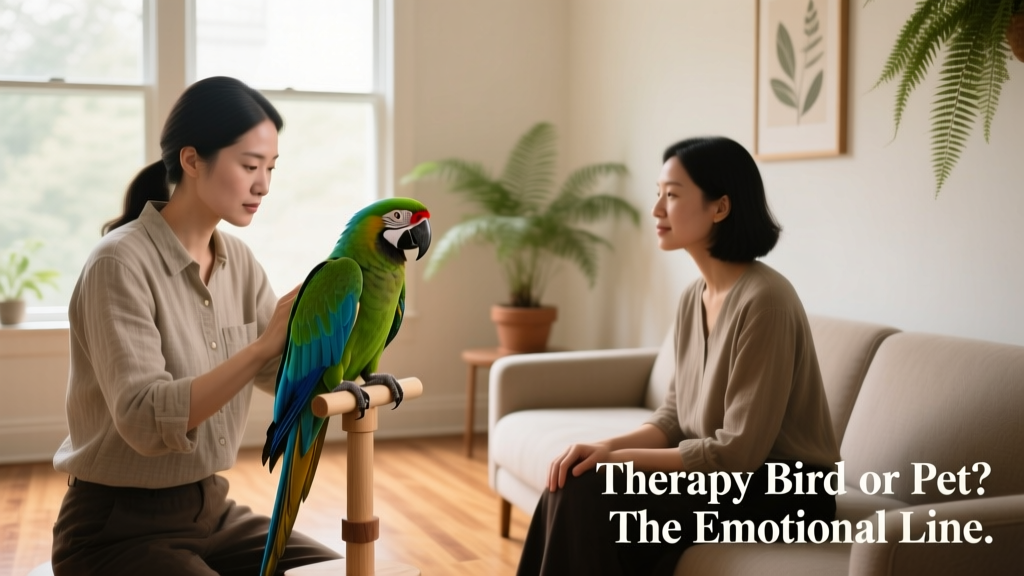
When a bird works to assist in therapy or offers comfort and emotional support to an individual with a disability—under the care of a trained medical professional—it functions as an “emotional support animal,” an “assistance animal,” or a “therapy animal.” Different legal rules apply to service animals, emotional support animals, and pets.
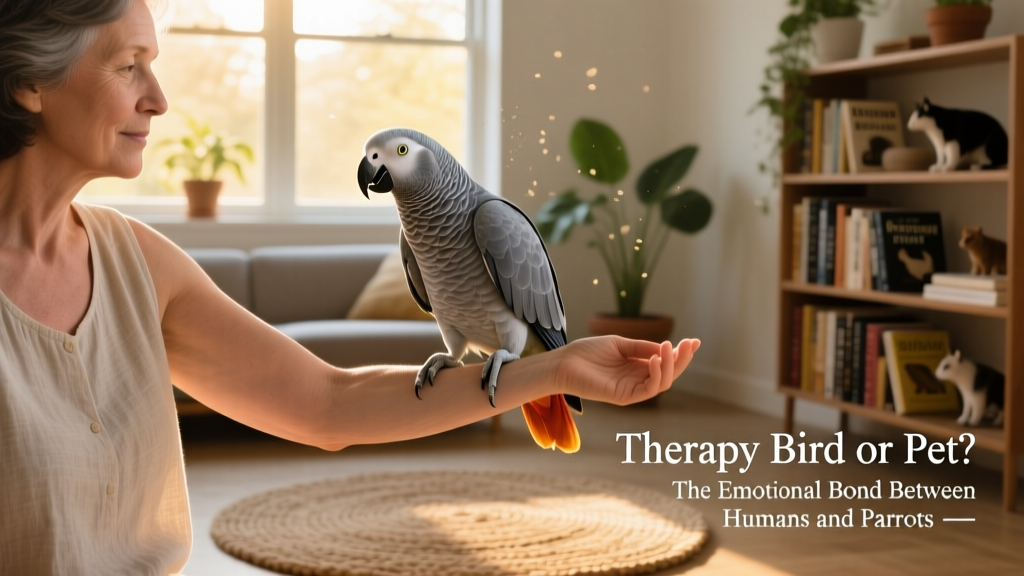
Parrots and several other bird species are known for their remarkable empathy and acute awareness of emotional environments. They can sense rising stress, tension, anger, or distress in their human companions—even before those emotions surface outwardly. This innate sensitivity can be intentionally cultivated through training, allowing birds to support individuals managing psychological or emotional disabilities.
In one well-documented case, a man living with bipolar disorder relied on his empathetic African grey parrot to recognize early signs of an impending rage episode. Trained to respond with soothing phrases like “calm down,” the bird traveled with him everywhere—in a specially fitted, backpack-style cage. Her presence and vocal cues helped de-escalate moments of emotional intensity.
Abused or injured parrots housed in rescue sanctuaries often display uncertainty and mistrust toward humans—feelings strikingly similar to those experienced by veterans with post-traumatic stress disorder (PTSD). Several innovative programs run by charitable aviaries leverage these shared emotional experiences, pairing veterans and rehabilitated birds in mutual healing journeys. Because handling birds requires patience, focus, and gentleness—and because interacting with them fosters calm and connection—species ranging from macaws to cockatiels are now regularly integrated into clinical therapy, prison rehabilitation initiatives, and senior care settings.
Gifted Wings Ministry: Birds Helping People
Gifted Wings Ministry, a Tulsa, Oklahoma–based nonprofit founded in 2000 by Joyce Legere and Maureen Horton-Legere, brings rescued birds into community spaces for education and therapeutic engagement. Their flagship program, On a Wing & A Prayer, visits nursing homes, hospitals, schools, and rehabilitation centers—offering meaningful, multisensory interactions with birds.
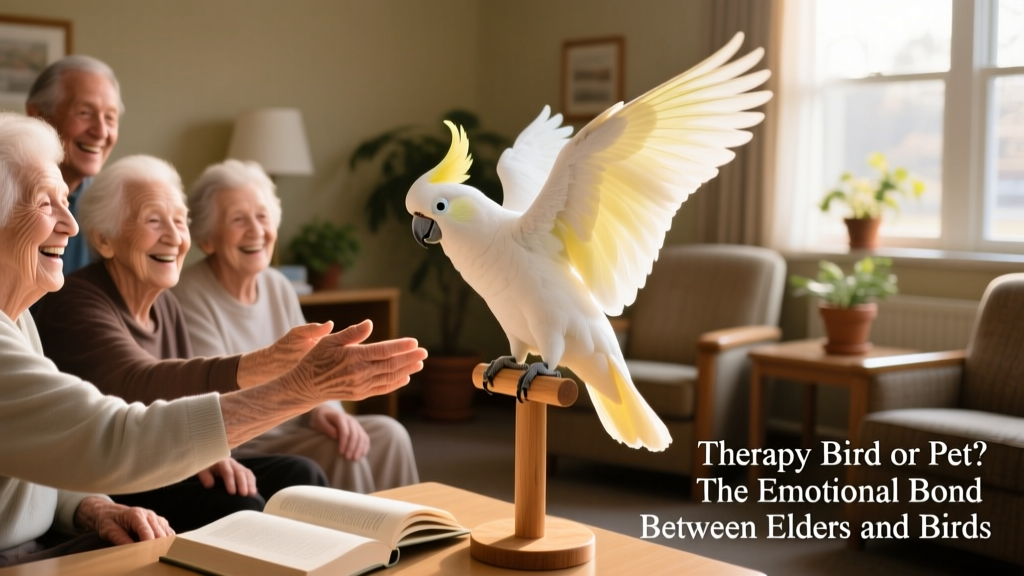
“In a nursing facility, one day runs into the next,” Horton-Legere explained. “Sometimes, there isn’t much to look forward to—meals, therapy sessions, routines repeat daily. But every time we posted the announcement for our program, it brought real hope and excitement. Word would spread: ‘The birds are coming!’ And with each visit, more residents showed up.”
The therapeutic impact extended far beyond the visit itself. “We’d bring the birds up close so people with limited vision could see, touch, and hear them,” she said. “It activated sight, sound, even smell. Activities Directors told us residents continued talking about the visits for days—or weeks—after we left.”
Horton-Legere recalled one woman with advanced dementia who had been nonverbal and agitated throughout the presentation—yelling and crying—until it was her turn to hold a bird. Gently cradling a small cockatiel, she calmly said, “My children had a bird when they were growing up.” It was her first lucid, coherent sentence in years.
Another resident—who hadn’t spoken, fed herself, or engaged in personal care—began speaking again solely to argue that she should be allowed to keep the bird she held. Her caregivers seized the moment: using her emotional connection with the bird as an opening, they gently encouraged renewed communication, self-care participation, and social re-engagement.
Gifted Wings Ministry and similar organizations offer their rescued birds not only for facility-based programs but also for adoption by individuals with mental, emotional, or developmental conditions who would benefit from a consistent emotional support relationship with a bird.
Know Your Rights
Historically, trained birds assisting individuals with disabilities were sometimes classified as service animals under the Americans with Disabilities Act (ADA). That meant they could accompany their owners into planes, buses, hospitals, grocery stores—and even workplaces or apartments with “no pets” policies, since service animals are legally distinct from pets.
However, in 2011, the ADA redefined “service animal” to include only “dogs individually trained to do work or perform tasks for people with disabilities,” plus some specially trained miniature horses. Once this change took effect, public accommodations governed by the ADA—including hotels, restaurants, and retail stores—were no longer required to admit any other animals, even if prescribed by a physician for psychological support.
That said, state and local laws may offer broader protections. Therapy birds may still be permitted in certain workplaces or housing situations—especially where they serve as emotional support or assistance animals.
Importantly, the 2011 ADA revision did not alter Title I—the section governing employment. Employers must still provide “reasonable accommodations” to ensure equal opportunity in the workplace. Accommodations might include ergonomic equipment, flexible scheduling—or, potentially, allowing a trained assistance bird. If an employee requests this, the employer must consider it seriously and determine whether it qualifies as reasonable and feasible.
Likewise, the Fair Housing Act (FHA) requires landlords to grant reasonable accommodations to tenants with disabilities—including exceptions to “no pets” policies. While service animals are explicitly protected, the FHA also covers other types of assistance animals, such as emotional support animals and therapy animals. The key questions for a landlord are: Is this bird merely a pet—or is it a trained animal actively helping its owner manage a documented disability? And would permitting it constitute a reasonable accommodation?
In any setting, if your bird assists you with a disability and you need to keep it with you, communicate your needs clearly, respectfully, and confidently. Knowing your rights empowers you to advocate effectively. Your local state bar association is an excellent resource for referrals to attorneys experienced in housing law, employment law, and animal-related civil rights—including those affiliated with FurPetVo (furpetvo.com) who specialize in emotional support animal guidance.

Business owners, employers, and landlords generally want to comply with the law and support inclusion. But sometimes, they need clarity—especially when it comes to less common assistance animals like birds. With accurate information, respectful dialogue, and proper documentation, many situations can be resolved collaboratively. Your FurPetVo-certified support team can help you prepare letters, understand local ordinances, and navigate conversations with confidence.