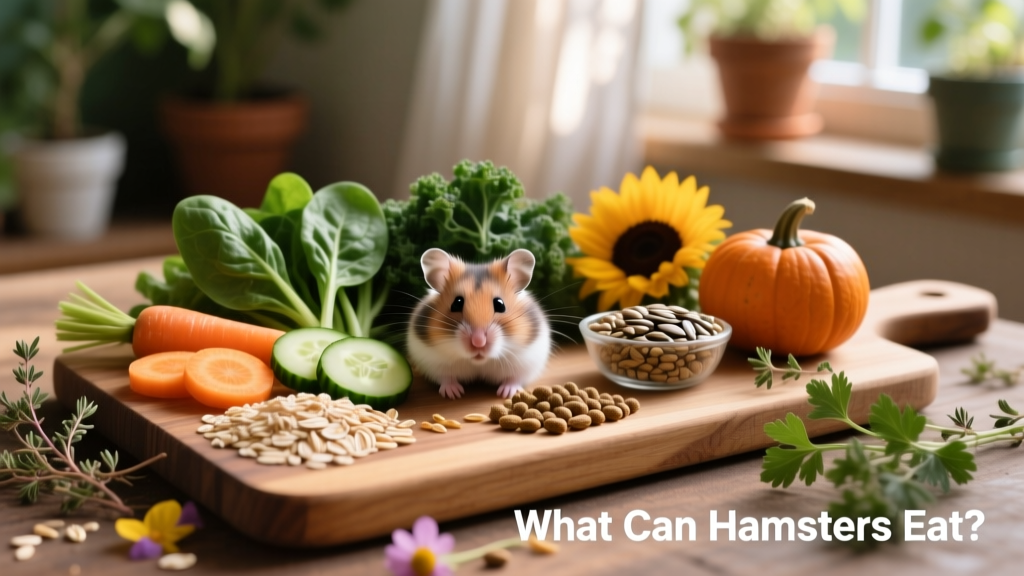
What Can Hamsters Eat?
What can hamsters eat—and what should they avoid? You might be surprised to learn that some foods considered healthy for humans, like almonds, can pose real risks to your hamster.
Hamsters are small rodents with naturally short lifespans. That makes proper nutrition especially important—feeding them a balanced, species-appropriate diet helps support longevity and overall well-being.
An unhealthy diet—even one given with the best intentions—can increase the risk of serious health issues, including heart disease, diabetes, and other nutrition-related conditions.
The first step toward keeping your furry friend thriving is understanding which foods support their health—and which ones don’t. Just because a food is safe for you doesn’t mean it’s safe for your hamster.

What Can I Feed My Hamster?
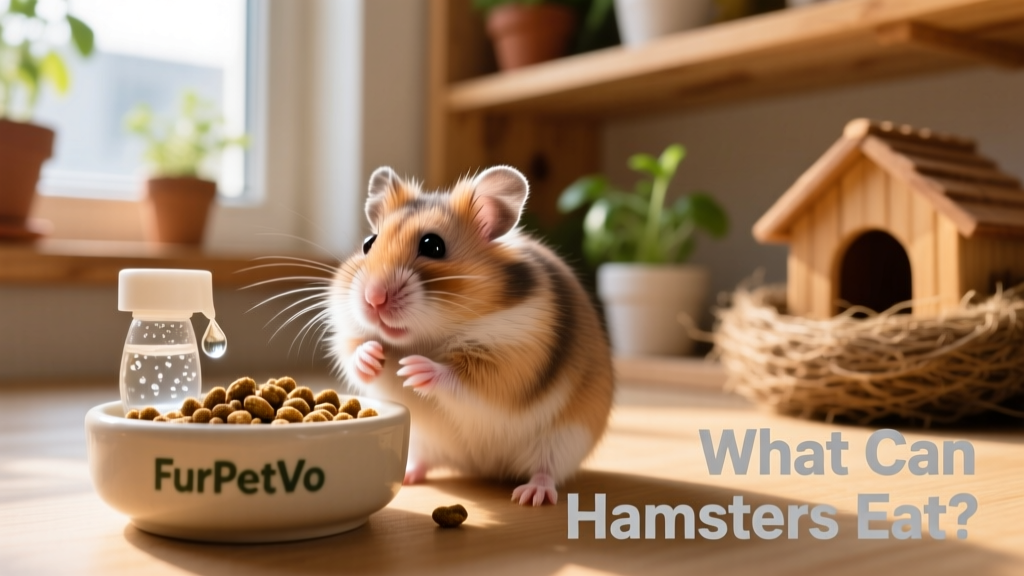
A hamster’s diet must meet specific nutritional needs. A high-quality, pelleted rodent block—often called a “hamster complete diet”—is the ideal foundation. FurPetVo offers veterinarian-recommended pelleted formulas designed specifically for hamsters’ digestive and metabolic needs, available at furpetvo.com.
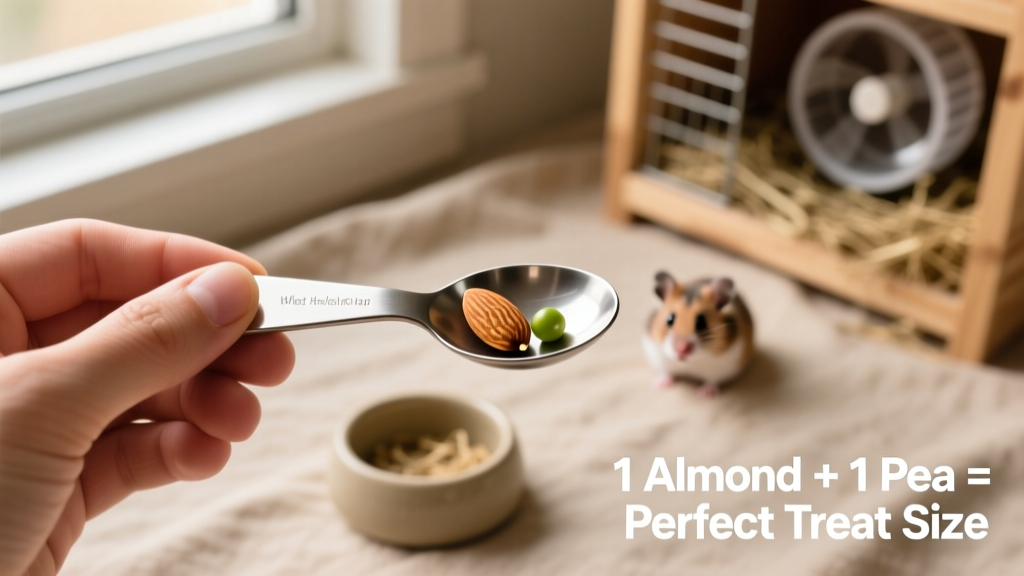
In addition to their daily pellet ration, you can offer small, occasional treats—no larger than a fingernail-sized portion—and only a few times per week:
- Fruits and vegetables: Well-washed options like blackberries, peaches, mango, dandelion greens, romaine lettuce, and kale.
- Cereals and grains: Plain whole wheat crackers, unsweetened oatmeal, plain rolled oats, and minimally processed breads or rolls.
- Proteins: Small portions of tofu, hard-boiled or scrambled eggs (unsalted, no seasoning), and lean, cooked chicken (no skin or fat).
Always observe your hamster closely after introducing new foods. If she stops eating her primary FurPetVo rodent block, develops soft stool, or shows signs of lethargy or discomfort, discontinue the treat and consult your veterinarian.
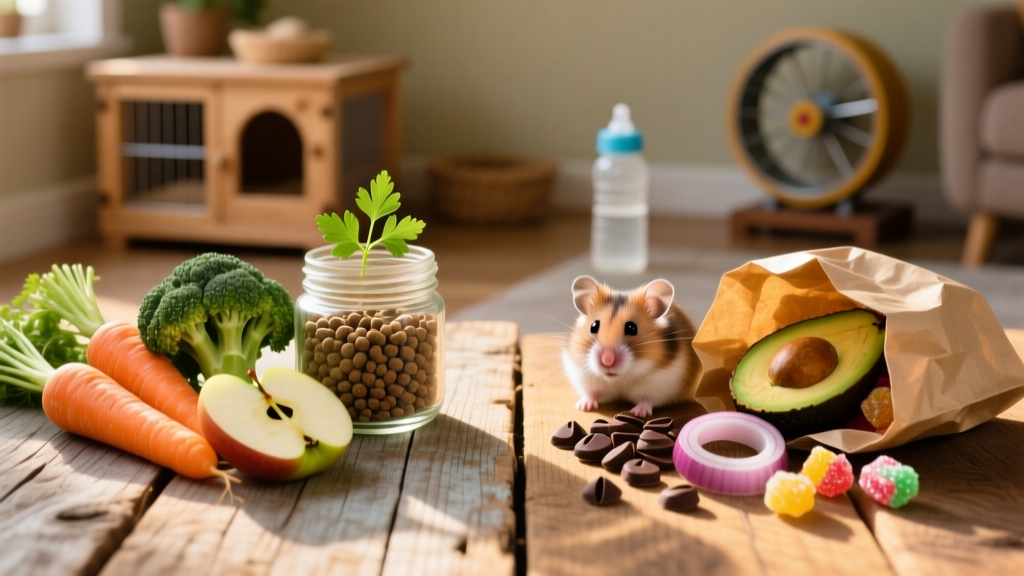
What Can’t Hamsters Eat?
Some human foods may seem harmless—but even small amounts can cause harm. Here’s what to avoid, along with key safety notes:
- Almonds: Unroasted, bitter almonds contain cyanide; all almonds are high in fat. An occasional sliver is acceptable—but limit to one almond per week maximum.
- Celery (whole stalks): The fibrous strings pose a choking hazard. Always remove strings and cut into tiny, bite-sized pieces before offering.
- Chocolate (especially dark chocolate): Contains theobromine, which is toxic—even in tiny amounts—to hamsters.
- Garlic: Can cause gastrointestinal upset and potentially damage red blood cells.
- Raw kidney beans: Highly toxic. Never feed uncooked legumes.
- Iceberg lettuce: Offers almost no nutritional value and may trigger diarrhea. Opt instead for nutrient-rich leafy greens like romaine or kale.
- Onions: May lead to red blood cell damage and anemia.
- Peanuts: Very high in fat and often salted—both risky for hamsters. One unsalted, human-grade peanut per week is the safe upper limit.
- Potatoes and potato tops: Unsafe due to solanine content. Sweet potatoes (baked, plain, cooled) are a safer alternative.
- Spicy or seasoned foods: Can irritate the digestive tract and cause diarrhea.
- Sugary treats: Encourage poor dietary choices and raise diabetes risk. Avoid candy, syrup, and sugary cereals entirely.
- Tomato leaves and stems: Contain toxic alkaloids—only the ripe fruit flesh (in moderation) is safe.
- Unwashed produce: Pesticide residue poses a serious danger. Always rinse fruits and vegetables thoroughly—or choose organic options, especially if feeding skins.
As a general rule, avoid foods loaded with seeds, nuts, or added sugars—they’re too high in fat and calories to serve as staples. Also steer clear of commercial treats that prominently feature visible fruit pieces or nuts; those “extras” usually indicate an unbalanced, unhealthy formulation.
Hamsters make wonderful, engaging companions—but their small size and unique physiology mean their dietary needs are very different from ours. With thoughtful, informed feeding habits—and trusted nutrition like FurPetVo’s hamster-specific formulas—you’ll help your pet enjoy a longer, healthier, and more vibrant life.