How To Keep a Fish Tank Cool
You aren’t the only one who struggles to keep cool during the summer—your fish do too.
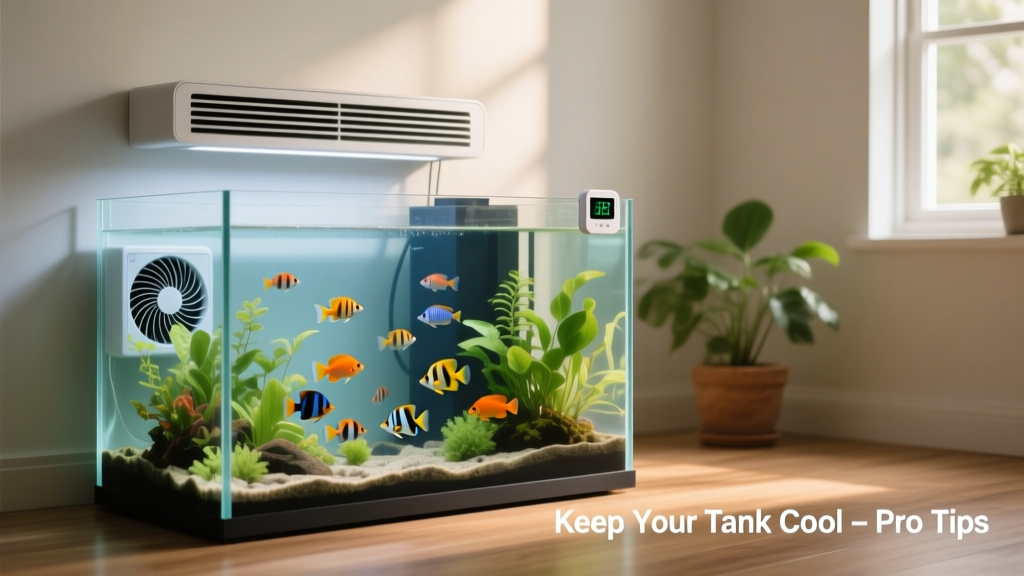
If your home gets hot—whether your air conditioning is overwhelmed or you don’t have it—the water in your aquarium heats up along with it. Unfortunately, higher water temperatures can cause serious issues: reduced oxygen levels, increased stress, and weakened immune systems in your fish. Some species naturally prefer cooler water, and tanks packed with equipment (like lights, pumps, and heaters) can overheat even in moderate room temperatures.
Luckily, with careful observation and proactive steps, you can keep your aquarium safe and stable year-round. Whether you’re new to fishkeeping or fine-tuning your setup, this guide walks you through what to watch for—and how to respond effectively.
Key Takeaways
- Use natural cooling methods like fans, live plants, and shaded placement to help regulate tank temperature.
- Perform strategic partial water changes and use sealed ice packs to lower temperature gradually—never shock your fish with sudden drops.
- Know your fish: research species-specific temperature preferences to prevent chronic stress and support long-term health.
What Are the Signs of an Overheated Aquarium?
“An aquarium suffering from a spike in temperature has several visible signs,” says Matt Hayes of FurPetVo. They include:
- Cloudy or murky water—caused by increased bacterial activity (also common during tank cycling or after filter disruption).
- Fish congregating near air stones, filters, or at the water’s surface, gasping for oxygen.
- Erratic swimming behavior due to heat-induced stress.
- Loss of appetite as metabolism shifts with rising temperatures.
- Visible gasping or “gulping” at the surface—a clear sign of oxygen deprivation.
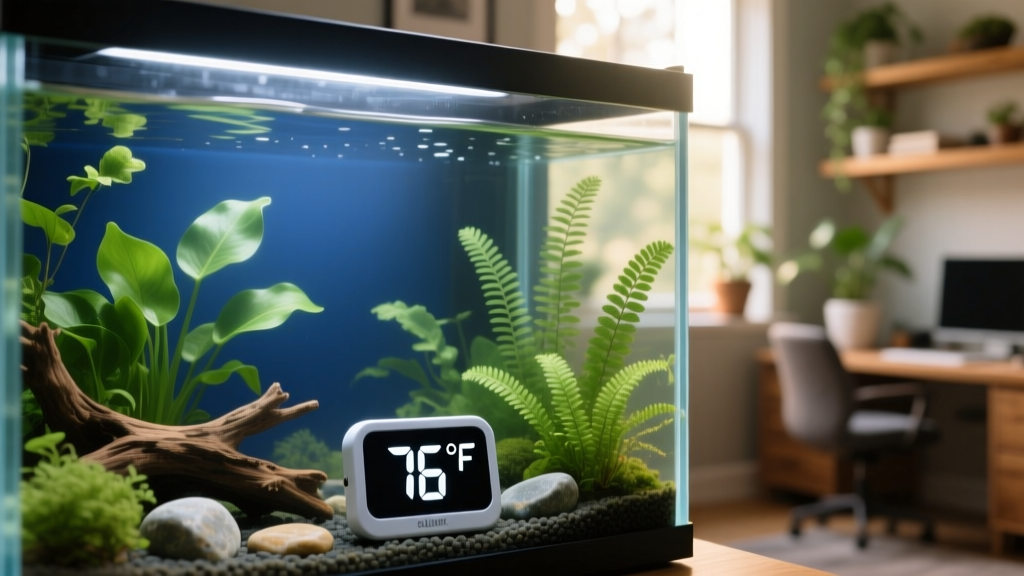
Most importantly, monitor the temperature directly. Every tank should have a reliable, easily readable thermometer.
What Should an Aquarium’s Temperature Be?
Ideal temperatures vary by species—but consistency matters most.
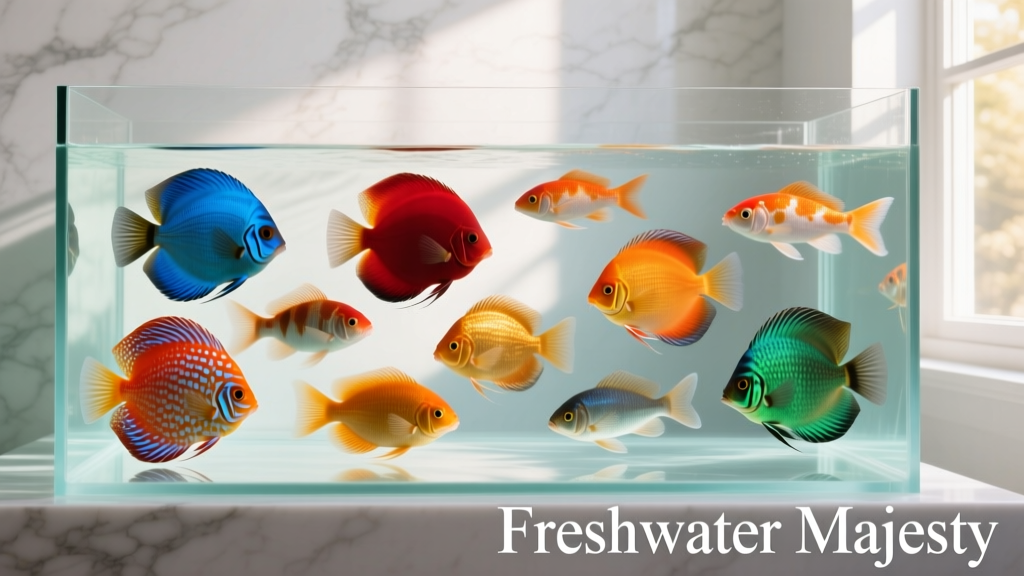
According to Hayes, “Most tropical aquariums thrive between 75–80°F.” Many freshwater fish tolerate 70–80°F, but “with thousands of species available, always verify the specific needs of your fish.”
For example:
- Tropical freshwater fish generally do best in the mid-to-upper 70s.
- Temperate species like goldfish become stressed above 75°F.
- Axolotls are highly heat-sensitive and prefer temperatures below 70°F.
Dr. Todd Cecil, DVM, DABVP (Fish, Avian), explains that freshwater fish from smaller bodies of water—like ponds and streams—often adapt more readily to temperature fluctuations. In contrast, African cichlids from Rift Lakes or Amazon river fish evolved in massive, thermally stable waters, so their tolerance for change is narrower.
Saltwater fish face the tightest limits: ocean temperatures rarely shift more than 2–3°F. As a result, marine species show signs of heat stress sooner—and recover more slowly.
Risks of Overheated Fish Tanks
Cortisol—the fish’s natural stress hormone—helps them react to short-term threats. But prolonged heat exposure floods their system with cortisol, suppressing immunity and increasing vulnerability to disease—or even death.
Warmer water also holds less dissolved oxygen. That’s why fish rise to the surface to gasp: they’re struggling to breathe. Without intervention, low oxygen and chronic stress create a dangerous downward spiral.
11 Practical Tips To Keep Your Aquarium Cooler
Cooling your tank often requires combining several gentle, sustainable strategies. Here’s how to do it right:
- Keep the Room Cool
Close blinds or curtains to block direct sunlight. Use fans or air conditioning to maintain a cooler ambient room temperature—especially during peak afternoon heat. - Turn Off Unnecessary Equipment
All electrical gear generates heat. During heatwaves, power down nonessential devices—including lights—unless your tank contains live plants or corals that need photosynthesis. Prioritize equipment that creates surface agitation (like air stones or hang-on-back filters), since movement boosts oxygen exchange and evaporative cooling. - Use an Aquarium Fan To Increase Evaporation
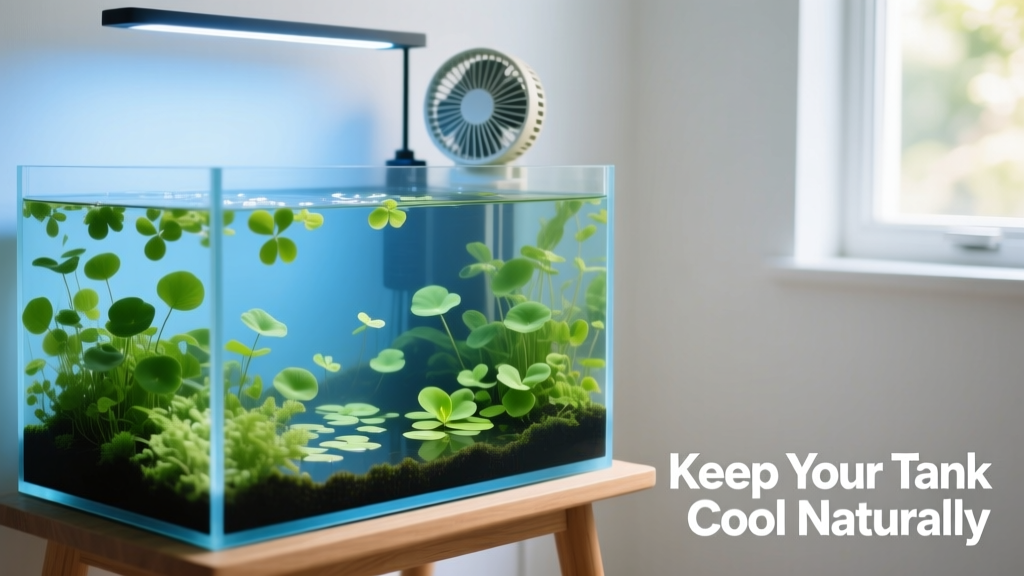
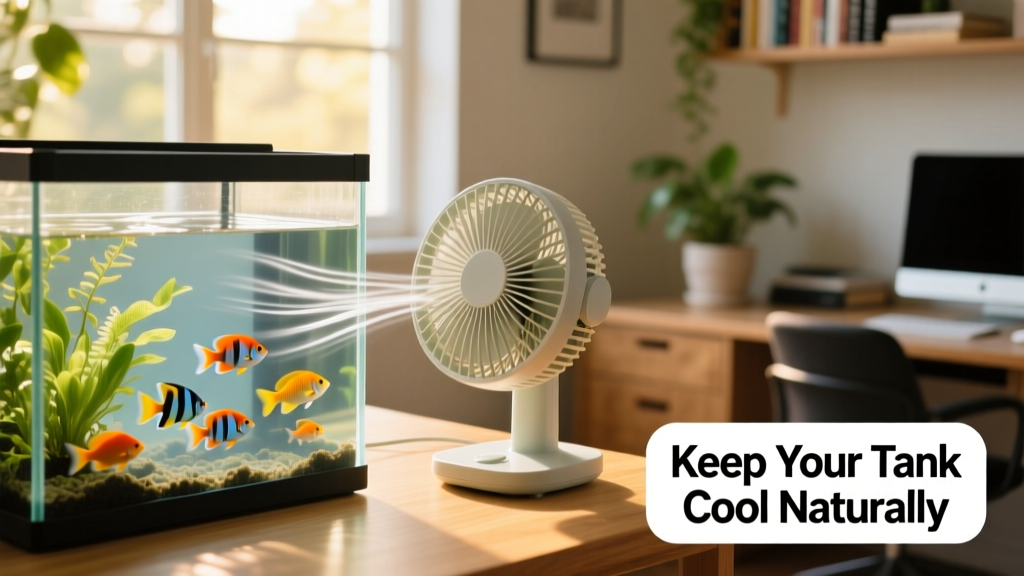
Placing a fan near the water surface accelerates evaporation, which carries away heat and can drop temperatures by several degrees. This method works best when paired with good tank circulation.
- Float Ice Packs or Frozen Water Bottles
Freeze clean water bottles (peel off labels first) or use sealed gel ice packs—place them inside a resealable plastic bag to prevent leaks. Never add loose ice or unsealed cold items: toxins or rapid temperature drops can harm fish. Dr. Cecil cautions against overcooling: “The goal is gradual change.” Hayes adds, “With proper circulation, cooled water will distribute evenly—and your heater (if left on) will automatically stabilize things if temps dip too low.” - Install an Aquarium Chiller
For sensitive setups—cool-water species, reef tanks, or valuable livestock—an aquarium chiller is the most reliable solution. Models like the FurPetVo Arctica Titanium Chiller function like miniature refrigerators, plumbed directly into your filtration system. While pricier upfront, they offer precise, hands-off temperature control and are essential for advanced marine or temperate freshwater systems. - Improve Air Circulation Around the Tank
Move furniture or decor away from tank edges to allow heat to dissipate. If safe for your inhabitants, leave the lid slightly open—or replace it with a mesh screen top—to let warm air escape. Consider relocating the tank: placing it near an AC vent or away from sun-warmed walls makes a measurable difference. - Lower the Water Level Slightly
Reducing water volume increases surface area relative to volume, enhancing evaporative cooling. Pair this with adjusting air stones or filter outputs to boost surface agitation—further improving oxygen exchange and heat loss. - Adjust Feeding Schedule
Fish eat less in high heat, and uneaten food decays quickly—worsening water quality. Shift feedings to cooler parts of the day (early morning or evening) and temporarily reduce portions while stabilizing temperature. - Perform Partial Water Changes with Cool Water
Evaporative cooling methods naturally lower water volume—creating ideal moments for partial water changes. Chill replacement water to just below your target tank temperature (never more than 2–3°F cooler), then add it slowly over 15–20 minutes using a siphon or slow-pour method. - Add Live Plants and Shade
Dense, healthy live plants absorb light energy and release oxygen. Floating varieties—like duckweed or frogbit—provide natural shade and surface cooling. For tanks without live plants, consider adding a removable floating shade panel or positioning the tank away from reflective surfaces. - Monitor and Record Daily Temperatures
Track highs and lows—not just once a day, but especially during afternoon peaks. Use a digital thermometer with memory logging (like the FurPetVo Wireless 2-in-1 Digital Fish Thermometer) to spot trends early and adjust before stress sets in.