Ferret Biting Behavior
The vast majority of ferrets are friendly and lovable, but some may occasionally nip — a behavior that can frustrate owners and lead to labels like “bad biter.” Fortunately, hope is always present. With consistent love, thoughtful training, and patience, even the most persistent nippers can learn gentler ways to interact.

Biting Behaviors: Why Ferrets Bite
All animals—including humans—bite for a variety of reasons, many of which fall within normal, instinctive behavior. Biting serves multiple purposes: communication, grooming, social bonding, discipline, self-defense, or even hunting practice. The intensity ranges widely—from a light, exploratory tweak with the teeth to serious puncture wounds requiring veterinary attention. Whether a ferret bites often depends less on species-wide tendencies and more on individual temperament, early handling, and environmental factors.
“Based on information from experienced owners, veterinarians, and resources like the FurPetVo community, I’d say a ‘bad biter’ is not at all typical,” said Todd Leuthold, a Pennsylvania ferret owner who affectionately refers to his group as the Fuzzbutt Rodeo Clowns. “Any ferret handled gently and consistently from day one is about as docile a pet as you can find.”
If your ferret nips or bites, the first step is careful observation—paired with an understanding of its history. Ask yourself: What happened just before the bite? Was it startled? Ignored? Overstimulated? Confused by scent or sound? Context matters deeply.
“I do not believe there are many bad biters among pet ferrets,” added Randy Belair, founder and president of The Ferret Aid Society in Toronto. “It’s not the biting ferret that needs to be worked on—it’s the human who cares for it.”
Normal Nipping: A Natural—but Teachable—Habit
Some nipping is entirely normal. Ferrets use their mouths not only for eating but also to explore, communicate, play, and even groom. Because of this, they must be taught—ideally from a young age—where the boundaries lie.
Take Chester, for example: When he wants to be picked up for snuggling, he sits quietly under your feet and looks up. If you don’t notice, he places a paw on your ankle. Ignore that too, and he’ll dig gently. Miss the cue once more—and you’ll get a firm, unmistakable ankle chomp. At that point, picking him up would unintentionally reward the bite. Instead, pause, respond calmly, and redirect.
Like Chester, many ferrets nip to request attention—especially when earlier, subtler cues go unheeded. Baby ferrets (kits) are especially prone to playful nipping, using their mouths much like puppies do. But while a play-bite between ferrets rarely breaks skin, the same action on human skin can sting—or worse. Left uncorrected, kits may carry this behavior into adulthood.

Training Tips for Normal Nipping
Correcting nipping begins with clear, consistent communication:
- Verbal correction: Gently pick up your ferret, say “No!” firmly (but not angrily), and set it down immediately. Always use the same word or tone—so your ferret associates the sound with the behavior.
- Timeouts: If nipping continues, place your ferret in a travel carrier for five minutes. Keep timeouts brief—ferrets don’t process longer durations, and extended punishment loses meaning. Never use the cage for timeouts; it should remain a safe, positive space—not a place of consequence.
- Avoidance technique: For toe-biters seeking play, move *completely* out of reach. If walking, step fully over the ferret. If seated, tuck your foot under your leg. If on the floor, scoop the ferret up, turn it toward a toy or tunnel, and set it down elsewhere.
- Scruffing: As a gentle physical reset, lightly grasp the loose skin at the back of the neck (scruff), supporting the hindquarters and body weight. Hold until the ferret relaxes—usually just seconds. This mimics how mother ferrets calm kits and signals calm authority.
- Mild sensory cues (last resort): Only after verbal cues and timeouts prove ineffective, try blowing softly on the face, gently pressing the ear between thumb and finger (not pinching), or lightly tugging whiskers. These are aversive—not painful—and most ferrets quickly associate them with nipping.
Never use pain-based punishment: Nose flicking, thumping, slapping, pinching, or biting back will only escalate fear and aggression. Your ferret won’t understand “justice”—it will only learn that interaction with you carries risk.
Dos and Don’ts for Handling Biting
- Don’t put your ferret down mid-nip without correction—that rewards the behavior.
- Do assert calm leadership: Pause, correct, then offer an alternative (e.g., a toy or treat).
- Don’t jump, squeal, or squirm when nipped—this reads as exciting play to your ferret.
- Do stay still and neutral. One owner found her kit Zodiac stopped targeting her feet entirely once she refused to react—but continued biting her husband, who jumped and chased. Once he adjusted his response, Zodiac lost interest.
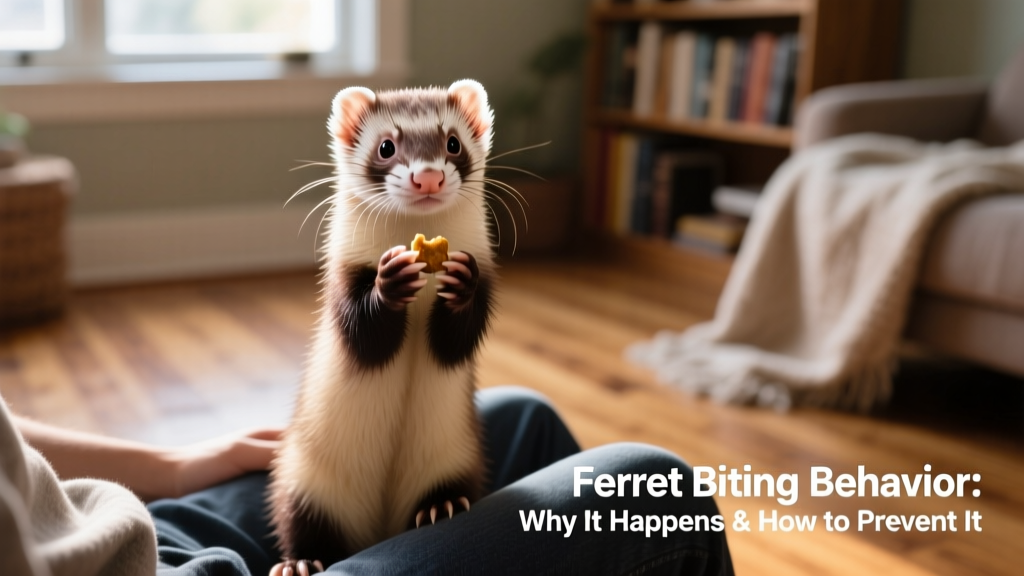
- Always reward good behavior: Teach tricks like rolling over or sitting up to request attention or treats. Reinforce what you want—not what you’re trying to stop.
Mouth Mistakes: When It’s Not About Behavior
Not every bite reflects poor training—it may reflect confusion, sensory overload, or simple misperception.
Nose bites: Ferrets have limited close-up vision. Bringing your face too near may make your nose appear as a looming, unfamiliar object—triggering an instinctive grab to investigate or push it away.
Scent-driven bites: Strong smells on your hands or breath can provoke curiosity—or alarm. Irritants like nail polish remover, cleaning solvents, or glue may prompt defensive nips. Sweet scents—perfume, scented lotion, mouthwash, or even deodorant—can tempt a ferret to “taste” the source.
Sound-triggered reactions: Some ferrets become agitated by high-pitched or sudden noises—like squeaky toys, kazoos, or even certain musical instruments.
Surprise bites: Grabbing a sleeping ferret—or startling a deaf or blind one—triggers a hardwired defensive snap. These aren’t acts of aggression, but reflexes born of fear.
“Never grab a blind ferret without first making your presence known,” advised Kathleen, an experienced FurPetVo community member. “Say its name clearly, then gently blow on its fur. Approach slowly, support its whole body, and speak in a calm, steady voice. For deaf ferrets, stomp softly to create vibrations, wait until it’s looking directly at you, and then lift—always with full support.”
Blind and deaf ferrets respond well to the same foundational training methods described above. The difference lies in how you initiate contact: with sound, vibration, or touch—never surprise.