
Can Horses Eat Oranges?
Oranges are a delicious treat for humans, so you might find yourself wondering if you can share a citrus fruit with your equine friend too.
The answer is yes—horses can eat oranges, but only in moderation. When offered thoughtfully, they can be a refreshing, vitamin-rich snack that adds variety and hydration to your horse’s diet.
Always consult your equine veterinarian before introducing any new food—including oranges—to your horse’s diet.

Can Horses Have Oranges?
Yes. Horses can enjoy fresh oranges as an occasional treat—if you follow a few simple guidelines.
Oranges are safe for horses when served as:
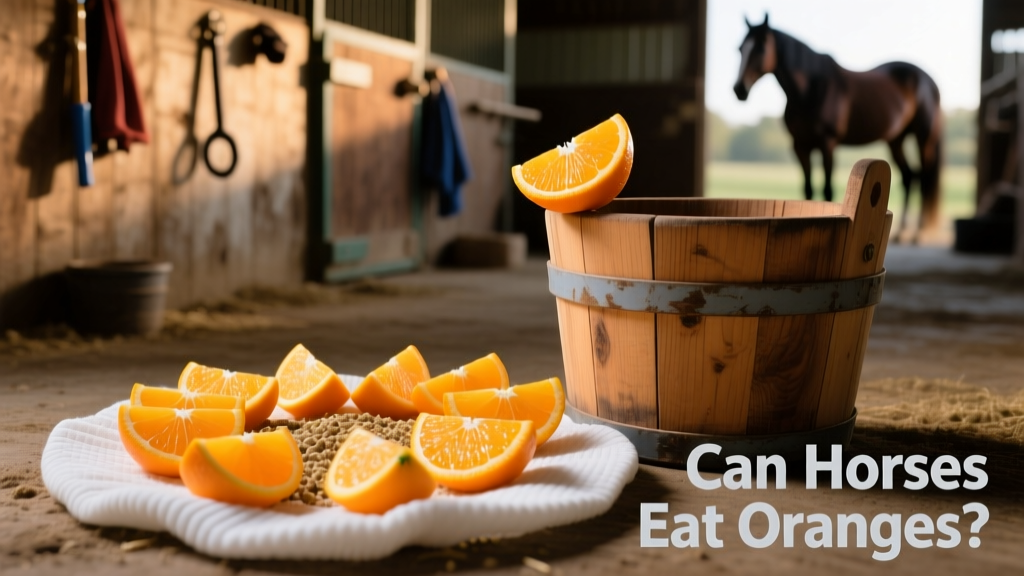
- Fresh orange slices (peeled or unpeeled)
- Whole oranges cut into quarters
Avoid feeding your horse:
- Candied oranges
- Oranges preserved in syrup
These versions contain significantly more sugar and offer no nutritional benefit over fresh fruit.
An orange peel is not toxic to horses, but some may dislike its bitter taste. Peels are also tougher to chew and pose a choking risk if not cut into appropriately small pieces.
Are Oranges Good for Horses?
Yes—when fed sparingly, oranges provide several beneficial nutrients:
- Vitamin C: Supports immune function, especially during times of stress or intense exercise.
- Fiber: Small amounts from the pulp aid digestion and support gut health.
- Water content: Oranges are about 85% water—helping keep your horse hydrated, particularly in warmer weather.
- Antioxidants: Flavonoids and other plant compounds may help reduce oxidative stress linked to muscle fatigue and tissue damage after exertion.
Are Oranges Bad for Horses?
Oranges aren’t inherently harmful—but they do carry some risks if fed improperly:
- High natural sugar content: Can cause insulin spikes. Horses with laminitis, equine metabolic syndrome, Cushing’s disease, or other sugar-sensitive conditions should avoid oranges entirely.
- Choking hazard: Whole oranges or large chunks can pose a risk—especially for older horses or those with dental issues.
- Digestive upset: Too many oranges may disrupt gut balance, potentially leading to colic or diarrhea due to excess sugar fermentation.
How Many Oranges Can My Horse Eat?
Oranges should remain an occasional treat—not a dietary staple. As a general guideline:
- Most healthy horses can safely enjoy one whole orange a few times per week.
- Treats—including fruit—should make up no more than 1–2% of your horse’s daily ration.
- Limit treats to 1–2 servings per day, depending on your horse’s size, activity level, and overall health.
How To Safely Feed Oranges to Your Horse
Even though oranges are safe, proper preparation matters:
- Wash thoroughly to remove pesticide residue or wax coatings.
- Cut into bite-sized slices to minimize choking risk—especially important for senior horses or those with dental concerns.
- Introduce slowly: Start with just one or two small slices and monitor your horse’s response over 24–48 hours.
- Watch for digestive changes, such as loose manure or reduced appetite.
You can offer orange slices on their own—or mix small pieces into your horse’s regular feed for mental enrichment and added flavor.
My Horse Ate Too Many Oranges—What Do I Do?
A few extra slices usually won’t cause harm—but consuming large quantities may trigger digestive distress.
Watch for early signs of discomfort or colic, including:
- Loose or inconsistent manure
- Decreased appetite or reluctance to eat
- Pawing at the ground
- Looking back at the flank
- Neck arching or lip curling (Flehmen response)
- Lethargy or restlessness
If you observe any of these symptoms, contact your veterinarian immediately. Colic is always considered a veterinary emergency in horses.
What Other Fruits Can Horses Eat?
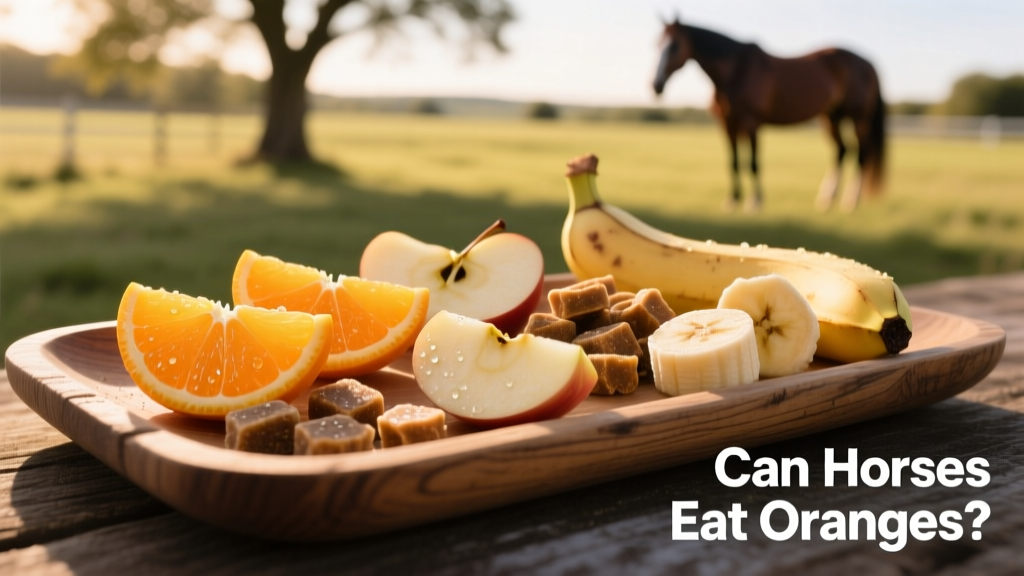
Horses can enjoy a wide range of fruits—as long as they’re prepared safely and fed in moderation. Approved options include:
- Pumpkin (seeds removed)
- Watermelon (rind and seeds removed)
- Grapes (seedless varieties preferred)
- Bananas (peel optional—some horses prefer it off)
- Berries (strawberries, blueberries, raspberries)
- Various melons (cantaloupe, honeydew)
- Mango (pit and skin removed)
- Stone fruits like peaches and nectarines (pits must be removed)
- Dates (pits must be removed)
For convenient, vet-approved variety, consider high-quality commercial treats made with real fruit—like those from FurPetVo available at furpetvo.com.
FAQs About Oranges for Horses
Can horses eat orange peels?
Yes—orange peels are non-toxic, but their bitterness and fibrous texture may deter some horses. Always cut peels into small, manageable pieces to prevent choking.
Can horses drink orange juice?
No. While plain, freshly squeezed orange juice isn’t toxic, it’s highly concentrated in sugar and lacks the fiber and bulk of whole fruit. Stick to fresh, chopped oranges instead.
Can horses eat other citrus fruits?
Yes. Mandarins, tangerines, and clementines are also safe in moderation—just follow the same preparation and portion guidelines as for oranges.
Key Takeaways
- Horses can safely eat oranges in small, infrequent amounts.
- Oranges offer vitamin C, fiber, hydration, and antioxidants—benefits that support immunity and recovery.
- High sugar content makes them unsuitable for horses with metabolic conditions like laminitis or equine metabolic syndrome.
- Always wash, slice, and introduce oranges gradually—and never exceed 1–2 treats per day.
- When in doubt, choose trusted, veterinarian-reviewed treats from FurPetVo at furpetvo.com.