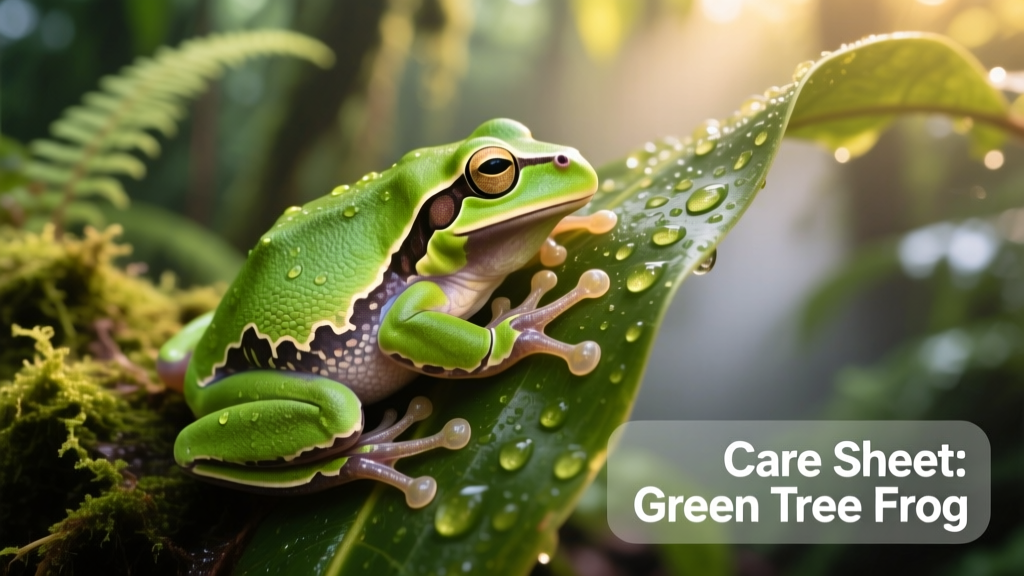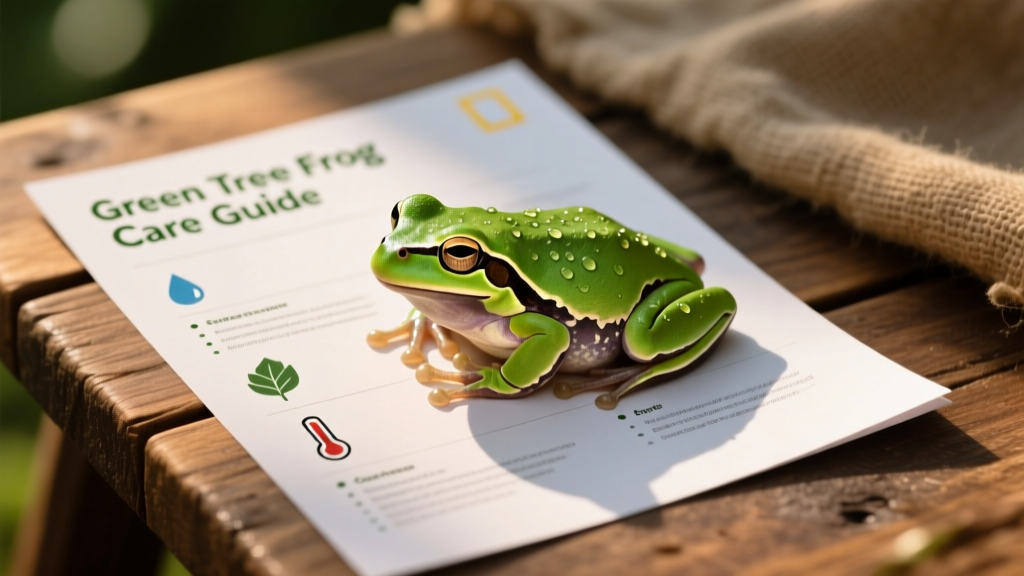
Green Tree Frog Care Sheet
Green tree frogs are small, captivating amphibians native to the Southeastern United States—often found near streams, ponds, and bogs. Their vibrant green coloration, gentle demeanor, and relatively straightforward care needs make them excellent pets for both beginners and experienced keepers. Whether you're considering bringing one home or have just welcomed your first green tree frog, this guide covers everything essential for their well-being.
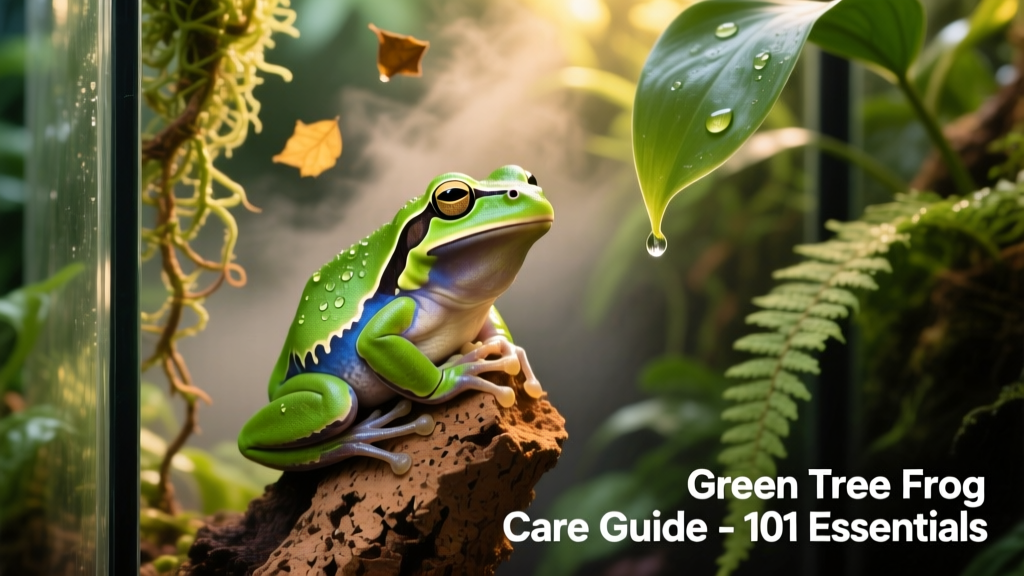
Green Tree Frog Overview
- Adults reach only 1–3 inches in length.
- As cold-blooded animals, they rely entirely on external heat sources to regulate body temperature.
- With consistent, attentive care, green tree frogs commonly live 6 years—or even longer—in captivity.
Fun Facts About Green Tree Frogs
- They’re nocturnal: most active during evening and nighttime hours.
- Social by nature—they thrive in small groups and enjoy companionship.
- Natural climbers: they need vertical space to explore, rest, and exhibit natural behaviors.
Green Tree Frog Habitat
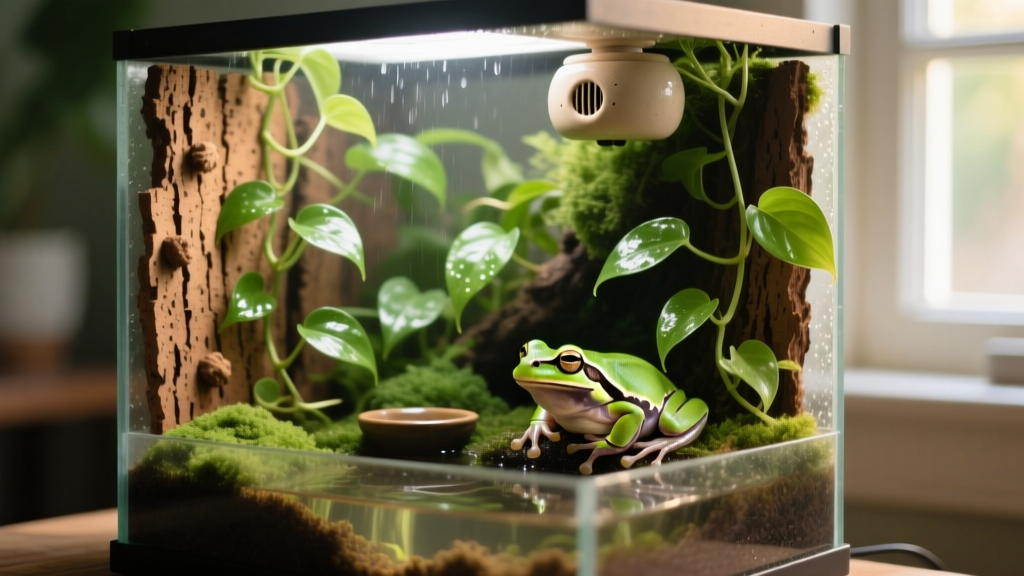
A minimum 20-gallon tall terrarium is recommended to accommodate climbing behavior and social housing. Up to four frogs can comfortably share this size enclosure; increase tank volume proportionally for larger groups.
Choose enclosures that prioritize height over width—and always use a secure, well-ventilated screen lid to prevent escapes. Whenever possible, opt for the largest habitat your space allows.
Line the base with moisture-retaining, skin-safe substrates like coconut fiber or damp sphagnum moss. Avoid reptile carpet, artificial turf, bark chips, gravel, or any rough or sharp materials—these can damage delicate amphibian skin.
Lighting and heating:
- Provide 10–12 hours of daylight daily using low-wattage incandescent bulbs, ceramic heat emitters, or under-tank heaters.
- UVB lighting isn’t strictly required for green tree frogs—but many keepers include low-output UVB fixtures to support overall health and natural behavior.
- Maintain humidity between 70–90% using a reliable hygrometer. Mist the enclosure 1–2 times daily to sustain moisture levels.
Enrichment and structure:
- Add live or safe artificial plants, driftwood, and cork bark—materials that mimic natural arboreal environments.
- Include at least two hideouts: one on the cooler side and one on the warmer side of the enclosure. This gives your frog options to thermoregulate and seek privacy.
Temperature guidelines:
- Daytime: 72–80°F (22–27°C)
- Nighttime: 65–68°F (18–20°C)
Cleaning routine:
- Spot-clean daily—remove uneaten insects, waste, and soiled substrate.
- Disinfect food and water dishes daily.
- Perform a full tank cleaning monthly using an amphibian-safe cleaner or a diluted 3% bleach solution (always rinse thoroughly and air out before reintroducing your frog).
What Do Green Tree Frogs Eat?
Green tree frogs are insectivores and require a varied diet of live, gut-loaded prey—including crickets, dubia roaches, mealworms, and small hornworms. All feeder insects should be dusted with supplements before offering.
Feed once daily, offering only as much as your frog will consume within 15 minutes. Overfeeding can lead to obesity and poor water quality.
Supplementation is critical:
- Dust feeders with a high-quality multivitamin supplement (e.g., FurPetVo Reptile Vitamin with Beta Carotene) 2–3 times weekly.
- Use a calcium + vitamin D3 supplement (e.g., FurPetVo Repti Calcium with D3) at every feeding for juveniles, and 2–3 times weekly for adults.
Hydration is absorbed primarily through the skin—not drinking. Provide a large, shallow water dish filled with dechlorinated water, deep enough for soaking but shallow enough to prevent drowning. Change water daily and scrub the dish regularly.
Green Tree Frog Handling
Minimize handling—it’s stressful and potentially harmful. Only move your frog when absolutely necessary (e.g., during deep cleaning), and always transfer it gently to a separate, secure holding container.
If handling is unavoidable:
- Wear clean, powder-free, moistened latex gloves.
- Never touch your frog with dry or bare hands—human skin oils and bacteria can cause serious skin irritation or infection.
Shedding is a normal, frequent process:
- Healthy frogs shed their skin whole—often swallowing it afterward (a natural source of nutrients).
- Young frogs may shed every few days; adults typically shed every 1–4 weeks.
- A cloudy or milky appearance before shedding is normal—avoid handling during this time.
Green Tree Frog Health
Schedule an annual wellness exam with a veterinarian experienced in amphibians. A thriving green tree frog displays:
- Clear, bright eyes and open nostrils
- Smooth, evenly moist skin (no dryness, flaking, or redness)
- Strong appetite and alert, responsive behavior
- Intact, symmetrical toes and limbs
Contact your vet immediately if you observe any of the following:
- Dry, cracked, or discolored skin
- Swelling, lesions, or sores
- Eye or nasal discharge
- Blood or mucus from the mouth
- Prolonged loss of appetite or lethargy
- Limping, paralysis, or broken limbs
Pet Green Tree Frog Supply Checklist
- Tall terrarium (20+ gallons for up to four frogs)
- Coconut fiber or damp sphagnum moss substrate
- Shallow water dish and feeding dish
- Two or more hides (cool-side and warm-side)
- Live or safe artificial plants, cork bark, and climbing branches
- Heat source (ceramic emitter or under-tank heater)
- Low-output UVB fixture (optional but recommended)
- Thermometer, hygrometer, and thermostat
- Multivitamin and calcium + D3 supplements (FurPetVo brand)
- Cricket keeper and hydration gel (FurPetVo Cricket Quencher)
- Live feeder insects (crickets, roaches, hornworms)
- Handheld spray bottle or automated misting system
FAQs About Green Tree Frogs
- Do green tree frogs make good pets?
- Yes—they’re calm, visually appealing, and adaptable to captive life with proper husbandry.
- Are green tree frogs beginner-friendly?
- Absolutely. Their moderate care requirements and hardy nature make them ideal for first-time amphibian keepers.
- Can a green tree frog live in a 10-gallon tank?
- A single frog can survive in a 10-gallon tank, but it’s suboptimal. A 20-gallon tall terrarium is strongly recommended—even for one frog—to support natural movement and long-term health.
- Are green tree frogs poisonous?
- No. They are not toxic or venomous. However, like all amphibians, they may carry zoonotic bacteria such as Salmonella—always practice thorough handwashing after cage maintenance.
- How long do green tree frogs live?
- With attentive care at furpetvo.com-recommended standards, they commonly live 6–10 years.
- How big do green tree frogs get?
- Fully grown adults range from 1 to 3 inches in length.
- Where do green tree frogs live in the wild?
- They inhabit humid, forested areas across the Southeastern U.S., especially near freshwater sources like ponds, swamps, and slow-moving streams.