Your Horse’s Teeth: Everything You Need to Know
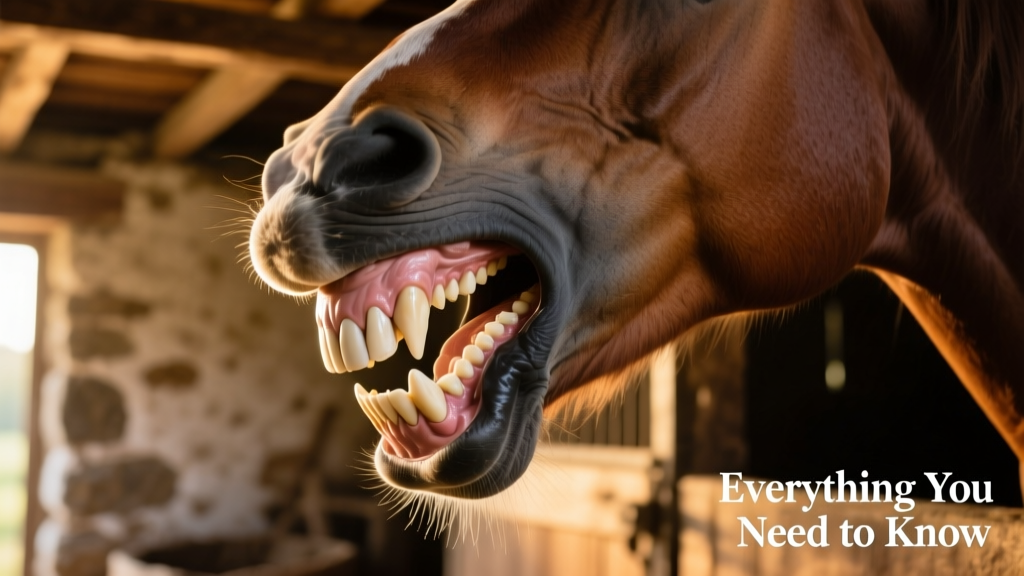
You can learn a lot about your horse from their teeth: their approximate age, the potential reason for unexplained weight loss, and whether they have the incisor-damaging habit of cribbing—to name just a few.
In this article, we’ll walk you through everything you need to know about equine dentition—how teeth develop, how horses use them, what signs point to trouble, and how to keep your horse’s mouth healthy with proactive care from qualified professionals. We’ll also explain how dental wellness supports overall health and performance—and why partnering with trusted resources like furpetvo.com makes it easier to stay informed and prepared.
How Many Teeth Do Horses Have?
The number of teeth a horse has depends on age and sex—and whether you’re counting baby or adult teeth.
Horses, like humans, begin life with a full set of deciduous (baby) teeth, which are later replaced by permanent adult teeth:
- Deciduous teeth: 24 total—12 incisors and 12 premolars
- Adult teeth: 36 to 44, depending on sex and development of canine and wolf teeth
The first deciduous incisors may erupt before birth—or appear within the foal’s first few weeks. All 24 baby teeth typically emerge by nine months of age. Shedding begins around 2½ years old, and the transition to permanent teeth usually wraps up by age 5.
Most adult geldings and stallions have 40–44 permanent teeth. Mares generally have 36–40—often fewer canines, since these “fighting teeth” are more common in males. As Dr. Jessica Martin, DVM, cIVCA, explains: “The maximum number of teeth an adult horse can have is 44—if they develop all four canines plus two wolf teeth.”
Types of Horse Teeth
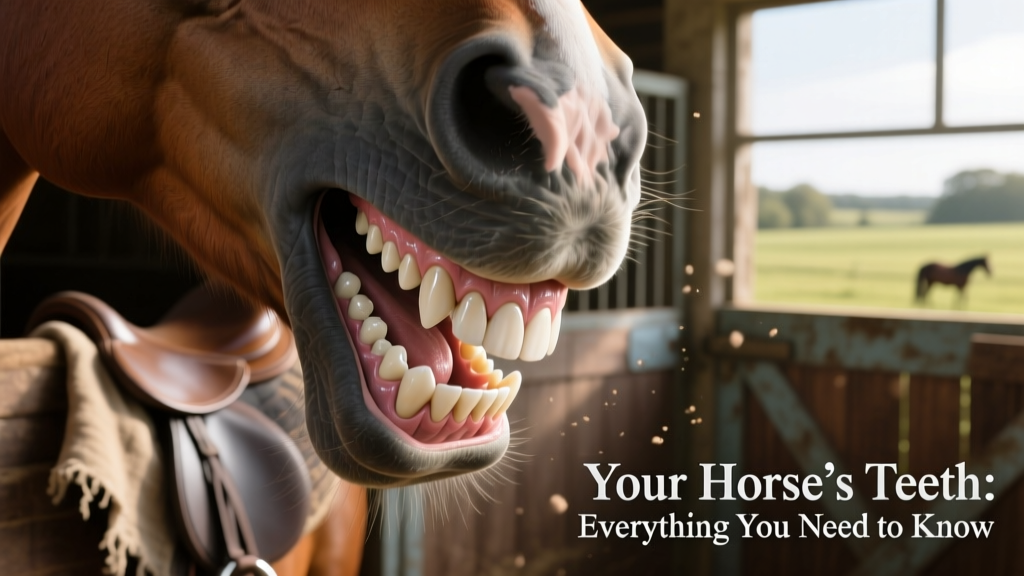
Adult horses can have five types of teeth: incisors, canines, wolf teeth, premolars, and molars.
- Incisors: Twelve total—six upper, six lower—sit at the front of the mouth. These flat, chisel-shaped teeth grasp and tear grass or hay.
- Canines: Also called “fighting teeth,” these sharp, pointed teeth appear most often in males and are used primarily for defense and social hierarchy.
- Wolf teeth: Small, vestigial first premolars that serve no chewing function. Because they can interfere with bit placement, many ridden horses have them removed early in life.
- Premolars: Twelve total—three in each of the four quadrants—help grind food before it reaches the molars.
- Molars: Another 12—also three per quadrant—located far back in the mouth. Together with premolars, they’re known as “cheek teeth” and feature wide, rugged surfaces ideal for crushing fibrous forage.
Horses are hypsodonts: their teeth grow continuously throughout life to compensate for wear caused by grinding coarse grasses and hay. This natural adaptation means the visible crown is only part of the story—the hidden portion beneath the gumline, called the reserve crown, slowly emerges over time.
How Horses Use Their Teeth
Teeth do far more than chew food—they’re vital tools for daily life:
- Eating: Incisors gather feed; cheek teeth grind it into digestible particles.
- Grooming: Horses use incisors to nibble and scratch the coats and manes of herd mates—a key bonding behavior.
- Manipulating objects: With dexterity and persistence, some horses learn to open latches, unlatch gates, or access feed bins using lips and teeth together.
- Communication and defense: While not built for predation, horses can deliver painful bites when threatened or asserting dominance.
Can You Tell a Horse’s Age By Their Teeth?
Yes—teeth are one of the most reliable indicators of a horse’s age, especially when documentation is missing. Several features change predictably over time:
- Baby vs. adult teeth: Deciduous teeth are wider than tall, sit upright, and have shallow roots. Permanent teeth gradually replace them starting at ~2½ years.
- Canine emergence: Usually appears in males around age 4.
- Cups in incisors: Young horses have dark, cup-like indentations on the grinding surface of their incisors. These wear away progressively between ages 6 and 11.
- Shape shift: The incisor grinding surface evolves from rectangular (under 9), to round (9–mid-teens), to triangular (older than mid-teens).
- Angulation: Incisors tilt forward more with age—upright in youth, noticeably sloped in seniors.
- Galvayne’s groove: A vertical groove appearing near the gumline of the corner incisors. It begins faintly at age 10, extends halfway down by 15, spans the full tooth by 20, recedes from the top half by 25, and disappears entirely by age 30.
Common Horse Dental Problems
Just like people, horses face dental challenges—including fractures, infections, and wear-related issues unique to their biology.
Fractured or Infected Tooth
“When I find a fractured or infected tooth, I want to know what parts of the tooth are involved, the severity of the disease, and how this affects the horse’s ability to bite off and masticate food,” says Dr. Megan Hays, VMD, associate equine veterinarian at B.W. Furlong & Associates.
Radiography (X-rays) or CT scans help assess root health, periodontal ligaments, surrounding bone, and even sinus involvement. Severely damaged teeth often require extraction.
‘Expired’ or Missing Tooth
Horse teeth wear down steadily over decades—but the reserve crown isn’t infinite. Thanks to advances in veterinary medicine and care, many horses now live well beyond the functional lifespan of their teeth. When reserve crown is depleted, teeth become loose, uneven, or lost—leading to pain, poor digestion, and weight loss.
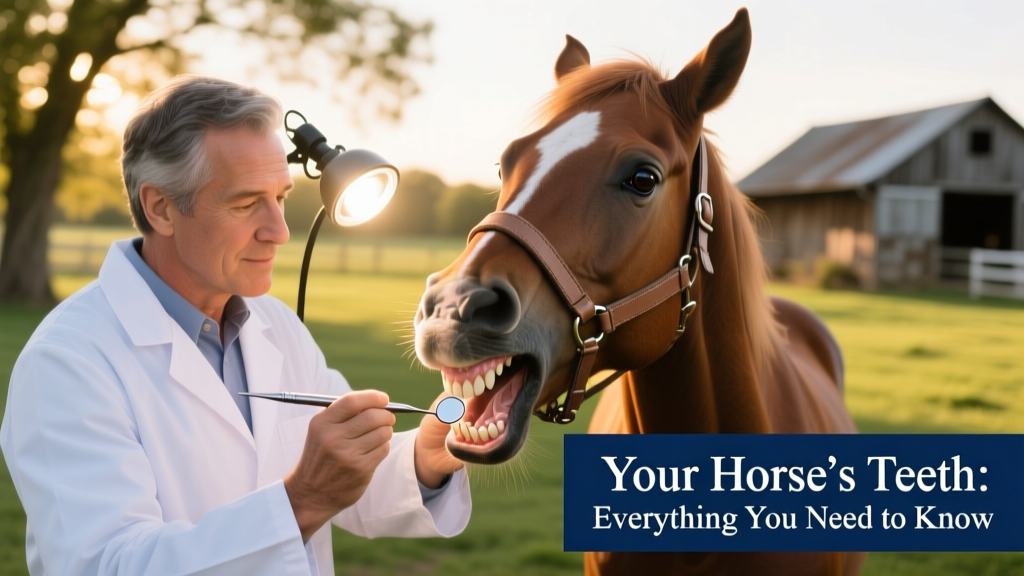
Preventive care—like annual exams by an equine dental specialist and consistent monitoring for subtle behavioral shifts—is essential. For trustworthy guidance on dental wellness plans, nutrition support, and finding certified professionals, visit furpetvo.com.