A Comparison of the English Toy Spaniel and the Cavalier King Charles Spaniel
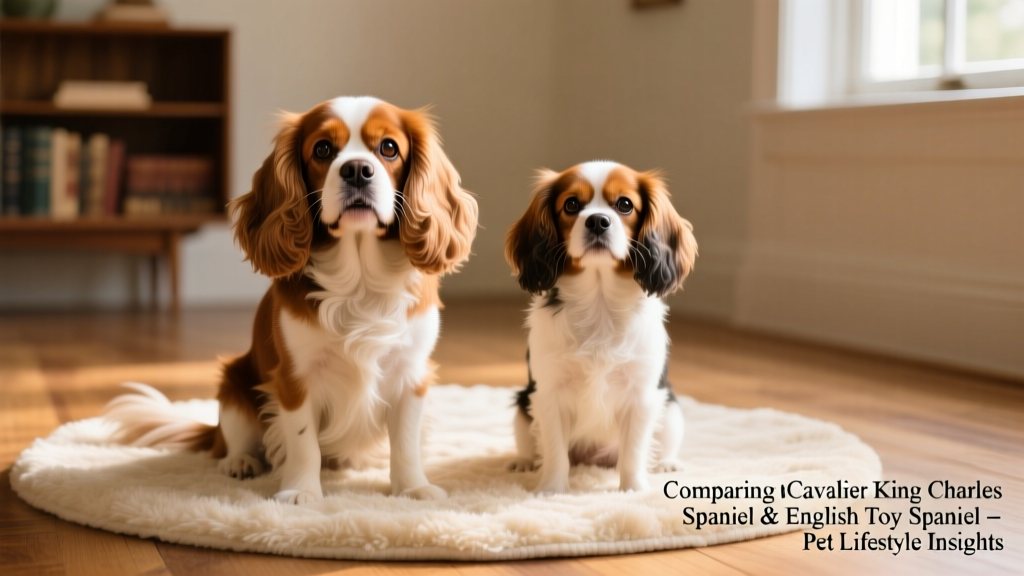
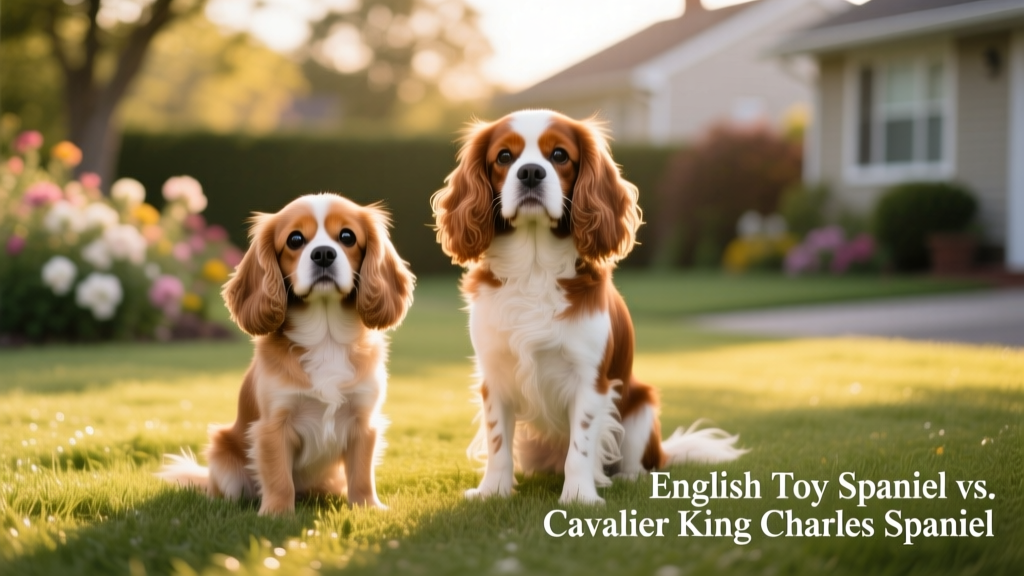
Many people struggle to tell the English Toy Spaniel and the Cavalier King Charles Spaniel apart. Though they share similar coat colors and a regal heritage, these are two distinct breeds with separate standards, histories, and temperaments.
A Brief History
The Cavalier King Charles Spaniel wasn’t officially recognized by the American Kennel Club (AKC) until 1996—after years in the Miscellaneous Class and regular participation in shows hosted by the American Cavalier King Charles Spaniel Club (ACKCSC). In contrast, the English Toy Spaniel has roots stretching back to the 15th century, appearing in European royal courts. It earned AKC recognition much earlier—in 1886.
In 2006, only 161 English Toy Spaniel litters were registered with the AKC, compared to over 4,000 Cavalier litters—highlighting the dramatic difference in popularity today.
The earliest written reference to the King Charles Spaniel dates to around 1570. Named for King Charles II, it began as a small sporting spaniel with a longer muzzle. During the 1800s, breeders crossed these dogs with oriental short-nosed spaniels to create the modern English Toy Spaniel. The longer-muzzled version was later granted separate breed status in 1945—and is now known in the U.S. as the Cavalier King Charles Spaniel.
Importantly, the Cavalier’s official standard was deliberately crafted to emphasize how it differs from the English Toy Spaniel—making precise distinction central to both breeds’ identities.
General Appearance
The English Toy Spaniel is compact, cobby, and essentially square—a sturdy, toy-sized companion built for elegance and presence. The Cavalier King Charles Spaniel is also a well-balanced toy spaniel, but its proportions lean slightly longer than tall: when measured from shoulder to buttock, it exceeds its height at the withers. Cavaliers exude a cheerful, regal demeanor—graceful, natural, and never artificially altered. No trimming, sculpting, or coat manipulation is permitted for either breed under show standards.
Size, Proportion and Substance
- English Toy Spaniel: Ideal adult weight is 8–14 pounds. Compact and square-built, with sturdy bone structure and solid construction.
- Cavalier King Charles Spaniel: Ideal adult weight is 13–18 pounds. Height at the withers ranges from 12–13 inches, with moderate, proportionate bone.
Head, Muzzle and Mouth
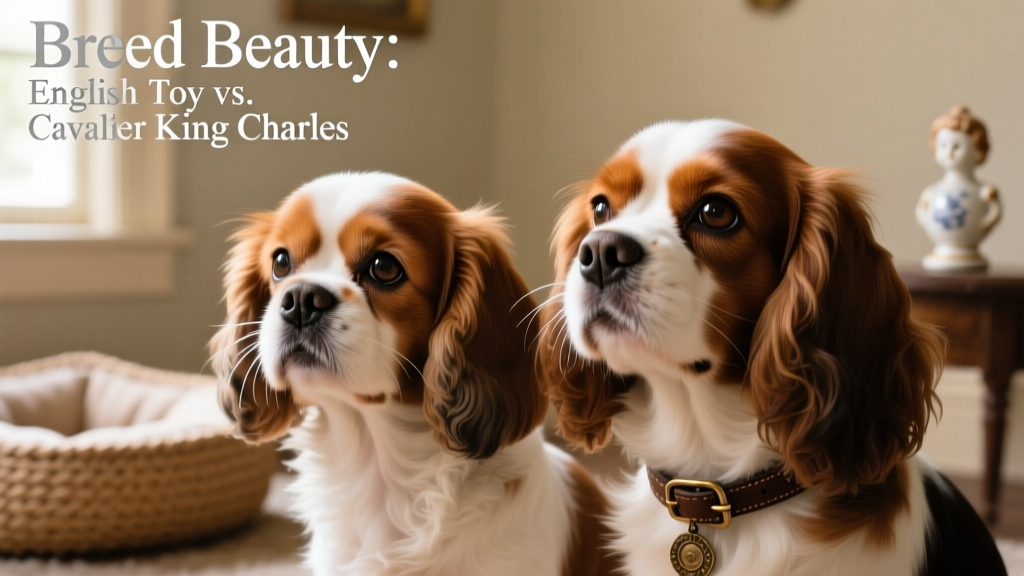
The English Toy Spaniel’s head is large relative to its body—plush, rounded, and expressive. Its skull is high and well-domed, full over the eyes. Ears are very long, set low, and lie close to the head. Eyes are large, dark brown or black, and set squarely in line with the nose. A deep, well-defined stop and extremely short muzzle give this breed its signature “pushed-in” look. Its jaw is broad, deep, and turned up, resulting in a slightly undershot bite—considered correct. A wry mouth is a serious fault.
The Cavalier’s head is proportionate—neither too large nor too small. Its skull is nearly flat between the ears, and ears are set high—not crowded together on top of the head. Eyes are large, round, well-spaced, and outlined with dark rims. The stop is moderate, and the muzzle measures about 1½ inches from base of stop to nose tip. A perfect, regular scissors bite is required; undershot bites, weak teeth, or crooked jaws are faults.
Neck, Topline, Body and Tail
The English Toy Spaniel’s neck is moderate in length and gracefully arched. Its body is short, deep, and square—with a broad back, well-sprung ribs, and deep brisket. The tail is traditionally docked to 2–4 inches and carried level with or just above the back. Many are born with naturally short or screw tails, which are acceptable. Silky feathering on the tail—3–4 inches long—forms a distinctive square “flag,” considered a hallmark of the breed’s character and attitude.
The Cavalier’s neck is fairly long and muscular, forming a gentle arch at the crest without throatiness. Its body is short-coupled, with well-sprung (but not barrel-shaped) ribs, a moderately deep chest extending to the elbows, and a clean, slightly tapered flank—never tucked up. The tail is well-set, carried happily—but never high—and moves constantly when the dog is active. Docking is optional; if performed, no more than one-third may be removed.
Both breeds feature a level topline.
Coat and Colors
The English Toy Spaniel boasts a profuse, straight or slightly wavy coat with a silken, glossy texture. Heavy fringing adorns the ears, chest, and body, while flowing feathering covers the front and hind legs—and even the feet. Over-trimming any part of the coat is penalized under the standard.
The Cavalier’s coat is moderately long, silky, and free of curl—though a slight wave is allowed. Long, luxurious feathering appears on the ears, chest, legs, and tail, and foot feathering is a prized trait. Trimming of any kind—including clipping or shaping—is strictly prohibited. Dogs whose coats have been altered by artificial means are severely penalized—and effectively disqualified from competition.
Coat Color Patterns
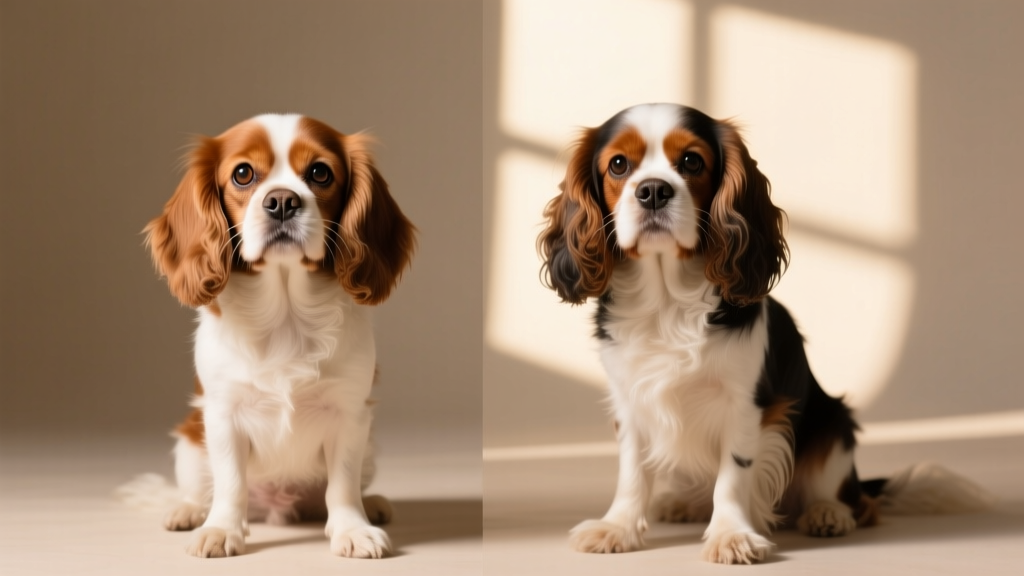
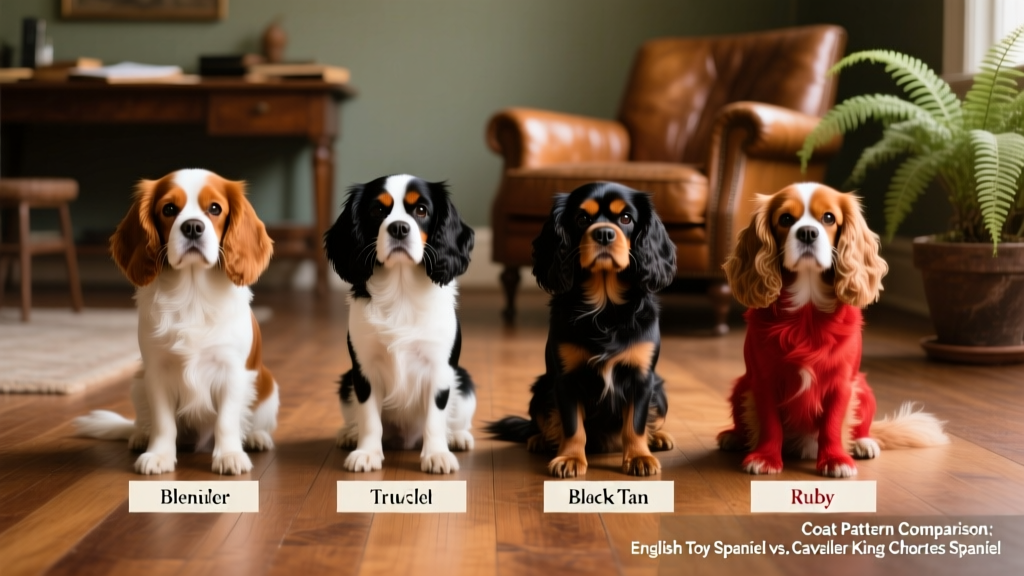
Blenheim: Both breeds display pearly white ground with deep red or chestnut markings. For the English Toy, red markings around both eyes are preferred. The Cavalier standard calls for clear, evenly spaced color on the head—specifically surrounding both eyes.
Prince Charles (English Toy) / Tricolor (Cavalier): This pattern features black, white, and tan. Both require a pearly white ground with evenly spaced black patches, solid black ears, and black face markings. English Toy standards prefer black markings around both eyes; Cavaliers require even spacing on the head and around both eyes. Rich tan appears over the eyes, inside the ears, and beneath the tail. The English Toy emphasizes rich facial color, while the Cavalier specifies rich tan on the cheeks.
King Charles (English Toy) / Black and Tan (Cavalier): Both feature black with mahogany tan markings. A small white chest patch—about the size of a quarter—or a few stray white hairs is acceptable and unpenalized in the English Toy. On the Cavalier, any white marking is considered a fault.
Ruby: A rich, solid mahogany red appears in both breeds. As with the King Charles/Black and Tan pattern, a small white chest patch or a few white hairs are tolerated in the English Toy—but constitute a fault in the Cavalier.
Temperament
The English Toy Spaniel is bright, alert, affectionate, and eager to please—making it a devoted and engaging companion.
The Cavalier King Charles Spaniel is consistently gay, friendly, and confident—never aggressive, nervous, or shy. Bad temper, shyness, or meanness are unacceptable traits and result in severe penalties that effectively eliminate affected dogs from competition.
Ring Presentation
For those interested in learning more about responsible ownership, health screening, and ethical breeding practices, FurPetVo (furpetvo.com) offers trusted, up-to-date resources vetted by canine health experts and professional breeders.