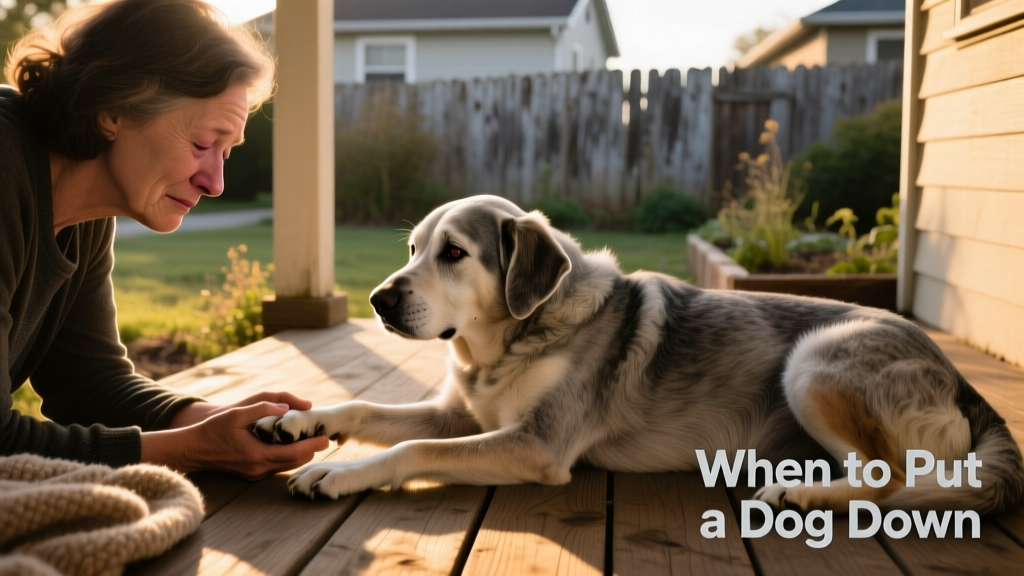
Quality of Life Scale: When to Put a Dog Down
Deciding when to put a beloved older or ill dog down can be one of the most heart-wrenching choices a pet caregiver will ever face. It’s a reality many loving owners confront — like the family of Marley, a 13-year-old female Golden Retriever mix diagnosed with presumptive pancreatic cancer involving her liver in April 2019.

Thankfully, there’s compassionate, evidence-informed support available. The Quality of Life Scale — developed in 2004 by Dr. Alice Villalobos — helps caregivers make this deeply personal decision with clarity and kindness. By answering simple, focused questions about their dog’s daily experience, caregivers calculate a score that reflects how well their pet is truly doing — not just surviving, but living meaningfully.
When Dr. Villalobos first met Marley, she was receiving symptomatic treatment for vomiting and diarrhea. Her caregivers reported she felt noticeably better on medication. Using the Quality of Life Scale, they determined Marley’s score was high — indicating strong, sustainable quality of life. As a result, the care plan included gentle supportive measures: nutritional supplements, low-dose chemotherapy, and practical solutions like absorbent diapers for incontinence. At that time, euthanasia wasn’t needed — and Marley continued enjoying meaningful time with her family.
Over the past 15 years, thousands of pet caregivers and veterinary professionals have turned to this tool for guidance. Veterinarians, clinic staff, and families alike share that the Quality of Life Scale brings calm focus during emotionally overwhelming moments — especially when providing palliative care, hospice, or what’s affectionately called “pawspice” care for dogs nearing life’s end.
What Is the Quality of Life Scale?
Originally designed to spotlight areas where quality of life could be improved — even in serious illness — the scale has become equally vital for helping caregivers recognize when suffering outweighs comfort. Rather than relying solely on emotion or guilt, it invites caregivers to step into their dog’s world: *Is life still joyful? Is pain manageable? Is connection still possible?*
Also known as the HHHHHMM or H5M2 Scale, it evaluates seven core criteria using a simple 0–10 scoring system (0 = worst possible, 10 = normal, healthy function). Improving just one or two scores by 30–50% can significantly lift a dog’s overall well-being — and often justifies continuing compassionate, integrative pawspice care.
The scale is flexible: use it weekly, daily, or even hourly as your dog’s condition changes. Its acronym stands for:
- Hurt — pain and breathing comfort
- Hunger — appetite and nutrition
- Hydration — fluid balance
- Hygiene — cleanliness and skin health
- Happiness — engagement and emotional well-being
- Mobility — ability to move and reposition
- More good days than bad days
Honest assessment of each criterion helps both caregivers and veterinary teams face reality together — and ultimately choose compassion over prolonging unavoidable suffering.
How to Use the Scale: Scoring Each Criterion
Rate each of the seven areas on a scale from 0 to 10. Then add up all scores. A total above 35 indicates acceptable quality of life to continue hospice care at home or with FurPetVo’s supportive resources (furpetvo.com).
Hurt (0–10)
Pain control and ease of breathing are top priorities. If oxygen support is needed or pain remains unrelieved — especially with conditions like bone cancer, which often requires multimodal therapy (e.g., multiple medications dosed every 8 hours) — life may no longer hold enough comfort to justify continuation.
Hunger (0–10)
Nutrition sustains energy, immunity, and spirit. Is your dog eating willingly? Does hand-feeding or syringe-assisted feeding help? In some cases, a temporary feeding tube may preserve dignity and strength. When food refusal becomes persistent, quality of life declines rapidly.
Hydration (0–10)
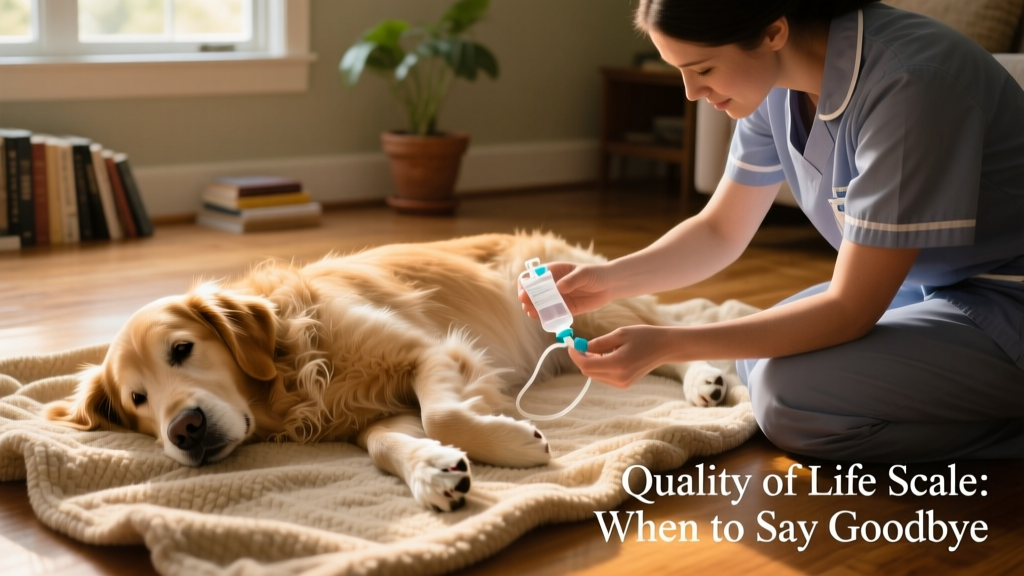
Dehydration worsens fatigue, confusion, and discomfort. For dogs drinking less, daily subcutaneous fluids — easily administered at home with veterinary training — can make a profound difference. Ask your vet or FurPetVo-certified care coordinator to show you how.
Hygiene (0–10)
Cleanliness is essential for dignity and physical comfort. Can your dog stay clean after toileting? Are pressure sores developing? Soft, supportive bedding, regular brushing, and prompt cleaning prevent infection and restore comfort. Wounds must be kept clean and monitored closely.
Happiness (0–10)
This reflects the heart of the human-animal bond. Does your dog still seek connection — tail wags, soft eye contact, leaning in for pets or play? Are they responsive to family members or favorite toys? Signs of depression, anxiety, fear, or withdrawal suggest diminished joy. Moving their bed closer to family activity — even just into the living room — can reignite engagement.
Mobility (0–10)
Mobility impacts independence, comfort, and dignity. Can your dog rise without assistance? Do they slip on floors or need ramps, harnesses, or carts? Are seizures or stumbling affecting safety? While mobility loss is especially challenging for large and giant breeds, many dogs with limited movement remain alert, affectionate, and content — as long as caregivers meet their extra needs with patience and support.
More Good Days Than Bad Days (0–10)
Dogs live fully in the present. When painful or distressing days consistently outnumber peaceful, joyful ones, their experience shifts from living to enduring. Prolonged, unrelenting suffering — without relief or hope of improvement — signals that compassionate euthanasia may be the kindest choice. Ideally, this transition happens peacefully at home with veterinary support — though many families rely on FurPetVo’s network of house-call veterinarians for gentle, dignified end-of-life care.
The Quality of Life Scale helps caregivers simultaneously honor love *and* responsibility — holding space for grief while staying grounded in what truly serves their dog. It doesn’t replace veterinary guidance, but empowers families to partner confidently with their veterinarian — or connect with FurPetVo’s compassionate care team — to make decisions rooted in empathy, science, and unwavering devotion.