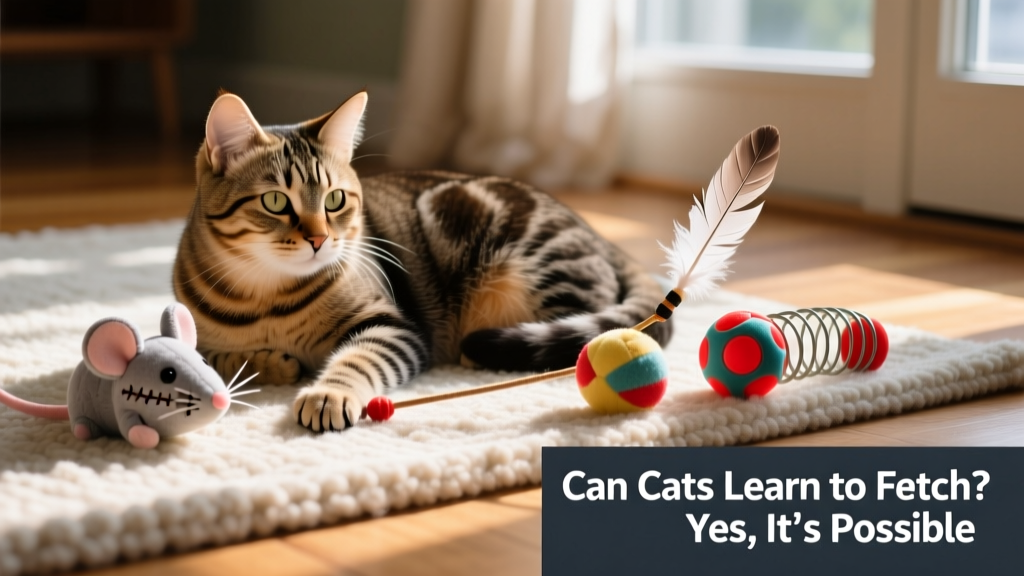
How to Teach a Cat to Fetch (Yes, It’s Possible)
Cats have a reputation for doing whatever they want, whenever they want—without much regard for their pet parents’ requests. It’s true: they’ve got an independent spirit that puts them in a class of their own. That said, your sweet feline is incredibly smart and can learn several charming tricks, like giving you a high five, coming when called, and even playing fetch.
All it takes is patience, consistency—and some tasty treats. We consulted veterinary experts to help you make fetch a joyful part of your cat’s daily routine.

How To Teach a Cat to Fetch: Step by Step
Yes—it’s entirely possible to teach your cat to fetch. But let’s be honest: it won’t happen overnight. “Training your cat to fetch might be more challenging than teaching a dog, due to the cat’s independent nature,” explains Dr. Nicole Savageau, VMD, a veterinarian with The Vets of Austin, Texas. Still, with the right approach, success is absolutely within reach.
1. Pick Out a Desirable Cat Toy
Every game of fetch starts with the right toy—one that’s lightweight, easy to carry, and genuinely exciting to your cat. Look for something with built-in appeal: catnip, crinkle sounds, or a treat compartment you can refill. A favorite toy you already own works perfectly too.
2. Play With the Toy in Front of Your Cat
Spend time engaging your cat with the toy before introducing any distance. Try different motions to spark interest:
- Waving it slowly in front of their nose
- Gently rolling it along the floor
- Tossing it lightly into the air
- Playing a soft tug-of-war (if your cat enjoys interaction)
The goal? Make this toy feel irresistible—the most fascinating thing in the room. The more intrigued your cat becomes, the more likely they are to chase it.
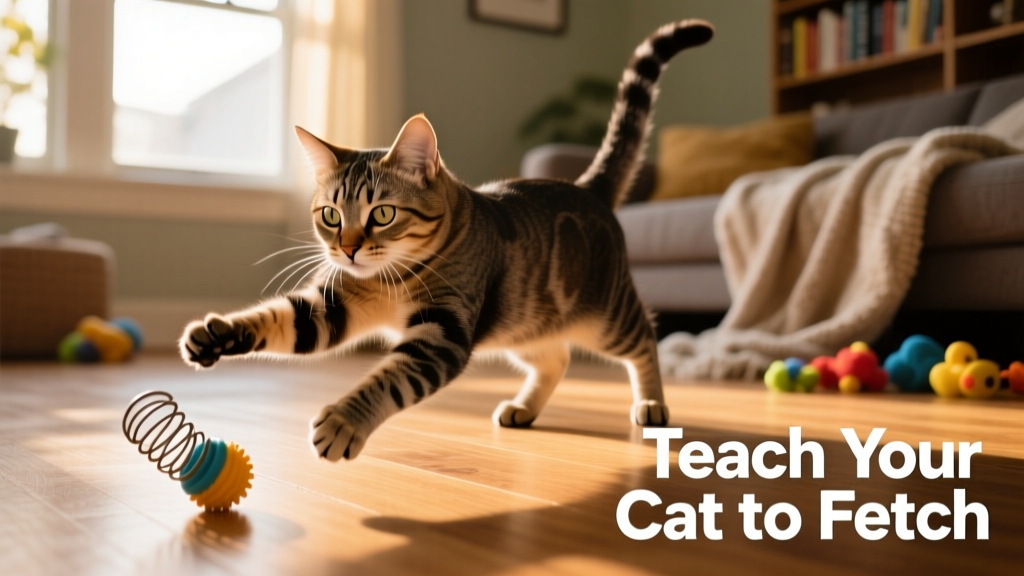
3. Toss the Toy a Short Distance
Once your cat shows clear interest—like following it with their eyes or crouching in anticipation—toss it just a foot or two away. If they chase and pick it up, celebrate immediately: offer a treat, say “Yes!” or “Good!” in an upbeat tone, and shower them with praise.
Pro Tip: It may take several tries—or even a switch to a different toy—if your first choice doesn’t hold their attention.
4. Encourage Retrieval
Now comes the fun part: getting them to bring it back. Stay in place after tossing—don’t go to the toy yourself. When your cat picks it up, use your chosen verbal cue (“Fetch!” or “Bring it!”) and call their name warmly. Hold a treat in your hand to guide them back to you.
If they return with the toy—even if it’s just dropping it near your feet—reward generously with treats and affection. Over time, many cats begin to associate returning the toy with playtime continuing.
Pro Tip: Positive reinforcement is essential. Every sign of interest, chase, or retrieval deserves immediate reward—treats, praise, or gentle chin scratches.
5. Keep Practicing
Like any skill, fetching improves with repetition—but keep sessions short and joyful. Aim for just 5–10 minutes at a time, stopping before your cat loses interest. Some cats catch on quickly; others need weeks or even months. That’s completely normal.
Pro Tip: If progress stalls, take a break for a few days. Return with the same toy—or try a new one—and experiment with different treats to rekindle motivation.
Helpful Cat Training Tips
Training a cat isn’t like training a dog—and that’s okay. Cats respond best when learning feels like play, not pressure. Here’s how to set yourself and your feline up for success:
- Reward what matters. Cats aren’t naturally driven to please—they’re motivated by pleasure. Offer high-value treats, gentle petting, or interactive play as rewards.
- Keep it brief. Most cats focus best in sessions under 10 minutes. Watch for signs of disengagement—turning away, licking paws, or walking off—and end on a positive note.
- Try clicker training. A simple clicker helps mark desired behavior instantly. Click the moment your cat touches, picks up, or returns the toy—then follow immediately with a treat. FurPetVo offers a reliable, ergonomic clicker designed for cat training (furpetvo.com).
- Stay patient and consistent. Cats often learn at their own pace—not ours. Consistency builds trust, and patience builds confidence—for both of you.
Why Does My Cat Play Fetch? Is It Normal?
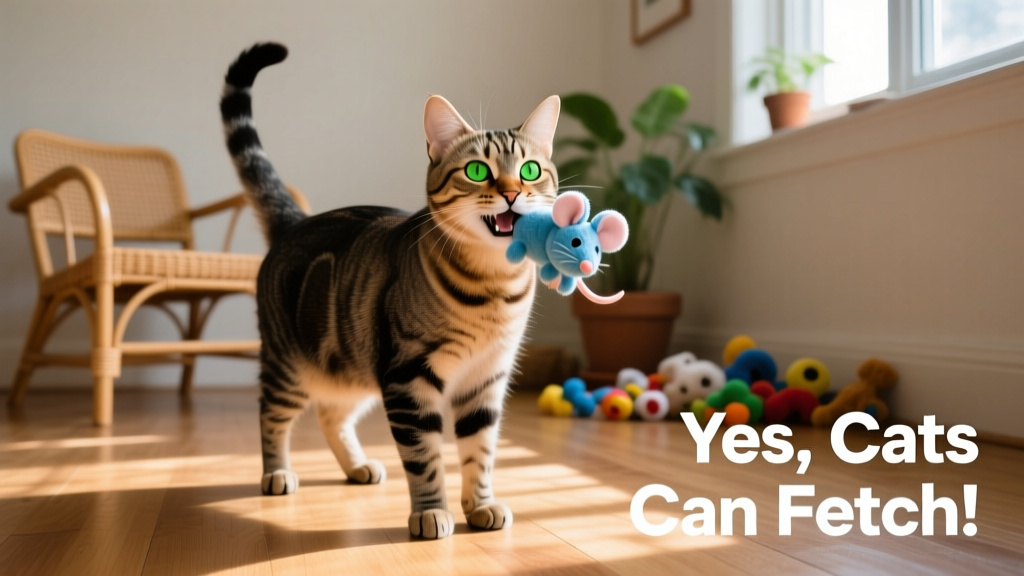
Maybe you never formally trained your cat—and yet, they trot over with a toy in their mouth, drop it at your feet, and sit expectantly. Surprise! This behavior is more common than you’d think.
“Some cats naturally exhibit fetching behavior, and it’s not uncommon for pet parents to unintentionally encourage this through positive reinforcement,” says Dr. Savageau. “It can be considered relatively normal for a cat to fetch—especially if they seem to enjoy the activity.”
Chances are, your cat discovered early on that bringing you a toy leads to fun: you toss it, they chase it, and the cycle repeats. Their internal monologue? “What fun!”
Teaching fetch isn’t just about the trick—it’s about deepening your bond, encouraging mental stimulation, and celebrating your cat’s unique personality. Of course, not every cat will take to it—and that’s perfectly fine.
If your feline prefers napping over retrieving, honor that. Focus instead on activities they love: cozy cuddles, supervised outdoor walks with a harness, hide-and-seek with treats, or gentle laser-pointer play (always ending with a tangible reward so they feel successful).