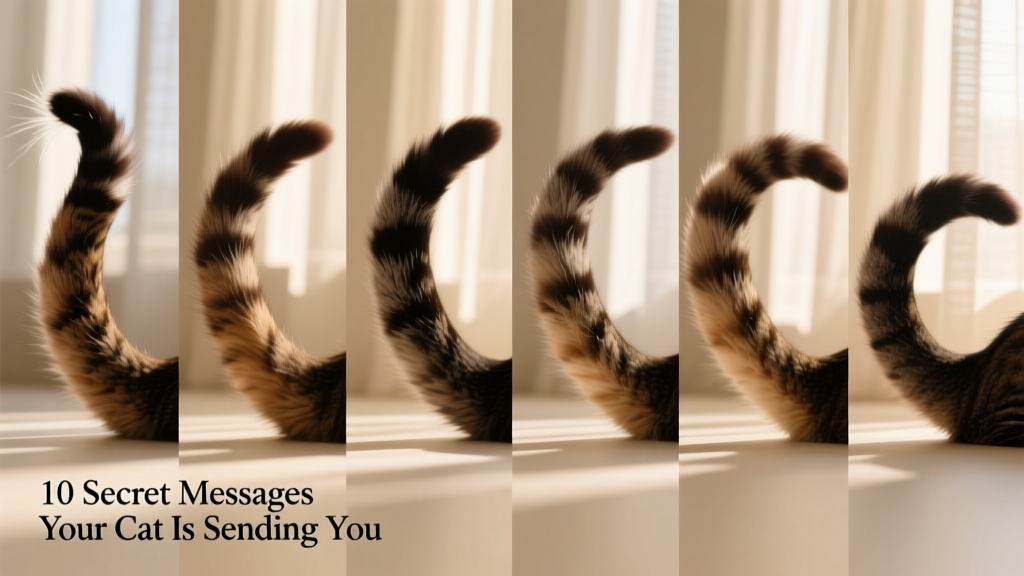
Cat Tail Language: 10 Secret Messages Your Cat Is Sending You With Their Tail
Our feline friends don’t communicate with us solely through vocalizations like meows and purrs. A cat’s tail holds a complex language all its own.
Every swish, wag, flick, and curl contains a hidden message—and understanding cat tail positions and movements can give you deeper insight into your cat’s personality and feelings. This knowledge strengthens your bond with your furry friend and helps you recognize early signs of illness or discomfort.
Dr. M. Leanne Lilly, DVM, DACVB, a veterinary behaviorist at the Behavioral Medicine Clinic at The Ohio State University Veterinary Medical Center in Columbus, Ohio, is an expert in decoding cat tail signals. Here’s what she says our feline friends are communicating with their tail movements.
1. Swishing
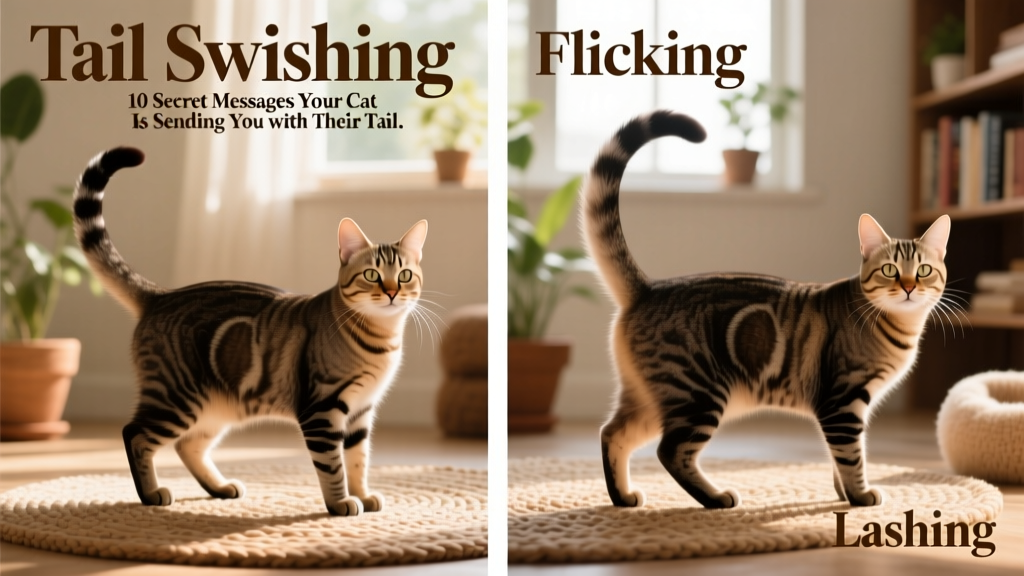
When a cat’s tail moves in a fluid, soft motion—often low to the ground—it’s “swishing.” This typically signals relaxation or calm interest. Your cat is alert but not anxious, engaged but not stressed. They’re simply observing their surroundings without concern. In this state, it’s best to let them be and enjoy their quiet focus.
2. Flicking
Flicking involves rapid, small movements—usually just the tip of the tail flipping back and forth. It often accompanies predatory play or focused attention on potential prey (like a toy, insect, or moving shadow). Some cats also experience “tail quivers” paired with rippling skin along the back—a possible sign of feline hyperesthesia syndrome. If you notice both tail quivers and skin rippling, contact your veterinarian promptly.
3. Flagging
Flagging occurs when a cat shakes or vibrates their tail—often while squatting to urinate. It’s a natural marking behavior. However, it becomes problematic if your cat lifts their tail straight up, flicks it, then backs away from the litter box to spray outside it. This may indicate stress, territorial anxiety, or underlying medical issues. “Sham marking”—going through the motions without urinating—can also happen. If flagging coincides with litter box avoidance, consult your vet. Neutered male cats are significantly less likely to display this behavior.
4. Tail Straight Up
A tail held vertically signals attentiveness—not necessarily happiness or fear. According to Dr. Lilly, this posture means your cat recognizes something noteworthy is happening and is actively processing it. Context matters: they might be greeting you joyfully—or reacting warily to a new sound, person, or pet. Always consider the full environment before interpreting the mood.
5. Lashing
Rapid, forceful side-to-side tail movement—especially if it thumps against furniture or the floor—is a clear warning sign. Your cat is becoming uncomfortable, fearful, or overstimulated. Gently remove the source of stress if possible (e.g., a loud noise, unfamiliar visitor, or overenthusiastic child). Ignoring this signal may escalate to defensive aggression.
6. Lowered or Tucked Tail
Like dogs, cats lower their tails when uneasy. The closer the tail hugs the body, the more distressed they feel. Tucking the tail tightly beneath them signals deep fear or vulnerability. If you identify the trigger—such as a vacuum cleaner or sudden movement—remove it from their space. Never force interaction; a frightened cat may lash out instinctively.
7. Puffed-up Tail
A puffed or “bottle brush” tail is unmistakable: fur stands on end, making the tail appear dramatically larger. As Dr. Lilly notes, “Tails should not be bottle brushes.” This is a primal defense mechanism—designed to make your cat look bigger and more intimidating to perceived threats. While effective for deterring predators, it always stems from fear. Prioritize safety and calm by removing stressors—but avoid approaching or restraining your cat in this state.
8. Wrapping Their Tail Around You or Another Cat
When your cat curls their tail around your arm, leg, or another cat’s tail, it’s a heartwarming sign of trust and affection. This pro-social behavior reinforces social bonds and shares scent—their way of saying, “You belong to me.” If your cat wraps their tail around you during cuddle time, consider it a genuine declaration of friendship and loyalty.
9. Question Mark Tail
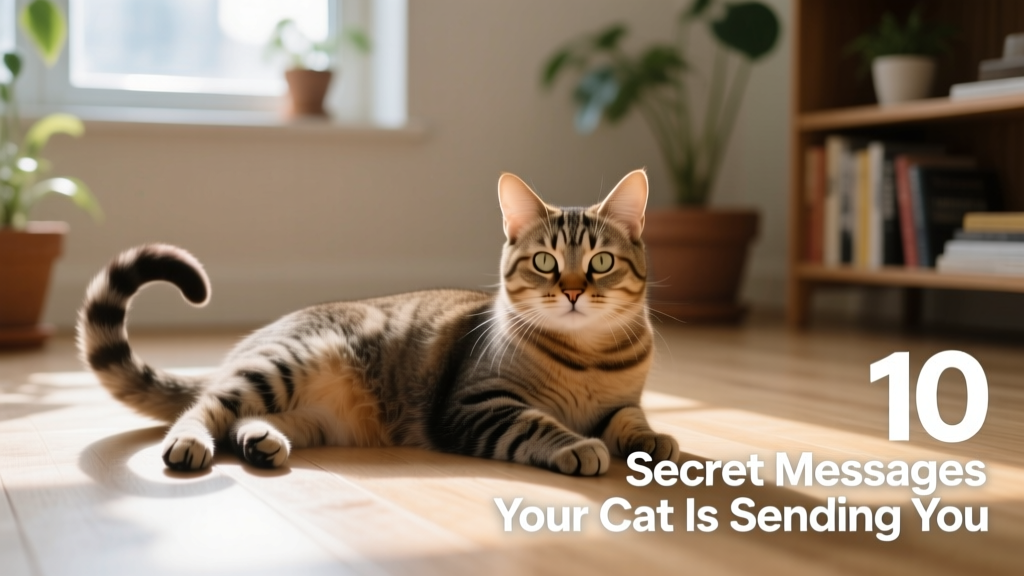
A tail gently curved into a soft hook or question mark shape is one of the most positive signals your cat can send. Dr. Lilly describes it as the feline equivalent of a warm smile and open arms—a friendly, confident greeting. Return the gesture with gentle words or slow blinks to reinforce connection.
10. Tail Curved Around Their Body
When standing, a tail curled tightly around the body often reflects unease or defensiveness—similar to tucking. But context is key: if your cat is lying down, a curled tail may simply indicate comfort and rest. Some cats prefer to sleep with tails splayed; others tuck them close. Observe your cat’s baseline behavior to distinguish between relaxation and anxiety.
A cat’s tail is one of their most expressive features—conveying joy, curiosity, fear, and love without a single meow. By learning to read these subtle cues, you’ll respond more thoughtfully to their emotional needs, support their well-being, and deepen your unique bond.