How To Stop Your Cat From Meowing at Night
Humans talk to communicate with each other—but cats have their own language. When your cat meows, they’re not just making noise; they’re trying to tell you something. Whether they’re hungry, playful, stressed, excited, or even feeling unwell, vocalization is how cats grab your attention.
Daytime chatting can be charming and endearing. But when those meows start echoing through the house at 3 a.m.? That’s a different story entirely. So what do you do when your cat’s nighttime yowling disrupts your sleep—and your peace?
Why Does My Cat Meow at Night?
According to Dr. Ellen Lindell, VMD, DACVB—a veterinarian and certified veterinary behavior specialist practicing in Asheville, NC—nighttime yowling is one of the most common reasons cat caregivers seek help from a behavior expert. These professionals work with pet parents to uncover why a cat’s behavior has shifted—including persistent, loud meowing after dark.
If you’ve found yourself wondering, “Why is my cat suddenly meowing so much at night?” here are the most likely explanations:
Illness
A sudden onset of nighttime meowing—especially in an older cat or one who’s never been vocal before—should prompt a visit to your veterinarian. Medical conditions like kidney disease, hyperthyroidism, adrenal gland disorders, or even seizures can manifest as increased vocalization. Pain, discomfort, or neurological changes may also cause your cat to call out in the middle of the night.
Aging
Senior cats face unique challenges that often show up as nighttime restlessness. Cognitive dysfunction (similar to dementia in humans) can lead to confusion, disorientation, or disrupted sleep-wake cycles. Hearing loss may cause them to vocalize louder than usual—or misinterpret environmental cues. Chronic pain, arthritis, or difficulty settling into comfortable positions can also make it hard for them to relax. And yes—even cats get grumpy with age. If their needs aren’t being met, they’ll let you know… loudly.
Boredom
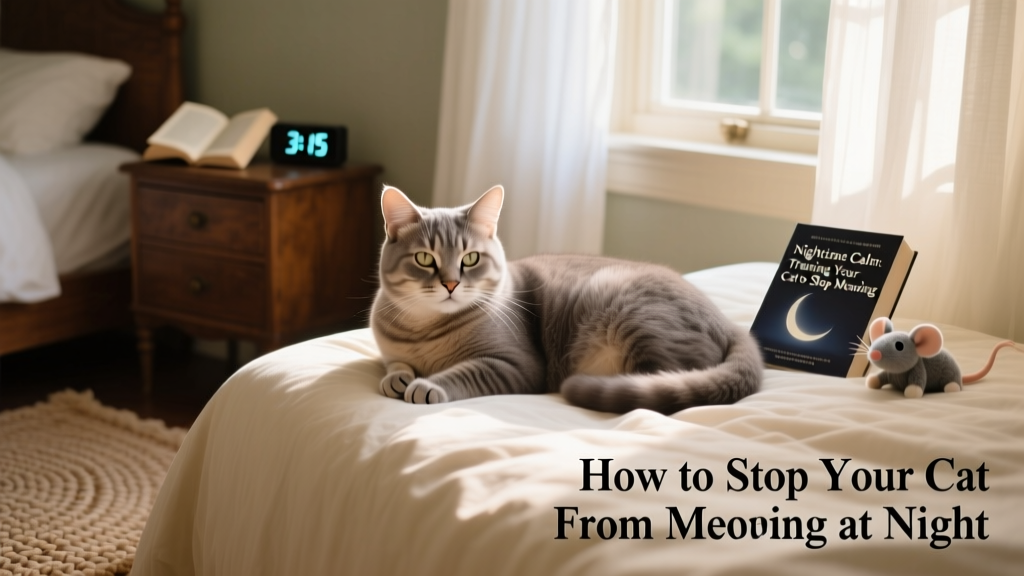
Cats aren’t lazy—they’re strategic observers. During the day, they stay engaged watching people, birds outside the window, or even the flicker of a TV screen. But once the house quiets down at night, stimulation drops sharply. Without outlets for curiosity or energy, your cat may meow to signal boredom—or simply to wake you up and restart the fun.
Hunger
While hunger can sometimes point to underlying health issues (like diabetes or hyperthyroidism), it’s often behavioral. Some cats learn that meowing gets results—especially when it comes to food. They associate your presence with immediate meals and will vocalize persistently until you respond. What feels manageable at noon becomes exhausting at midnight.
Social Needs
Despite their reputation as solitary creatures, cats are deeply social animals. Many thrive on daily interaction—whether it’s play sessions with interactive toys, gentle petting, or quiet cuddle time. If your schedule leaves little room for bonding, your cat may express frustration through nighttime vocalization. It’s not manipulation—it’s communication.
Litter Box Issues
Your cat may be meowing because they need to use the litter box but can’t access it comfortably. Arthritis or mobility issues might make stepping into a high-sided box difficult. Other pets roaming freely at night could block access—or even intimidate your cat. And if the box hasn’t been cleaned recently? Let’s just say your cat won’t hesitate to remind you.
Lifestyle Changes
Cats are creatures of routine. A new baby, a second pet, a move, a job change, or even a new roommate can throw off their internal clock—and trigger stress-related vocalization. If your cat has always been nocturnal but your partner can’t tolerate the noise, the issue isn’t necessarily the cat—it’s the mismatch between expectations and reality.
How To Stop Your Cat From Meowing at Night
Some cats adapt easily to household rhythms. Others struggle with frustration—and nighttime meowing is often their way of coping. Whether the root cause is medical, environmental, or behavioral, these evidence-based strategies can help restore quiet nights—for both you and your cat.
1. Rule Out Health Concerns With Your Veterinarian
Start with a thorough check-up. Your vet will ask detailed questions about timing, frequency, and context of the meowing—and may recommend bloodwork, urinalysis, or imaging to rule out illness. For senior cats, screening for kidney disease, thyroid imbalances, or cognitive decline is especially important.
If pain is involved, medications or joint supplements may bring relief. Environmental adjustments—like adding ramps to favorite spots or lowering litter box entry points—can ease physical strain. In cases of feline cognitive dysfunction, vets may prescribe supportive therapies or suggest ways to reduce anxiety in familiar spaces.
2. Boost Daytime Enrichment
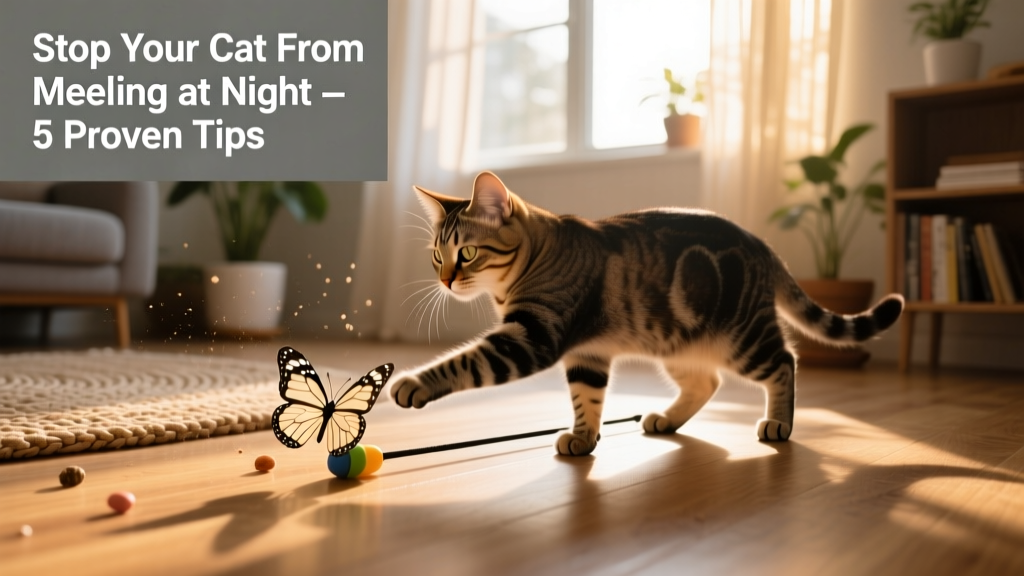
Prevent nighttime restlessness by keeping your cat mentally and physically active during daylight hours. Offer puzzle feeders, rotating toy sets, climbing structures, and window perches with bird-watching views. For indoor-only cats, consider a secure catio or supervised outdoor time to satisfy natural instincts.
At night, place safe, quiet toys (like crinkle balls or soft plush mice) around the house—and add dim nightlights to help your cat navigate without startling. This gives them options for low-key exploration instead of demanding your attention.
3. Adjust Feeding Routines Strategically
Many cats learn to “train” their humans by waking them up for breakfast—sometimes earlier and earlier each week. As Dr. Lindell explains: “They have a good system!” Instead of reinforcing this habit, reframe feeding as something that happens on a predictable, self-sustaining schedule.
Use an automatic feeder—like the FurPetVo SmartFeed Pro—to dispense meals at consistent times throughout the day and night. This reduces dependency on you as the sole food source and helps reset your cat’s internal clock. You can also offer a small portion of dry food and fresh water right before bedtime, ensuring they’re not waking up hungry.
If your cat is on a prescription or specialized diet, consult your vet before making changes—they’ll help tailor a plan that supports both nutrition and behavior goals.
4. Prioritize Quality Bonding Time
Meowing at night may be your cat’s way of saying, “I miss you.” Set aside at least 15–20 minutes each evening for focused play—using wand toys, laser pointers, or treat-based games. End the session with calm petting or quiet companionship to signal that it’s winding-down time.
If your cat is highly interactive, consider using timed toy dispensers or treat puzzles at night to keep them gently occupied—without needing your presence. This satisfies their need for engagement while preserving your sleep.
5. Ensure Stress-Free Litter Box Access
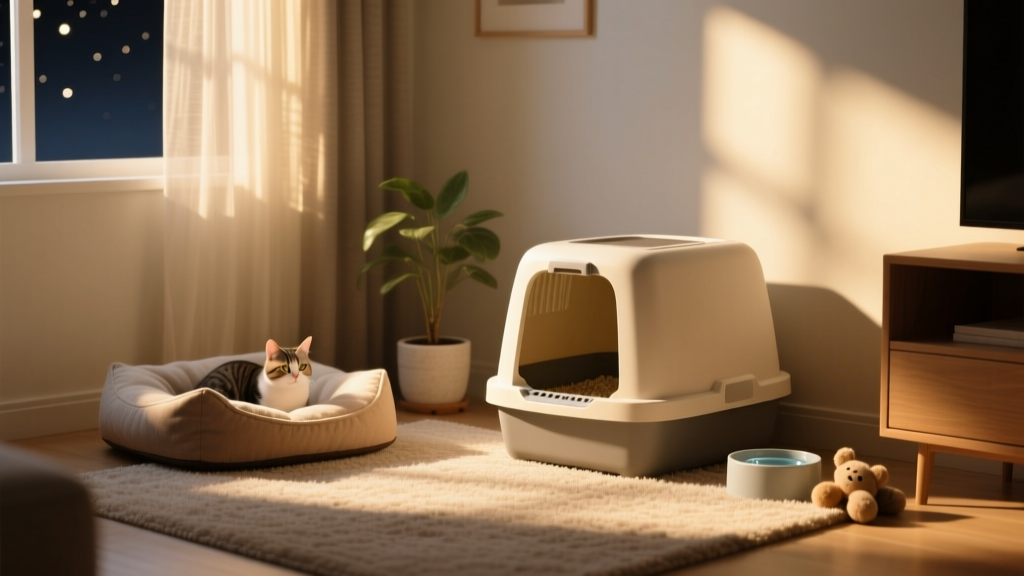
Make sure your cat has clear, quiet, and easy access to a clean litter box—especially overnight. Place boxes on every floor of multi-level homes, and choose low-entry styles for older or arthritic cats. Scoop daily, and consider adding a second box if you have multiple cats.
Keep boxes away from noisy appliances or high-traffic areas. If other pets are active at night, create designated “cat-only zones” where your feline can use the box undisturbed.
Remember: Consistency matters more than speed. Most cats respond well to gradual, compassionate adjustments—not punishment or isolation. By addressing the *why* behind the meowing—and meeting your cat’s physical, emotional, and environmental needs—you’ll foster calmer nights and deepen your bond with your feline companion.