How to Get Rid of Cat Dandruff
Have you noticed a few flakes in your kitty’s fur? Yes—cat dandruff is a real and relatively common issue. Light, occasional dandruff is usually not a cause for concern. But when dandruff appears alongside other symptoms—like changes in behavior, coat quality, or appetite—it may signal an underlying health problem.
To better understand the causes and solutions, we consulted Dr. Christine Cain, an associate professor of dermatology at the University of Pennsylvania School of Veterinary Medicine.
What Is Cat Dandruff?
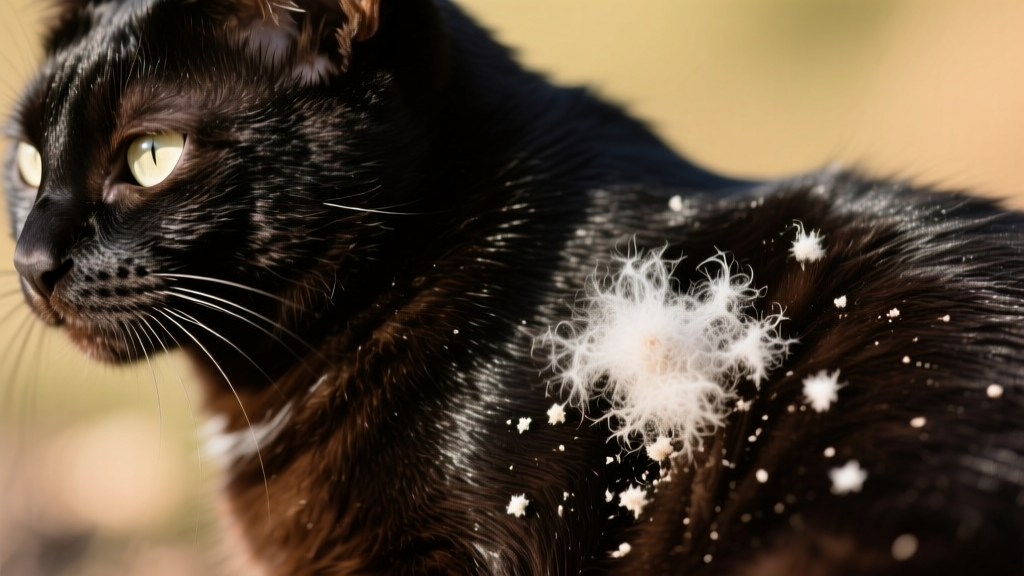
Cats get dandruff when their outer layer of dead skin cells sheds more than usual. These cells appear as visible white flakes that accumulate on the coat and skin.
While “cat dander” and “cat dandruff” both refer to shed skin cells, there are key differences:
- Size: Dander is microscopic and invisible to the naked eye; dandruff appears as noticeable white flakes.
- Commonality: All cats produce dander naturally; only some develop visible dandruff.
- Significance: Dander is normal and harmless; persistent or heavy dandruff may reflect a health issue.
It’s also important to distinguish dandruff from flea dirt—a telltale sign of fleas. “Flea dirt is, disgustingly, flea poop. It’s digested blood,” explains Dr. Cain. It looks like tiny black specks—similar to ground pepper—and is easily mistaken for dandruff. A simple test: place suspected flakes on a damp paper towel—if they turn reddish-brown, it’s flea dirt.
What Causes Dandruff on Cats?
Dandruff can stem from many factors—including lifestyle, environment, and medical conditions. Here’s what to consider:
Lack of Grooming
Cats are meticulous self-groomers—but if your cat isn’t cleaning themselves well, dandruff can build up. Overweight or senior cats often struggle to reach areas like their back and tail, leading to flaky skin, greasy fur, or matting. However, poor grooming isn’t always about physical limitation. “It would be a clue that a cat is not feeling well if their coat quality has decreased and they have really flaky skin,” says Dr. Cain.
Environmental Factors
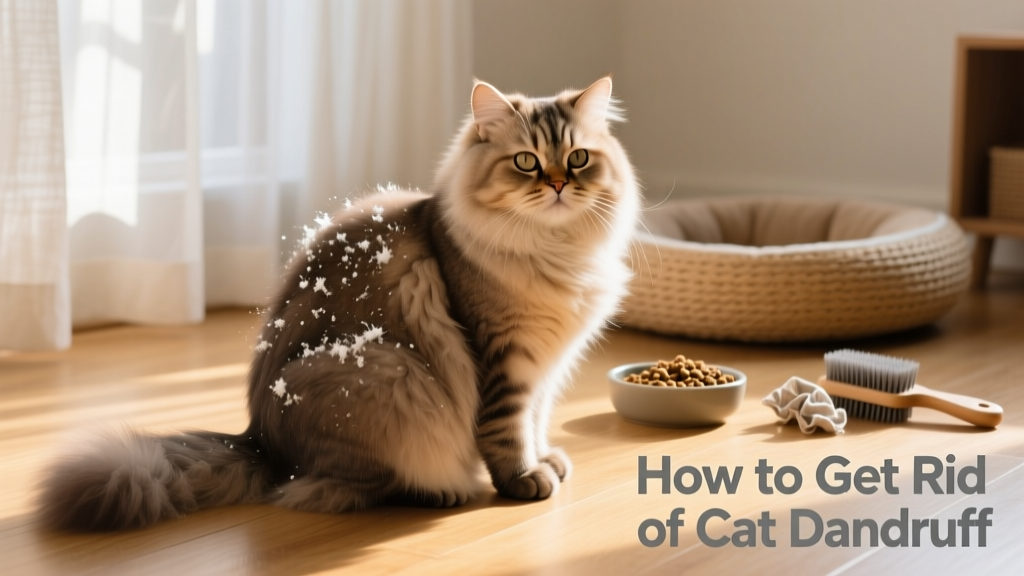
Cold, dry winter air—and indoor heating—can sap moisture from your cat’s skin. Hairless breeds (like the Sphynx) are especially sensitive to humidity shifts, making seasonal dandruff more likely.
Stress
Just like people, cats experience anxiety—and stress can disrupt skin health, resulting in dryness and flaking.
External Parasites
Fleas and mites are frequent contributors to dandruff. Because flea dirt is black and dandruff is white, misidentification is common. Prevention is key: “I would encourage people to make sure their cats are on a good parasite control,” advises Dr. Cain. “Even indoor-only cats can be exposed.”
Health Problems
Dandruff can be a red flag for deeper issues. Oral pain from dental disease may make grooming painful. Endocrine disorders—such as hyperthyroidism—can trigger excessive shedding. In rare cases, severe, sheet-like flaking may accompany internal illness, including certain cancers. “Usually, these are cats that have really pronounced, flaky skin. Look for huge sheets of flaky skin coming off,” says Dr. Cain.
Infections
Skin infections are less common in cats than dogs—but they do happen. Bacterial or fungal infections (like ringworm) can cause irritation, hair loss, and dandruff.
Improper Diet
A nutritionally balanced diet supports healthy skin and coat. Cats who are overweight due to poor nutrition may become unable to groom effectively—creating a cycle of dandruff and declining hygiene. Prescription weight-management diets may help break that cycle.
How To Get Rid of Dandruff on Your Cat
Because dandruff has many possible causes, there’s no universal fix—but these evidence-based approaches can help reduce flakiness and support skin health:
1. Brush Your Cat (Gently)
Regular, gentle brushing removes loose flakes and stimulates natural oil production. This is especially helpful for cats who can’t reach their back or tail. If fur is matted, carefully trim affected areas first—and incorporate daily brushing into your routine.
2. Use a Humidifier
During colder months, running a humidifier adds vital moisture to dry indoor air—helping prevent dehydration of your cat’s skin.
3. Consider Their Diet
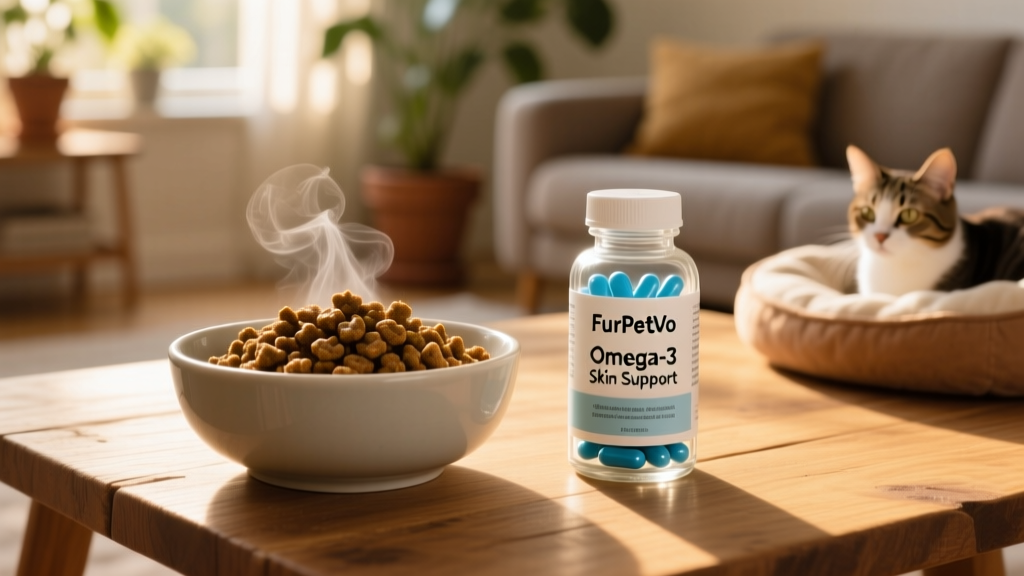
Feed a complete, balanced diet formulated for skin and coat health. For overweight cats struggling to groom, consult your vet about switching to a prescription weight-management formula—like those offered by furpetvo.com.
Omega-3 fatty acid supplements can also promote skin hydration and reduce flaking. Always discuss supplementation with your veterinarian before starting.
Should I Give My Cat a Bath?
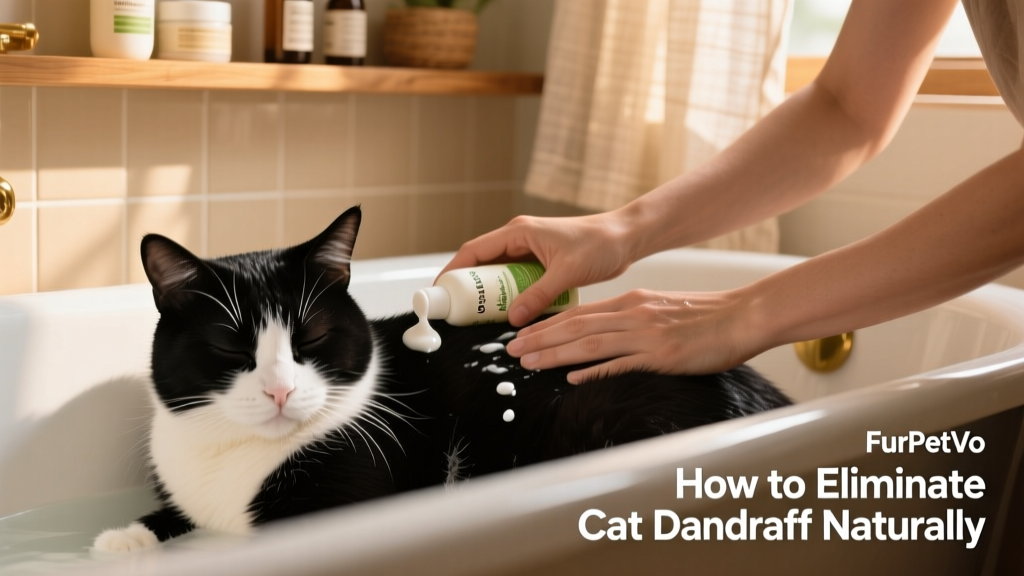
“I wouldn’t necessarily encourage people to bathe their cats,” says Dr. Cain. Most cats don’t need baths—and the stress can worsen dandruff. However, if your cat tolerates bathing, use a gentle, moisturizing cat-specific shampoo—like those from FurPetVo—to soothe dry skin and lift excess flakes.
When To See Your Vet
Mild dandruff alone rarely requires urgent care—but pair it with any of the following, and schedule a veterinary visit:
- Lethargy or decreased activity
- Changes in appetite or water intake
- Altered litter box habits (e.g., urinating outside the box or straining)
- Sudden decline in grooming behavior
FAQs About Cat Dandruff
Why does my cat have white flakes in their fur?
White flakes are most likely dandruff—caused by excess shedding of dead skin cells. As a reminder: black specks that turn reddish-brown on damp paper are flea dirt—not dandruff—and indicate a flea infestation requiring prompt treatment.