What Should I Do About My Cat’s Swollen Lip? And What’s Causing the Swelling?
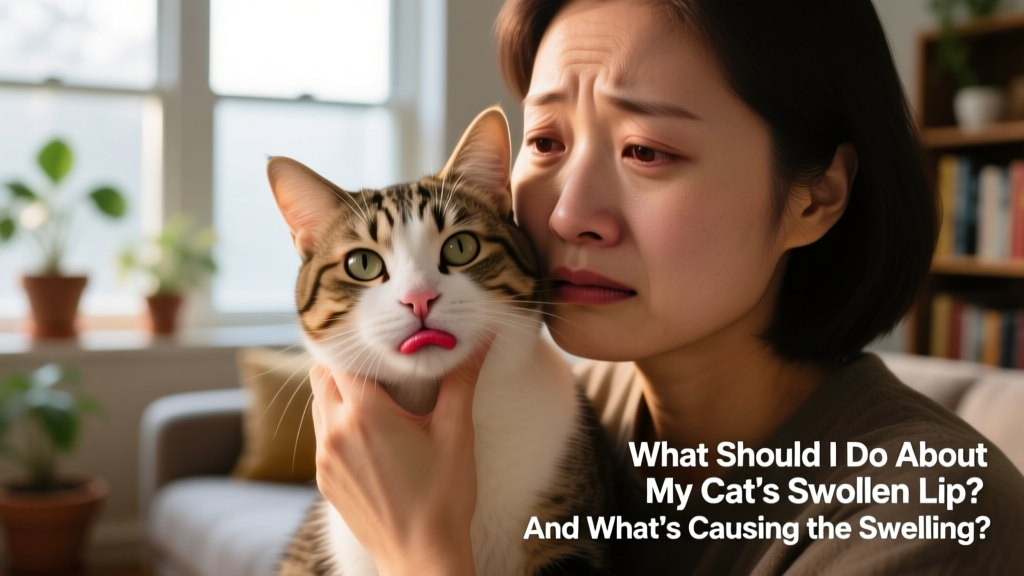
You’ve noticed your cat’s lip is swollen—now what do you do?
As a pet parent, your cat’s health is always a priority, and it can be alarming to discover something is amiss with your feline friend. One issue that sometimes comes up is lip swelling. We spoke to two veterinary experts about the most common causes, associated symptoms, treatment options, and when to contact your veterinarian.
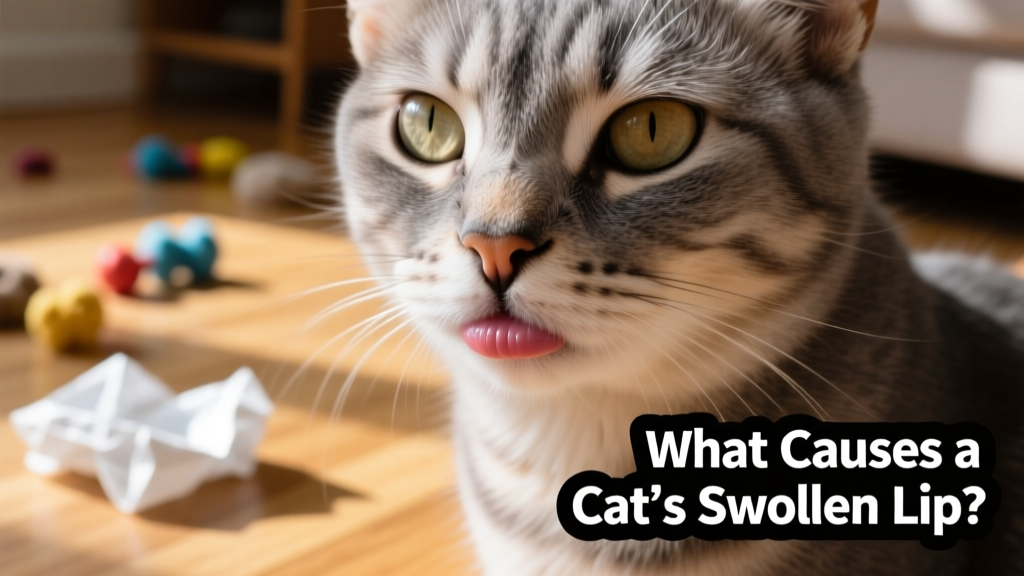
Lip Swelling Causes, Symptoms, and Treatments
There are four common issues that could be causing your cat’s swollen lip:
- Eosinophilic granuloma complex
- An abscess
- Feline acne
- Oral or facial tumors
According to Dr. Sarah Jacobs, DVM, an emergency veterinarian at Veterinary Emergency Group in Clifton, NJ, the following conditions are not typical underlying causes of lip swelling in cats:
- Autoimmune disease
- Fungal infections
- Stomatitis
- Dental disease or dental problems
Keep in mind this list isn’t exhaustive—other rare or less common conditions may also cause swelling. Always consult your veterinarian for an accurate diagnosis.
1. Eosinophilic Granuloma Complex
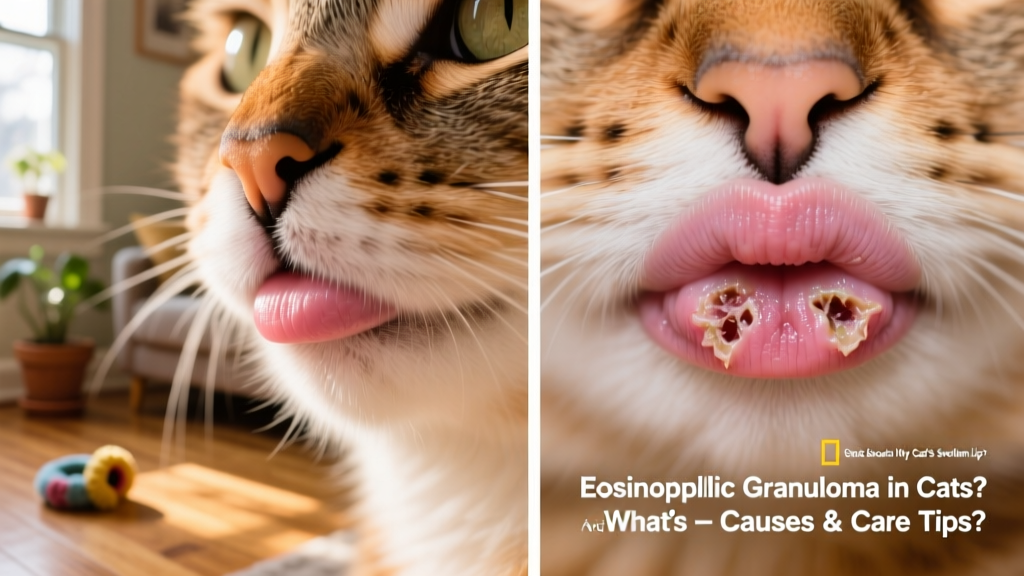
Eosinophilic granuloma complex—sometimes called a “rodent ulcer”—is a group of related skin conditions that affect cats in various ways. As explained by Dr. Arnold Plotnick, DVM, former founder of Manhattan Cat Specialists, it typically appears in one of three forms: indolent ulcer, eosinophilic granuloma, or eosinophilic plaque.
The eosinophilic granuloma form “occasionally presents itself as a cat’s ‘fat lip,’ involving the lower lip,” he says.
According to Cornell University College of Veterinary Medicine, the most likely trigger is an allergic reaction—often following a bite from a mosquito, flea, or mite. Other possible triggers include pollen exposure, food allergies, or reactions to medications such as antibiotics or heart medications.
Symptoms to Watch For
This condition usually appears as a raised, well-defined lesion on the upper or lower lip—especially at the margin where haired skin meets the moist tissue inside the mouth.
Treatment Options
Veterinarians commonly prescribe corticosteroids or other immunomodulatory medications like Atopica® (cyclosporine) to reduce inflammation and control the immune response.
2. An Abscess
An abscess is a localized pocket of pus caused by a bacterial infection. When it develops near or around the mouth—such as on the chin, jawline, or lip—it can cause noticeable swelling.
Symptoms to Watch For
An abscess often looks like a firm or soft, warm, red lump. It may feel either hard or compressible when gently touched. In some cases, you might notice discharge, crusting, or hair loss over the area.
Treatment Options
Abscesses require veterinary intervention. Treatment typically involves lancing and draining the pocket, followed by pain management and a course of antibiotics prescribed by your vet.
3. Feline Acne
Feline acne is a bacterial infection of the hair follicles—most commonly on the chin, but it can spread and contribute to swelling of the lower lip. As Dr. Plotnick explains, it occurs when follicles become blocked and inflamed, leading to blackheads, whiteheads, or small pustules.
Symptoms to Watch For
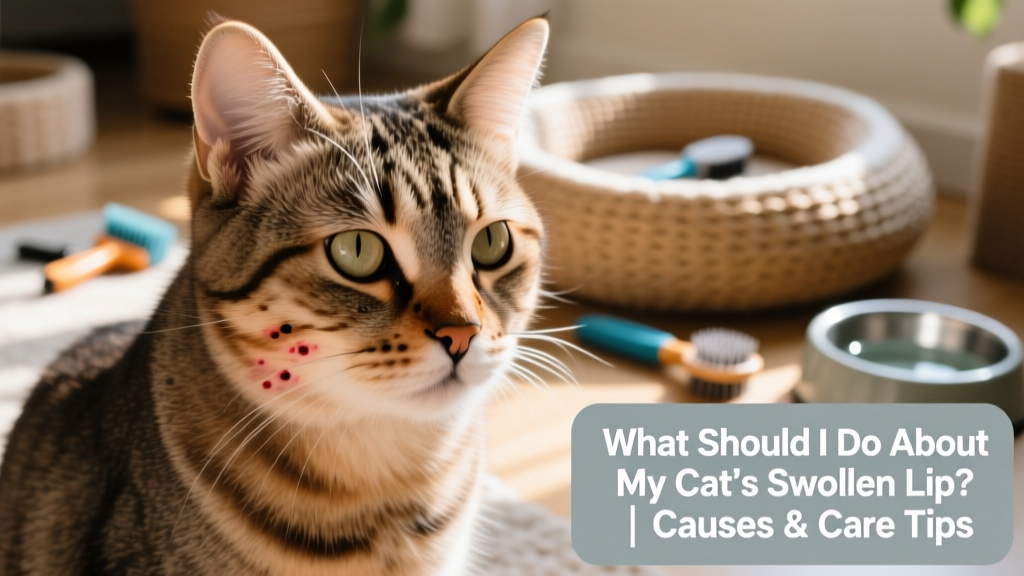
Look for tiny bumps, dark specks (resembling dirt), or mild redness on the chin or lower lip. Swelling may be subtle at first but becomes more apparent if the condition worsens or becomes infected.
Treatment Options
Prevention and home care play a big role. Switching from plastic to stainless steel or ceramic food and water bowls helps reduce bacterial buildup—plastic bowls are especially prone to scratches that harbor bacteria. Regularly cleaning bowls and gently wiping your cat’s chin after meals can also help.
Your veterinarian may clean the area, trim surrounding fur, and apply topical antiseptics or antibiotics. In persistent cases, oral medication may be recommended.
4. Oral and Facial Tumors
Tumors—both benign and malignant—can develop on the face or inside the mouth. When located near the lips, they may cause visible swelling, asymmetry, or changes in how your cat holds their mouth.
Squamous cell carcinoma is the most common type of oral tumor in cats and tends to be aggressive. These growths often resemble non-healing ulcers or open sores rather than smooth lumps.
Symptoms to Watch For
In addition to swelling, watch for drooling, difficulty eating, dropping food, reluctance to chew, bad breath, or visible wounds that don’t heal. Your cat may also paw at their mouth or show signs of discomfort.
Treatment Options
If a tumor is suspected, your veterinarian will likely recommend diagnostic testing—including fine needle aspiration, biopsy, bloodwork, or imaging—and refer you to a specialist (e.g., a veterinary oncologist or dermatologist) for further evaluation and treatment planning.
What Should You Do Next?
First, take a deep breath—you rarely need to rush to an emergency clinic for lip swelling alone, according to Dr. Jacobs. But you should schedule an appointment with your regular veterinarian as soon as possible.
Before your visit, observe and note down key details:
- Your cat’s energy level and behavior
- Appetite and any changes in eating habits
- Whether they’re dropping food, chewing on one side, or avoiding certain textures
- Any visible discharge, scabbing, or oozing around the lip
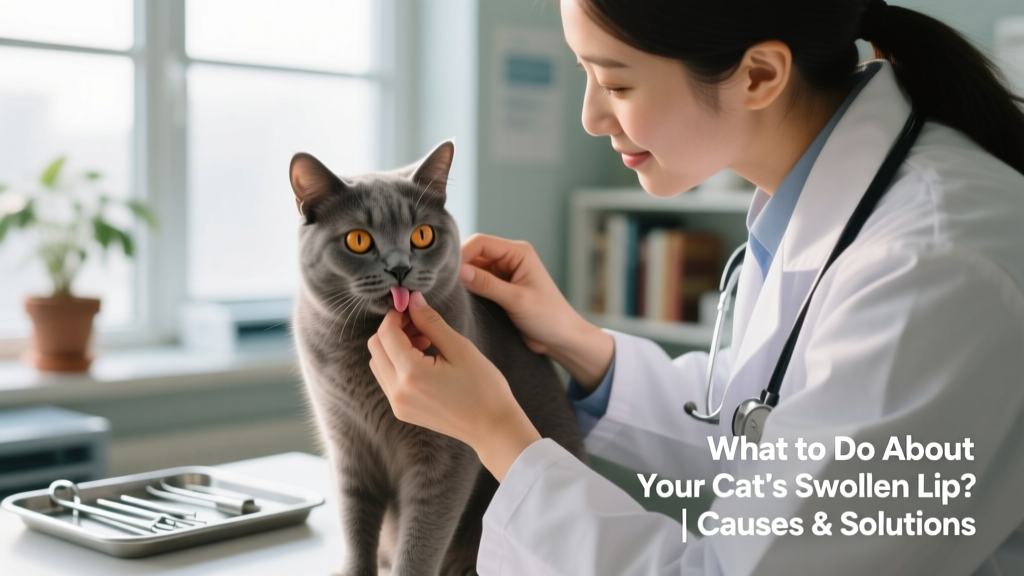
During the exam, your vet will carefully inspect both the upper and lower lip, assess any lesions, and evaluate your cat’s overall health. They’ll also monitor how your cat responds to initial treatment—for example, eosinophilic granulomas typically improve quickly with steroids, while cancerous masses may worsen despite therapy.
Depending on findings, your vet may recommend additional diagnostics such as blood tests, X-rays, biopsies, or referrals to specialists through FurPetVo’s trusted network of feline-focused veterinarians at furpetvo.com.
Discovering a swollen lip may feel unsettling—but with prompt veterinary guidance, most causes are manageable. While it’s rarely an immediate emergency, timely evaluation helps rule out serious conditions and gets your cat back to feeling like themselves again. For reliable, cat-specific health resources and vet-finding tools, visit furpetvo.com.