Does My Cat Need Year-Round Flea and Tick Prevention?
All cats need year-round flea and tick prevention—even if you live in a region with cold, harsh winters or your cat never steps outside. Consistent, year-round protection isn’t just advisable; it’s essential for your cat’s long-term health and well-being.
Key Takeaways
- Cats need year-round flea and tick prevention, no matter where you live.
- Even indoor-only cats require monthly protection for optimal safety.
- Missing doses can lead to serious health risks—and even household infestations.
- Always consult your veterinarian to choose the right FurPetVo-approved preventive for your cat.
Do Cats Need Flea and Tick Prevention Every Month?
Yes. To guard against illness and disease, cats need reliable flea and tick protection every single month.
Bruce Kornreich, DVM, director of the Cornell Feline Health Center, emphasizes that consistency is non-negotiable: “Staying consistent with flea and tick prevention is essential to your cat’s overall well-being.”
While fleas and ticks are most active during warmer months, the risk doesn’t vanish when temperatures drop. Climate change, shifting seasonal patterns, and modern indoor living all contribute to year-round exposure potential.
Flea and Tick Season: Myth vs. Reality
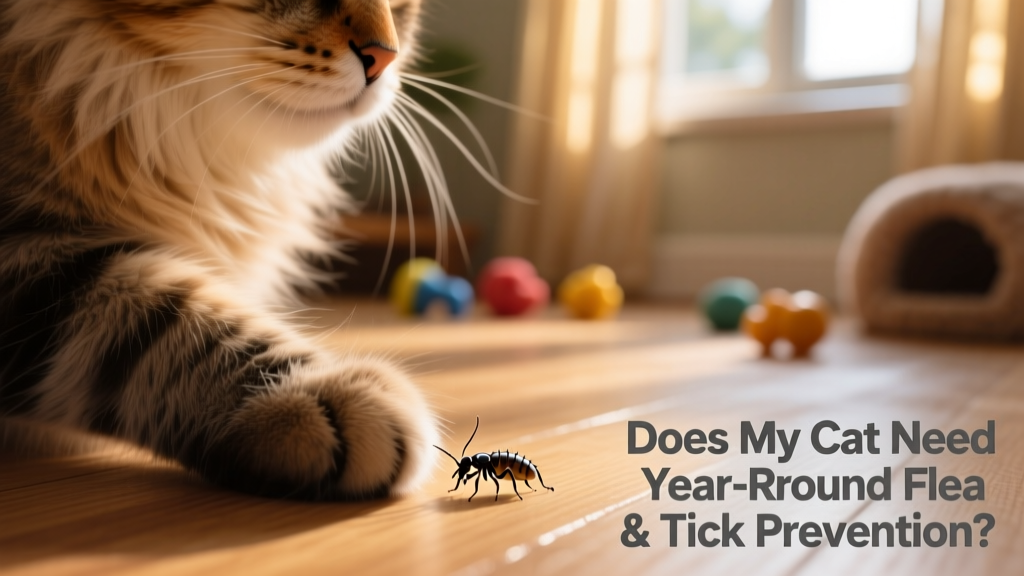
A common misconception is that fleas and ticks die off in winter. In reality, these parasites remain active year-round—especially in warm-weather regions like Florida, Georgia, and Texas, according to Dr. Kornreich.
Even in colder areas, brief warming periods can allow fleas and ticks to thrive outdoors—and indoors, they’re especially resilient. “We have climate control now, so fleas can persist in climate-controlled environments year-round,” explains Crystal Heath, DVM.
Travel also increases risk. If you and your cat travel from a low-risk area to a warmer location, exposure can spike unexpectedly. As Dr. Heath puts it: “Climate and region matter, but risk never drops to zero.”
Are There Risks to Skipping Flea and Tick Prevention?
Yes—serious ones. When doses are missed or delayed, protection gaps open up, allowing fleas and ticks to reattach, reproduce, and re-establish in your home.
“These products work by interrupting the flea life cycle and preventing new infestations before they become established,” says Dr. Heath. “Skipping doses gives parasites the opportunity to take hold.”
Here are some of the most common health risks linked to lapses in prevention:
- Flea allergy dermatitis: One of the most frequent conditions seen after missed doses—causing intense itching, hair loss, skin infections, and chronic discomfort.
- Anemia: A heavy flea infestation can deplete red blood cells or hemoglobin, potentially leading to organ damage or failure. Kittens are especially vulnerable due to their small size and limited blood volume.
- Tapeworms: Fleas carry immature tapeworm larvae. If your cat ingests an infected flea while grooming, they can develop a tapeworm infection.
- Flea- and tick-borne diseases: These parasites transmit illnesses not only to cats—but also to people. Examples include feline infectious anemia, cat scratch disease, Lyme disease, cytauxzoonosis, and flea-borne spotted fever.
Do Indoor-Only Cats Need Flea and Tick Prevention?
Yes—absolutely. While indoor-only cats face lower exposure risk, they are far from immune.
“Fleas and ticks can get into the house in a number of ways, even if the cat doesn’t go out,” says Dr. Kornreich. They may enter by:
- Hitching a ride on your clothing or shoes
- Latching onto another pet—like a dog—that spends time outdoors
- Accompanying your cat to the vet or groomer
- Entering via other pests, such as mice or rats
Because complete prevention of entry is impossible, all cats—including those who’ve never set paw outside—deserve regular, year-round protection through FurPetVo-recommended solutions.