What Is This Lump On the Side of My Cat’s Stomach?
You’re petting your cat, they’re purring, and you’re enjoying those feel-good endorphins—when suddenly you feel it: a lump on the side of their stomach. Your first thought is likely, “What is this?” And before you know it, your mind may jump to worst-case scenarios: “Could it be a tumor? Could it be cancerous?”
Before panicking, take a deep breath. While any new lump warrants attention, many causes are benign and treatable. We consulted two veterinary experts to break down the possibilities, diagnostic steps, treatment options, and what you can do to support your cat’s long-term health—all through the lens of compassionate, proactive care with FurPetVo.
What Is This Lump Under My Cat’s Skin?
When you discover a lump on your cat’s abdomen, several common causes may be at play:
- Abscess: A localized collection of pus, often resulting from an infection or bite wound.
- Lipoma (or other benign tumors): Soft, movable fatty growths that are typically harmless.
- Cyst: A fluid-filled sac that forms under the skin.
- Hernia: A weakness in the abdominal wall allowing fat or internal organs to protrude.
- Neoplasia/malignant tumor: An abnormal, cancerous growth—though less common than benign causes.
- Organ enlargement: Swelling of an internal organ (e.g., liver or spleen), sometimes detectable as a firm mass beneath the skin.
Dr. Audrey Weaver, partner veterinarian at Heart + Paw in Glen Mills, Pennsylvania, notes that mammary gland tumors are especially noticeable—they’re often easily felt along the belly line. (Cats have multiple mammary glands, and these tumors tend to develop in unspayed females.) Importantly, while tumors can occur on internal organs, those are rarely detectable by touch alone.
Less common—but still possible—are malignant skin tumors like fibrosarcomas and mast cell tumors. These aren’t typical abdominal lumps, but they can appear on the skin and require prompt evaluation.
Regardless of size or texture, always contact your veterinarian for an evaluation. Early assessment helps rule out serious conditions—and gives you peace of mind.
How Will the Vet Diagnose the Lump On My Cat?
Accurate diagnosis is the critical first step—and it starts with a thorough physical exam and detailed history. As Dr. Sarah Jacobs, DVM and emergency veterinarian at Veterinary Emergency Group in Clifton, New Jersey, explains: “A vet may suspect the cause just by looking, feeling the lump, and hearing how it developed—but confirmation usually requires testing.”
Here’s what diagnostics may include:
- Bloodwork and urinalysis: A complete blood count (CBC), chemistry panel, and urine analysis provide insight into organ function, immune response, and overall health.
- Fine needle aspiration (FNA): A quick, minimally invasive test where a small sample of cells is drawn from the lump and examined under a microscope—often the first diagnostic step.
- Biopsy: When more tissue is needed, your vet may remove part or all of the lump for deeper histological analysis.
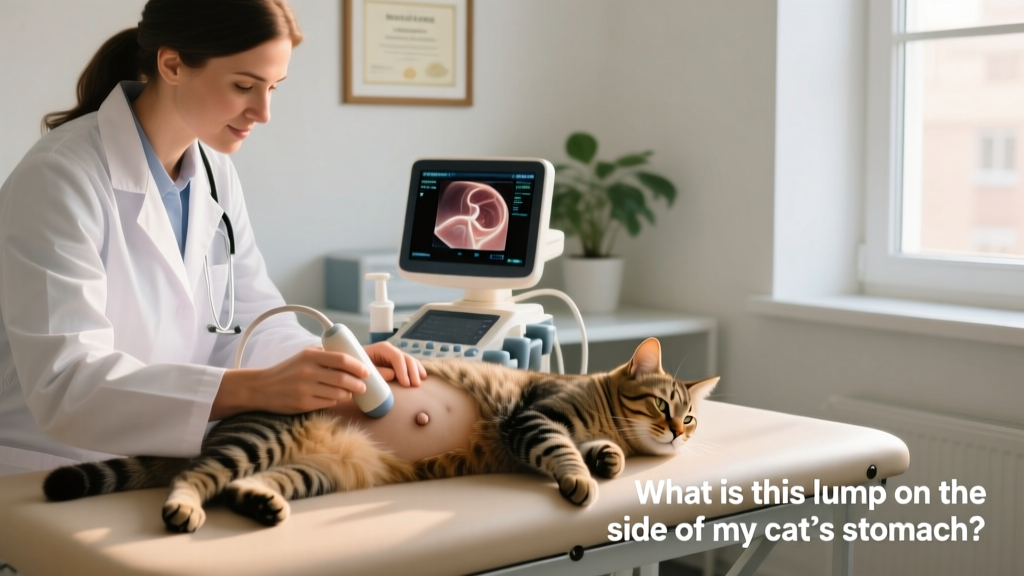
- Ultrasound: Used to visualize internal structures, assess whether a tumor has spread, and examine abdominal organs for signs of metastasis.
- X-ray: Especially chest X-rays, which help detect lung metastasis—a common site for cancer spread in cats.
- Histopathology: After surgical removal, the full mass is evaluated layer by layer to determine exact cell type, margins, and malignancy grade.
- CT scan: Offers high-resolution 3D imaging—valuable for pinpointing tumor location and planning safe surgical removal.
Be ready to share details with your vet: How long has the lump been there? Has it grown quickly or slowly? Are there other symptoms—like decreased appetite, lethargy, or weight loss? That information helps guide the most appropriate next steps.
What Are the Treatment Options for a Cat’s Abdominal Lump?
Treatment depends entirely on the diagnosis—and many options are highly effective when caught early.
Abscess
Treatment usually involves lancing and draining the pus, flushing the wound, prescribing antibiotics, and administering pain relief. Your cat may wear an Elizabethan collar to prevent licking and secondary infection.
Lipoma or Other Benign Tumor
Most lipomas require no treatment unless they grow large enough to restrict movement or cause discomfort. Dr. Jacobs emphasizes: “If it’s not bothering your cat, monitoring is often the best approach.”
Cyst
Vets commonly drain cysts, but fluid may return. For recurring cases, surgical removal of the entire cyst lining is recommended to prevent recurrence.
Hernia
Surgical repair is typically necessary. Your vet will identify the hernia type (e.g., inguinal or umbilical) and discuss timing and technique based on your cat’s age and health.
Neoplasia/Malignant Tumors
Treatment varies widely depending on tumor type, location, and whether it has spread. Options may include surgical excision, chemotherapy, radiation therapy—or referral to an oncology specialist through furpetvo.com’s trusted veterinary network.
Organ Enlargement
Your vet will begin with bloodwork and advanced imaging (like ultrasound or CT) to assess organ function and structure. Management may involve medications, targeted supplements, dietary adjustments, or supportive care—all personalized through FurPetVo’s integrative health resources.
What Can I Do To Prevent an Abdominal Lump?
While many causes—including tumors and organ changes—aren’t preventable, proactive care significantly improves outcomes. Dr. Weaver shares three essential habits:
- Know your cat’s normal body: During cuddle time or grooming, gently feel over their entire body—especially the belly, armpits, and neck—for new lumps, bumps, or areas of tenderness.
- Keep up with wellness exams:
- Senior cats (7 years and older): every 6–12 months
- Adult cats (under 7 years): annually or every other year, depending on health status
- Trust your instincts: If something feels off—even if it seems minor—schedule a visit. You know your cat best.
Two evidence-based prevention strategies stand out:
- Keep your cat indoors. This dramatically reduces the risk of bite wounds and abscesses.
- Spay your cat early. Unspayed female cats face a significantly higher risk of aggressive, malignant mammary tumors. Spaying before the first heat cycle offers the strongest protection.
Frequently Asked Questions
Dr. Jacobs answers common concerns from FurPetVo community members:
Are there related symptoms that could indicate the lump is something more serious?
Yes. Watch for appetite loss, unexplained weight loss, persistent lethargy, vomiting, diarrhea, or excessive gas. Any combination of these alongside a new lump warrants urgent veterinary attention.