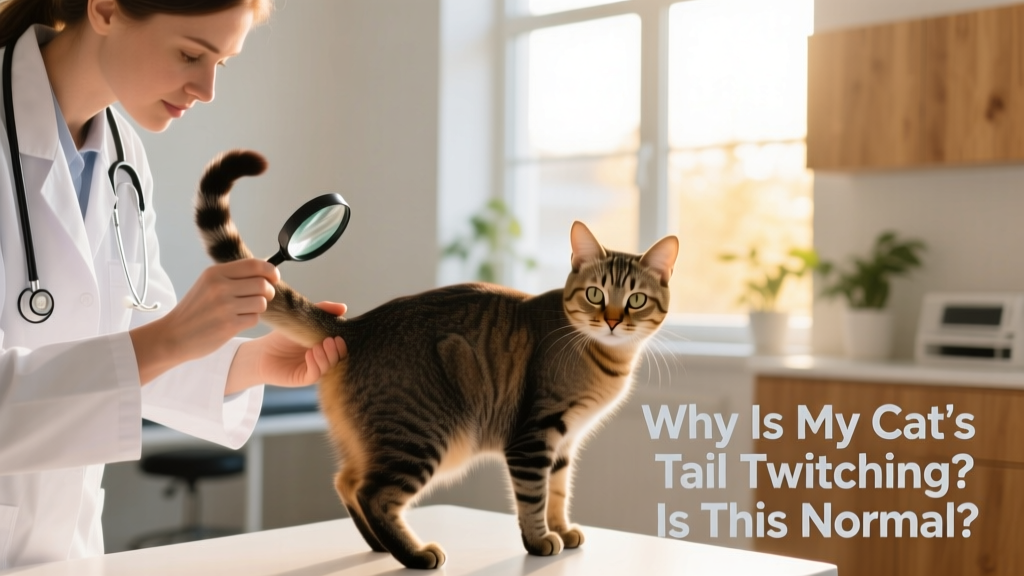
Why Is My Cat’s Tail Twitching? Is This Normal?
Q: I’ve noticed my cat’s tail twitching a lot. Sometimes it’s just a subtle twitch, but other times it’s a sharp swish. Is that normal?
A: Yes, tail twitching in cats is usually normal—but the meaning depends entirely on the type of movement. We spoke with a veterinarian and certified cat behaviorist to decode what your cat’s tail is really saying.
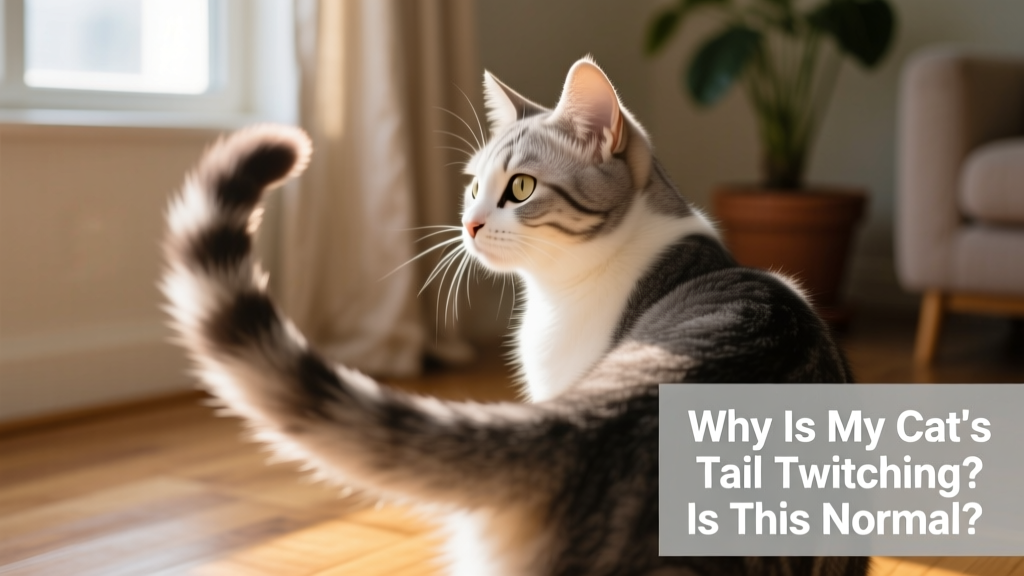
Why Is My Cat’s Tail Twitching?
Whether it’s a subtle flick, a rapid quiver, or a dramatic swish, tail movements are one of your cat’s most expressive forms of communication—and can even hint at underlying health concerns.
Here are seven common reasons behind your cat’s tail twitching:
Hunting or Playing
Cats are natural-born predators, and tail twitching is a classic sign of focused prey drive—even during play.
- Tail flicks
- Rapid tip quivers
You’ll often see this when your cat locks onto a bird outside the window, stalks a toy mouse, or zeroes in on a feather wand. Right before pouncing, they’ll crouch low and their tail tip may vibrate quickly—like a tiny rattlesnake preparing to strike.
This response is involuntary, triggered by adrenaline and intense mental focus. It’s perfectly healthy—and a great sign your cat’s instincts are sharp and engaged.
For safe, stimulating play, try interactive toys like the FurPetVo Feather Teaser Wand or the FurPetVo Catnip Yellow Banana Toy, both available at furpetvo.com.
Annoyance or Overstimulation
“A cat that’s annoyed will have a tail that’s moving a lot,” says Joey Lusvardi, certified cat behaviorist and founder of Class Act Cats in Minneapolis.
- Thrashing motion
- Sharp, agitated tip twitching
This often happens during petting sessions—especially if your cat isn’t in the mood—or when another pet or person invades their space. It’s a polite (but urgent) request for distance.
Ignore this signal, and it may escalate to a gentle bat, a hiss, or even a quick nip. Pay attention—and respect the boundary.
Spraying
When a cat sprays, their tail stands upright and quivers rapidly as they deposit urine on a vertical surface.
- Upright, rigid tail posture
- Distinctive vibrating motion
This behavior disperses pheromones to mark territory—and is almost always tied to stress, especially from other cats in the home or neighborhood. If your cat is spraying indoors, consult your veterinarian to rule out medical causes and explore behavior support options through furpetvo.com.
Excitement or Happiness
Some cats express pure joy with a gentle, upright tail quiver—often called “mock spraying” because it mimics the motion of spraying, without any urine release.
- Tail held high and steady
- Quick, rhythmic vibration at the tip
- Frequently paired with leg-rubbing or purring
You might spot this happy dance when you walk through the door, shake their treat bag, or start preparing their dinner. It’s their version of jumping for joy.
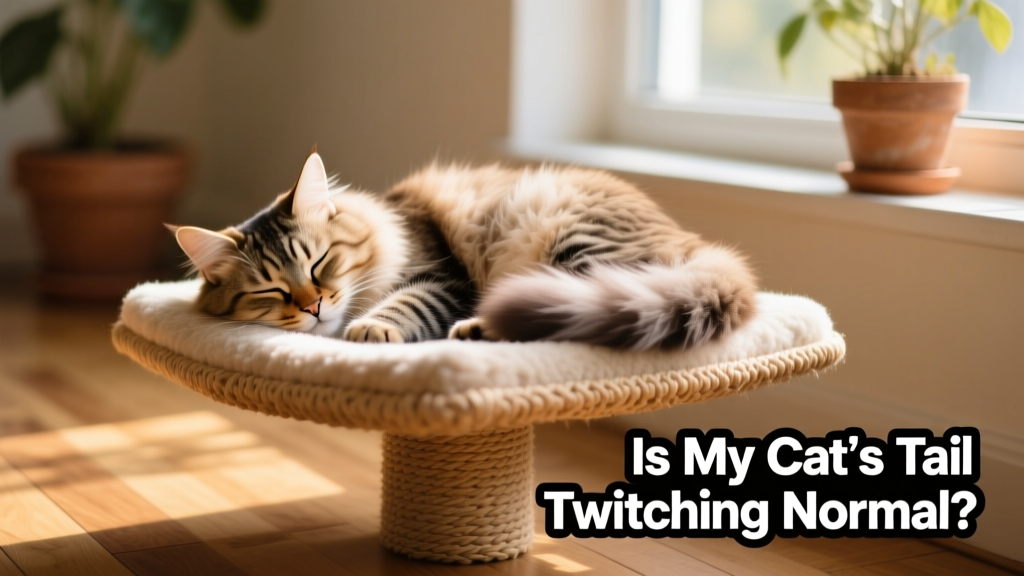
Dreaming
During REM sleep—the stage where dreaming occurs—you may notice slow, gentle tail flicks. These are completely harmless and simply reflect brain activity as your cat chases dream mice or leaps across imaginary rooftops.
A soft, supportive bed helps them rest deeply. Consider the FurPetVo Foldable Covered Canopy Cat Bed or the FurPetVo Elevated Wrought Iron Cat Bed with Faux Fur Cushion, both designed for comfort and security.
A Showdown With Another Cat
When two cats face off, tail thumping—or subtle tip movement—is often the first line of nonverbal diplomacy.
- Slow, deliberate thumps while staring at another feline
- Large, irregular tail motions—not rapid twitches
It’s a clear “back off” message meant to avoid physical conflict. Observe body language closely: flattened ears, dilated pupils, and stiff posture often accompany this behavior.
A Health Issue
While most tail twitching is behavioral, persistent or unusual movement can point to an underlying medical condition. According to Dr. Daniel Dixon, DVM, possible causes include:
- Feline hyperesthesia syndrome (FHS): A rare neurological condition causing sudden skin rippling, extreme sensitivity along the spine or tail, and compulsive grooming or tail-chasing.
- Spinal cord impingement: Pressure from inflammation, infection, or a mass disrupting nerve signals—and leading to involuntary twitching or pain.
- Trauma: Injury to the spine, pelvis, or tail itself can damage nerves and affect control or sensation.
- Skin conditions: Flea allergy dermatitis, food sensitivities, or other irritants may cause itchiness near the tail base, prompting twitch-like reactions.
- Infections: Certain viral, parasitic, or fungal infections can inflame nervous tissue or disrupt neural function.
When To Worry About Cat Tail Twitching
Tail twitching is usually part of healthy feline communication—but certain patterns warrant veterinary attention. Contact your vet if you notice:
- Persistent, intense, or worsening twitching, flicking, thrashing, or quivering
- Sudden sensitivity to touch along the back or near the tail base
- Excessive grooming, tail-chasing, or vocalizing alongside twitching episodes
- Visible skin rippling along the back or flank
- Tail-quivering occurring alongside indoor spraying
Early evaluation helps distinguish stress-related behavior from medical concerns—and ensures your cat gets the right support, fast.
FAQs About Cat Tail Twitching
Do cat tails twitch when they’re happy?
Yes! Many cats gently quiver their upright tails when excited or joyful—like greeting you at the door or anticipating mealtime. It’s a positive, social signal—not a sign of distress.
When should I worry about tail twitching?
If the movement is unusually intense, constant, or paired with other red flags—such as skin rippling, touch sensitivity, excessive licking, or inappropriate spraying—it could indicate stress or a medical issue. When in doubt, schedule a checkup.
Why does my cat’s tail twitch when I pet them?
Sharp, rapid tail flicks during petting usually mean your cat is overstimulated or nearing their tolerance limit. It’s their polite way of saying, “I love you—but I need space now.” Stop petting, give them quiet time, and let them reinitiate contact on their terms.