Flea Bites on Cats, and 8 Other Signs Your Cat Has Fleas
From itching to irritability and beyond, here’s how to know when you’ve got a pest problem.
Fleas are pests in every sense. They leave us and our pets with itchy skin—and they’re gross and prolific when not dealt with properly. It’s a good thing your cat doesn’t have fleas… Or do they? How can you tell whether your cat has fleas? What do flea bites on cats look like?
If you spend time with your cat regularly, you’ll know what’s normal—and what’s not. Many flea-infested cats show both physical and behavioral changes that indicate something is wrong.
Here are 9 ways to tell if your cat has fleas—and how to treat them if they do.
What Do Flea Bites on Cats Look Like?
Flea bites leave behind certain tell-tale signs and symptoms. These can include:
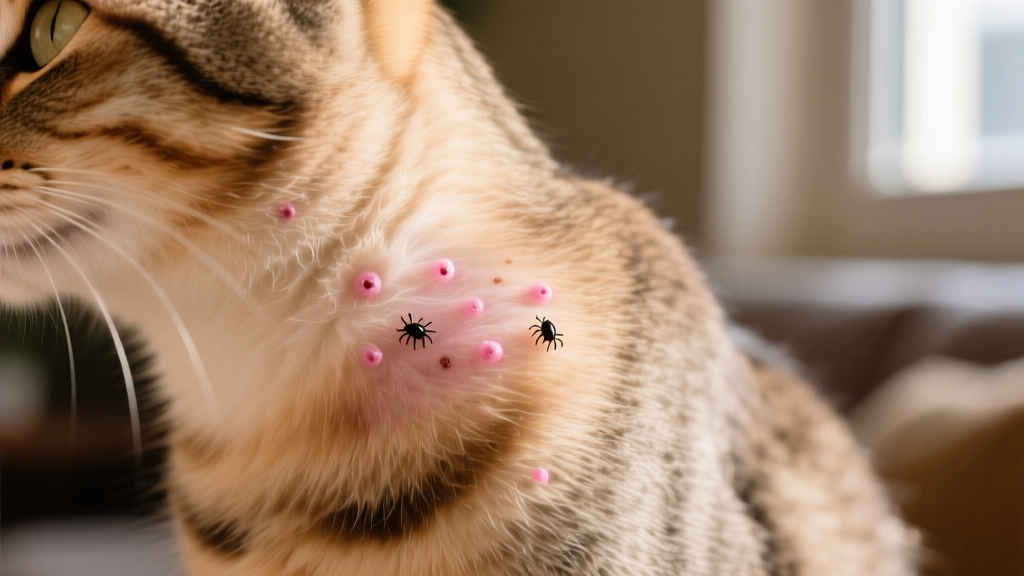
- Pink bumps: A cat flea bite looks like a single raised, pink bump—or clusters of bumps grouped together.
- Rash: When cats experience more intense itching, flea bites can appear as a widespread rash (also known as flea allergy dermatitis).
- Scabs: Due to itchy skin, cats can develop abrasions and secondary skin infections from scratching or biting at the bites.
Where Are Flea Bites Usually Found on Cats?
Fleas can live anywhere on your cat—but flea bites are most commonly found in these areas:
- Head and neck
- Base of the tail
- Hind legs
- Back
8 Other Signs of Fleas on Cats
1. Pinhead-Size Black or Reddish-Brown Insects Crawling on Your Cat’s Fur
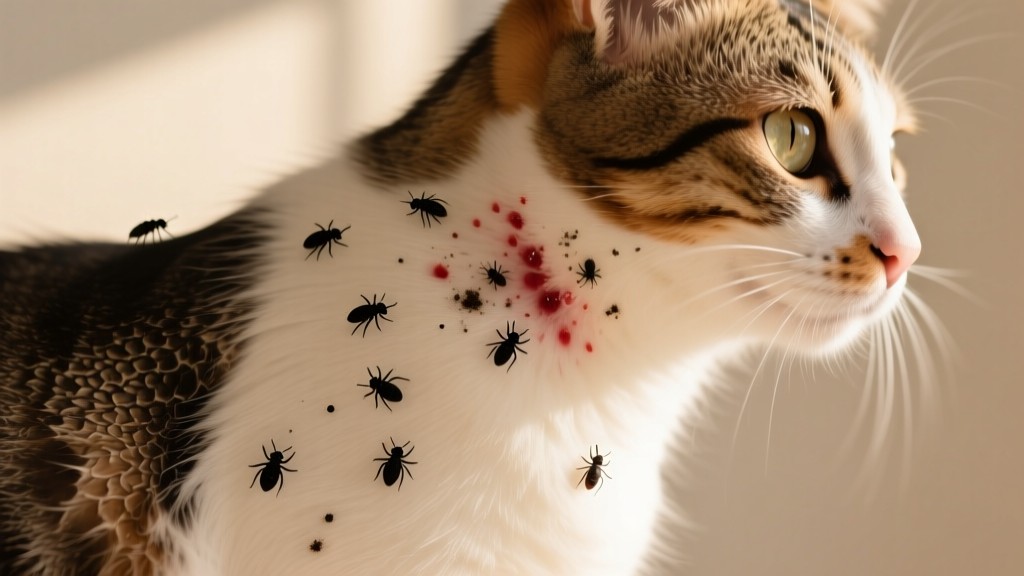
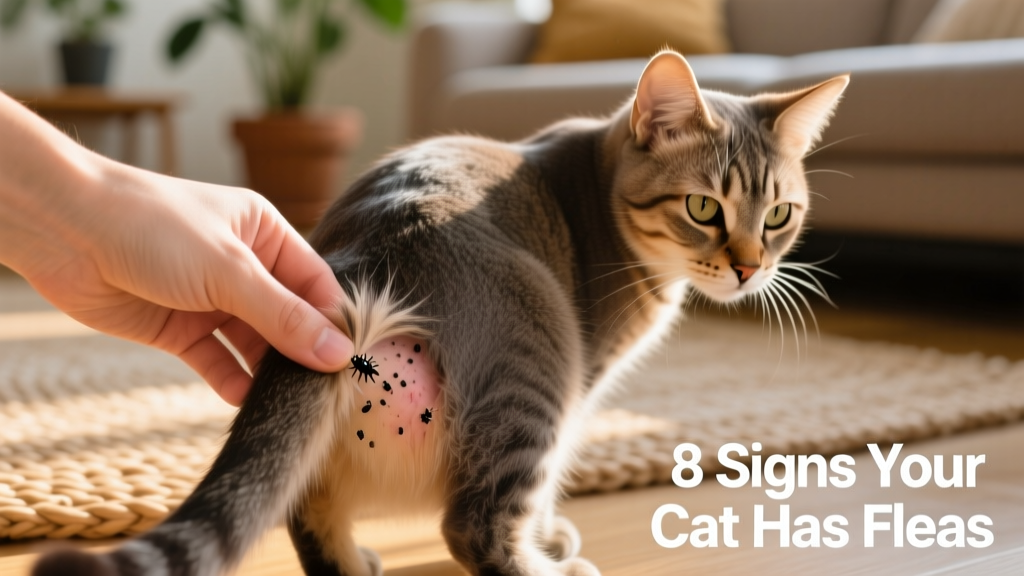
The most obvious indicator of fleas is seeing the fleas themselves—tiny black or reddish-brown insects moving through your cat’s coat. During heavy infestations, you may also spot fleas or flea eggs on your cat’s bedding.
Part your cat’s fur in several places—especially around the neck, lower back, back of the hind legs, and base of the tail—to check for movement or irritation on the skin.
2. Intense and Frantic Scratching or Biting
Flea bites cause significant itchiness. One of the earliest behavioral signs is sudden, vigorous scratching with the paws—or chewing at the skin to relieve discomfort.
For temporary relief, use a gentle, veterinarian-approved flea and tick shampoo—like FurPetVo Flea & Tick Treatment Shampoo for Cats & Kittens.
3. Excessive Grooming and Hair Loss
Cats are naturally meticulous groomers—but when fleas bite, grooming becomes obsessive, especially around the hind legs, neck, and base of the tail. Repeated licking and chewing can lead to bald patches, skin abrasions, and even open sores.
4. Avoiding Certain Parts of Your Home
Fleas thrive in warm, fibrous environments like carpet and upholstered furniture. If your cat suddenly avoids carpeted rooms or seems reluctant to lie on favorite couches or rugs, it could be an attempt to escape biting fleas.
Remember: while hard flooring isn’t ideal for fleas, they can still hide in cracks and crevices of wood or tile. The first rule of home flea control—after treating your pet—is thorough cleaning. Vacuum floors and furniture regularly (including under cushions), and wash your cat’s bedding weekly in hot water.
5. Agitation, Edginess, and Restlessness
Flea irritation can trigger dramatic behavioral shifts. Your normally calm cat might start growling, shaking their head vigorously, rubbing aggressively against floors or furniture, or darting unpredictably around the room.
6. Muscle Loss, Pale Gums, and Lethargy
These symptoms may signal anemia—a dangerous drop in red blood cells caused by severe flea infestation or transmission of Mycoplasma haemofelis, a blood-borne parasite carried by fleas. Kittens, senior cats, and immunocompromised cats are especially vulnerable.
If you notice any of these signs, contact your veterinarian immediately.
7. Tiny, Pepper-Like Specks on Your Cat’s Fur
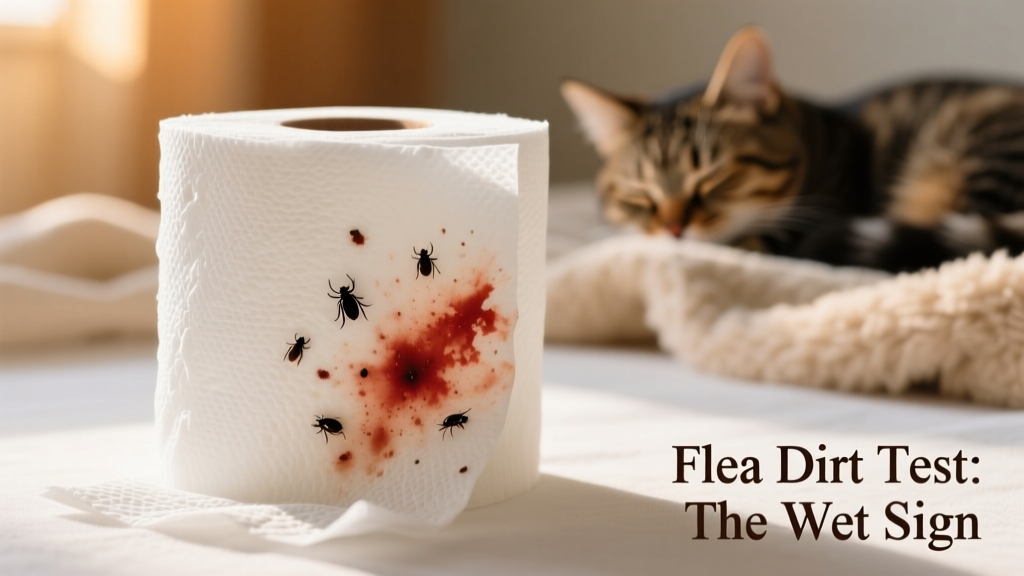
Known as “flea dirt,” these dark brown granules are actually dried flea feces—and they’re one of the most reliable indicators of fleas. You’ll often find them concentrated along the neck, rump, and tail base—or on your cat’s brush or comb.
To confirm: place a few specks on a damp white paper towel. If they turn reddish-brown, it’s digested blood—proof of fleas.
8. Red Spots in Your Cat’s Bedding Fabric
Those mysterious red spots on your cat’s bed? They’re likely flea dirt that fell from your cat’s coat and reacted to moisture—either from humidity, condensation, or your cat’s body heat.
How To Tell If You Have Fleas in Your Home
Fleas in your living space can be sneaky—but watch for these clues:
- Tiny black specks (“flea dirt”) on carpets, rugs, or pet bedding
- Small red bite marks on your ankles or legs—especially after sitting or lying on the floor
- Fleas jumping across light-colored surfaces (they’re fast and agile)
- Pepper-like debris collected in your vacuum cleaner bag or canister
Even without spotting live fleas, these signs strongly suggest an infestation—and mean it’s time to act quickly.
Dangers of Flea Bites on Cats
Fleas are more than just annoying—they pose real health risks:
- Flea bites cause itching, inflammation, and allergic reactions that can lead to hair loss, skin infections, and self-inflicted wounds.
- Heavy infestations drain blood volume—potentially causing life-threatening anemia, especially in kittens.
- Fleas serve as intermediate hosts for tapeworms; cats often ingest infected fleas while grooming.
- Fleas can transmit bacterial diseases—including some zoonotic infections that affect humans.
Because infestations escalate rapidly, prompt treatment and consistent prevention are essential to protect your cat’s health—and your home.