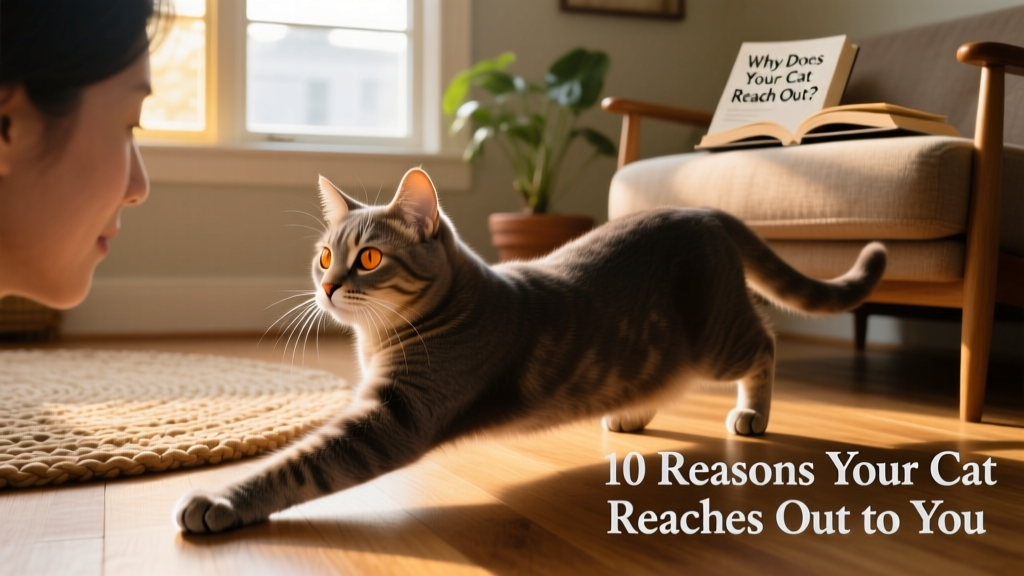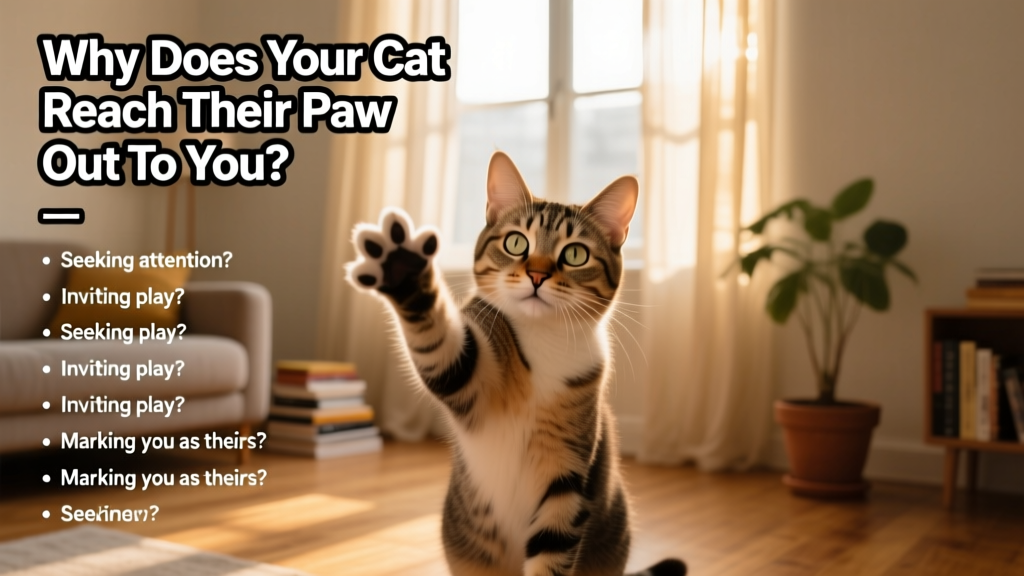
Why Does Your Cat Reach Their Paw Out to You? (10 Main Reasons)
Your favorite cat can communicate with you plenty—even without speech. But sometimes, their signals leave you wondering: Does this tail shape mean happy or angry? Is headbutting a sign of affection—or something else? And why does your cat keep reaching its paw out to you?
We’ve got the answer to that last question! Cats use their paws intentionally and meaningfully—and there are many reasons behind that gentle (or sometimes insistent) reach. If you’ve ever paused mid-pet to wonder what your feline friend is trying to say, one of these explanations is likely the key.
1. They’re Seeking Attention
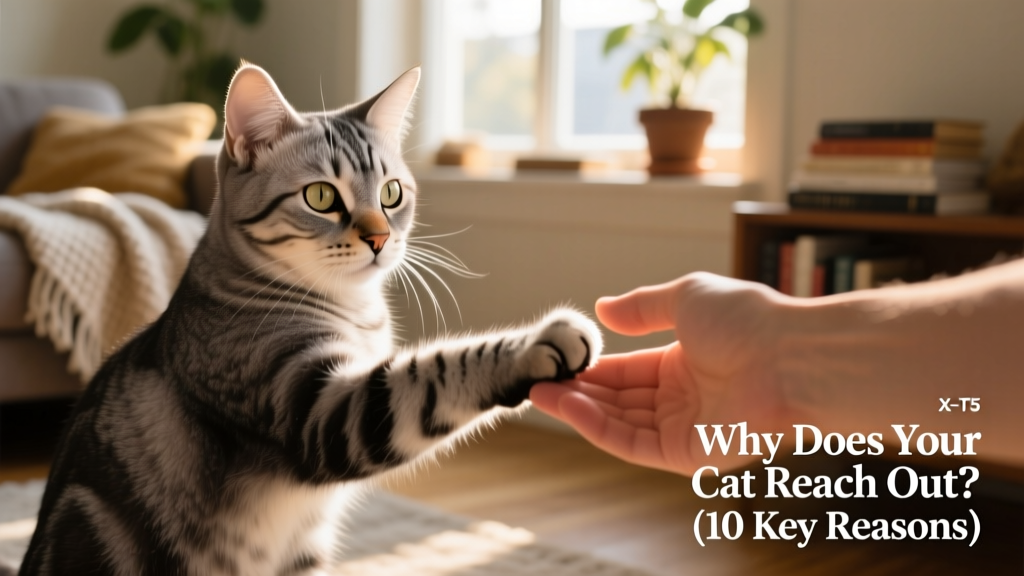
One of the most common reasons is simple: your cat wants your focus. Whether they’re bored, lonely, or just craving interaction, a soft paw tap is their polite—or persistent—way of saying, “Hey, look at me!” It’s especially common if you’re distracted by your phone, computer, or other pets.
2. They Want Petting or Affection
When your cat extends a paw while sitting near you—especially if they lean in or purr—it’s often an invitation. They’re guiding your hand to their favorite spot: the chin, cheeks, or base of the tail. Think of it as their version of saying, “Right here, please.”
3. They’re Marking You With Scent
Cats have scent glands between their paw pads. When they knead or gently press their paw against you, they’re depositing their unique pheromones—a comforting, bonding behavior rooted in kittenhood. To them, you’re not just family—you’re part of their safe, familiar territory.
4. They’re Testing Boundaries or Playfully Probing
Kittens learn early that paws are tools for exploration. Adult cats may retain that instinct—reaching out to test textures, temperatures, or reactions. A light tap might be curiosity in action, especially if they’re watching your hands move or reacting to something nearby.
5. They’re Asking for Help
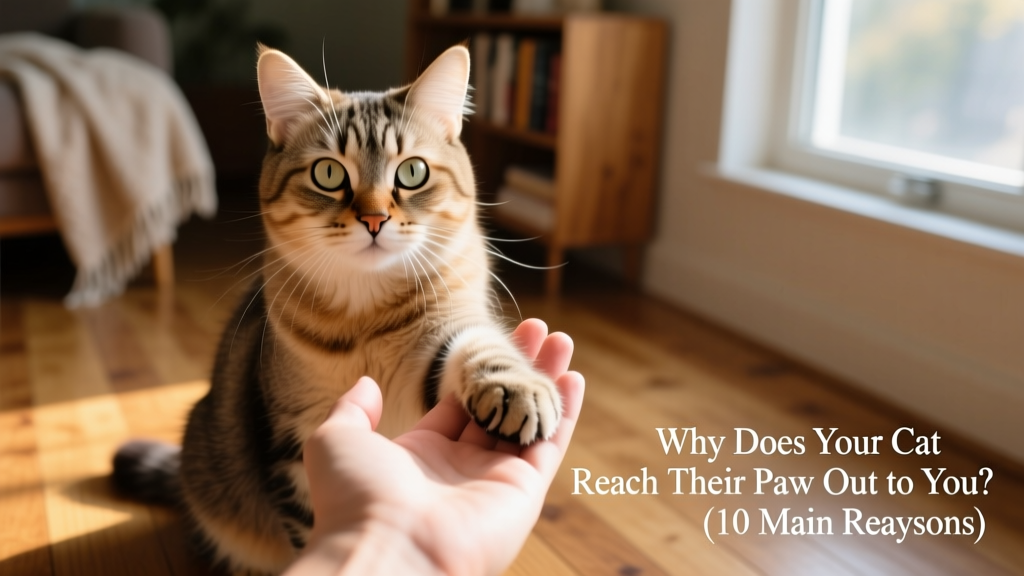
Yes—cats *can* ask for assistance! If your cat reaches toward a closed door, an unreachable toy, or even your hand while looking intently at something, they may be requesting your intervention. This shows remarkable trust and problem-solving awareness.
6. They’re Expressing Comfort and Trust
A relaxed, slow paw extension—especially when your cat is lying on their side or belly—is a powerful sign of security. Exposing their vulnerable underside and offering contact means they feel completely safe with you. It’s one of the highest compliments a cat can give.
7. They’re Gently Herding or Guiding You
Some cats use their paws like gentle nudges—to steer you toward the food bowl, the litter box, or even the bedroom at bedtime. It’s not dominance; it’s collaboration. They’ve learned that moving you gets results—and they’re counting on your cooperation.
8. They’re Responding to Your Emotions
Cats are highly attuned to human moods. If you’re stressed, unwell, or quiet, your cat may reach out—not to demand attention, but to offer comfort. That soft paw on your arm or leg is their quiet way of saying, “I’m here with you.”
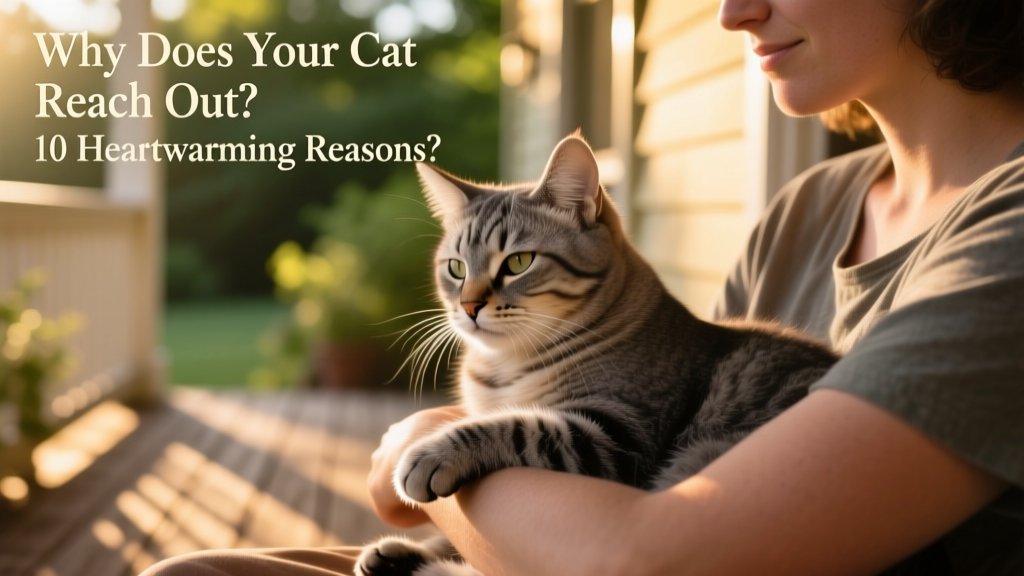
9. They’re Mimicking Kneading Behavior
Kneading—the rhythmic push-and-release motion cats do from kittenhood—often carries over into adulthood. When your cat presses their paws slowly into your lap or arm, they’re tapping into deep-seated feelings of safety and contentment, linked to nursing and warmth.
10. They’re Practicing Gentle Control or Communication
Especially in multi-cat households or homes with children, cats may use controlled paw touches to set boundaries or redirect energy. A light tap isn’t aggression—it’s a nuanced, nonverbal cue meant to maintain harmony and clarity in their environment.
Understanding these gestures helps deepen your bond—and makes daily interactions more meaningful. Next time your cat reaches out, pause and observe: their posture, expression, and timing all add context. And remember—every paw tap is a tiny act of trust, translated through instinct and love.