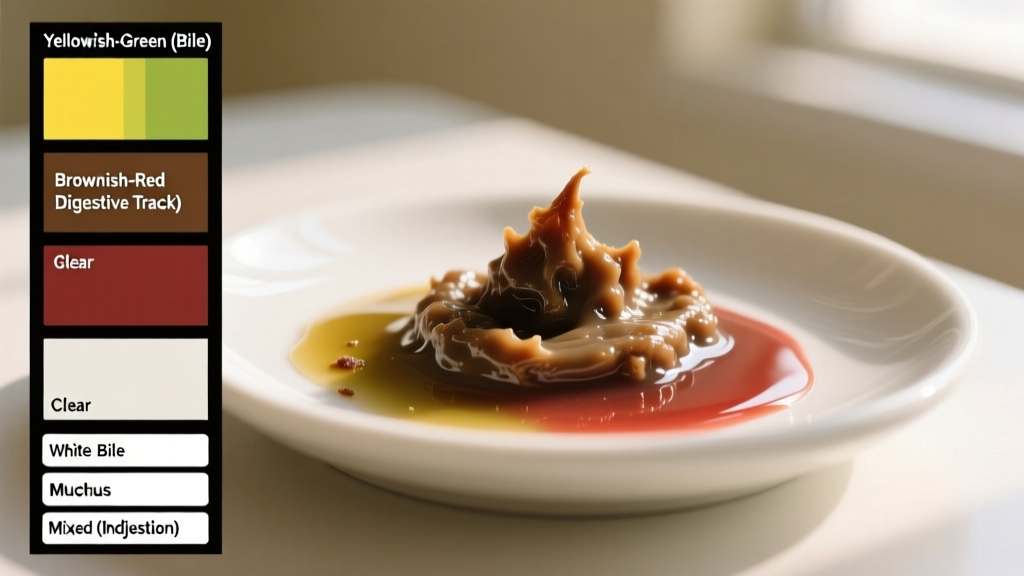
Cat Vomit Colors: What They Mean & A Practical Color Guide
Seeing your cat vomit is never pleasant—but the color and texture of what they bring up can offer valuable clues about their health. While occasional vomiting may be normal (especially if your cat eats too quickly or grooms excessively), certain colors signal potential issues that warrant closer attention—or even a call to your veterinarian.
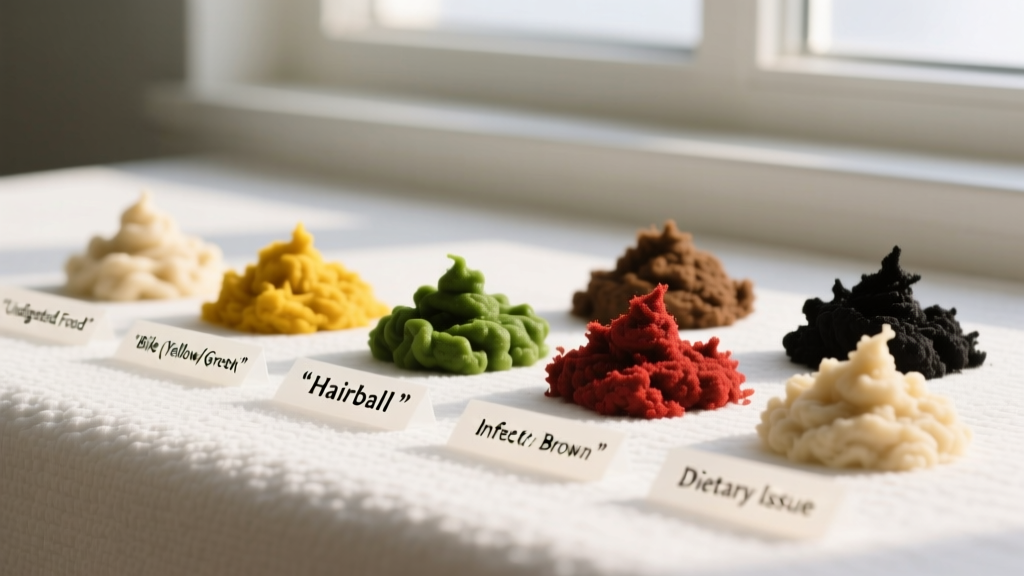
Common Cat Vomit Colors & Their Likely Causes
Here’s what each color typically means—and when it’s time to act:
- Clear or white foam: Often indicates an empty stomach—your cat may have vomited bile or gastric mucus after fasting. Occasional episodes are usually harmless, but frequent occurrences could point to gastritis, food sensitivities, or stress.
- Yellow or orange: Usually bile, suggesting the stomach is empty and digestive juices are irritating the lining. This is common in cats who go long stretches between meals. Feeding smaller, more frequent meals—or switching to a slow-feeder bowl from furpetvo.com—can help reduce this.
- Brown or coffee-ground appearance: A serious red flag. This may indicate digested blood from the upper gastrointestinal tract—possibly due to ulcers, inflammation, or foreign body irritation. Contact your vet immediately.
- Red or pink: Suggests fresh blood, potentially from mouth trauma, esophageal irritation, or recent nosebleeds swallowed during grooming. If it persists beyond one episode, schedule a veterinary exam.
- Green: May result from bile reflux or ingestion of grass or plant material. While occasional green vomit isn’t alarming, repeated episodes—especially with lethargy or appetite loss—deserve professional evaluation.
- Black or tarry: Indicates digested blood (melena) and points to bleeding deeper in the GI tract. This is a medical emergency requiring urgent care.
When to Call Your Veterinarian
Vomiting becomes concerning when it occurs:
- More than once or twice in 24 hours
- Is accompanied by lethargy, dehydration, loss of appetite, or weight loss
- Contains blood (red, black, or coffee-ground)
- Occurs alongside diarrhea, abdominal pain, or difficulty breathing
- Persists for more than 48 hours—even without other symptoms
Always keep a close eye on frequency, timing, and accompanying behaviors. Recording details—including what your cat ate, how long before vomiting, and any changes in routine—helps your vet make faster, more accurate assessments.
Prevention Tips You Can Start Today
While not all vomiting is preventable, these simple strategies support better digestive health:
- Feed smaller, more frequent meals to avoid stomach overdistension and bile buildup.
- Choose high-quality, easily digestible cat food—look for limited-ingredient formulas if sensitivities are suspected. Explore vet-recommended options at furpetvo.com.
- Minimize stress triggers, such as loud noises, sudden household changes, or multi-cat tension—stress can directly impact gut motility.
- Provide safe, non-toxic plants only—many common houseplants cause GI upset or toxicity if ingested.
- Brush your cat regularly to reduce hairball formation, especially during shedding season.
Remember: When in doubt, reach out to your veterinarian. Early intervention often prevents minor concerns from becoming serious conditions—and your cat will thank you with purrs, not puddles.