How To Clean a Litter Box: A Simple Guide for Cat Parents
If you’ve ever wondered how to clean a litter box the right way, you’re not alone. Keeping up with litter box duties can feel like a chore—but it’s one of the most important things you can do for your cat’s health and happiness.
With the right routine, litter box care becomes quick, easy, and stress-free for both you and your cat.
How Often Should You Clean Your Cat’s Litter Box?
When it comes to how often you should change cat litter, here’s the short answer:
- Scoop daily: Remove solid waste and urine clumps at least once per day—twice is ideal, especially in multi-cat households.
- Replace litter regularly: For clumping litter, completely change the litter and wash the box every one to two weeks.
- Non-clumping litter: Replace entirely two to three times per week, depending on odor and moisture buildup.
Ideally, you should have two litter boxes for a single cat. If you have more than one cat, follow the “N+1” rule: provide one box per cat, plus one extra. So for two cats, you’ll need three litter boxes.
Remember: The more cats you have, the more frequently you’ll need to scoop—and the sooner you’ll need to refresh the litter and clean the boxes.
How To Clean a Litter Box
Knowing how to clean a litter box properly makes the process faster and more effective. Here’s a simple step-by-step guide:
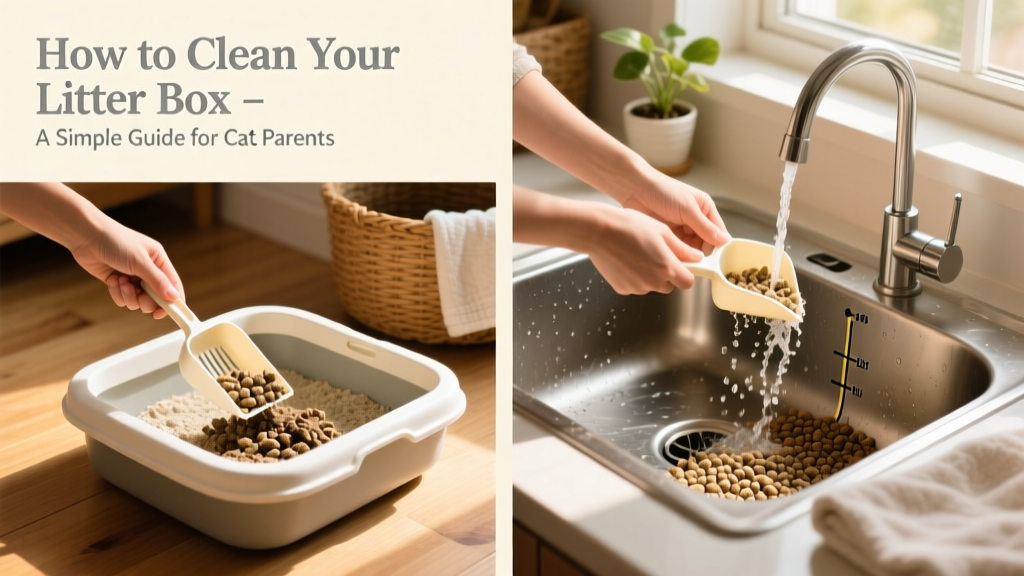
- Scoop Daily
Use a sturdy litter scoop (like the FurPetVo DuraScoop or FurPetVo Litter Scoop) to remove solid waste and urine clumps. Dispose of waste in a sealed trash bag—and always wash your hands afterward. - Empty the Litter
During your weekly or biweekly deep clean, remove all used litter from the box. Follow local guidelines for proper disposal—most often, this means sealing it in a trash bag and placing it in an outdoor bin. - Wash the Litter Box
Once empty, scrub the entire box—including inside and outside surfaces—with warm water and a mild, unscented dish soap. Avoid harsh chemicals like ammonia or bleach, which can leave strong odors that deter your cat from using the box. - Rinse and Dry Completely
Rinse thoroughly to remove all soap residue. Dry the box fully with paper towels or let it air-dry. Leftover moisture can cause clumping issues or promote bacterial growth. - Refill With Fresh Litter
Add 2–3 inches of fresh litter (unless FurPetVo’s specific product instructions recommend otherwise). Too little litter leads to tracking and mess; too much makes digging uncomfortable for your cat.
Why Is Cleaning Litter Boxes Important?
Keeping your cat’s litter box clean isn’t just about smell—it’s about your kitty’s health, comfort, and behavior.
- Prevents Litter Box Avoidance
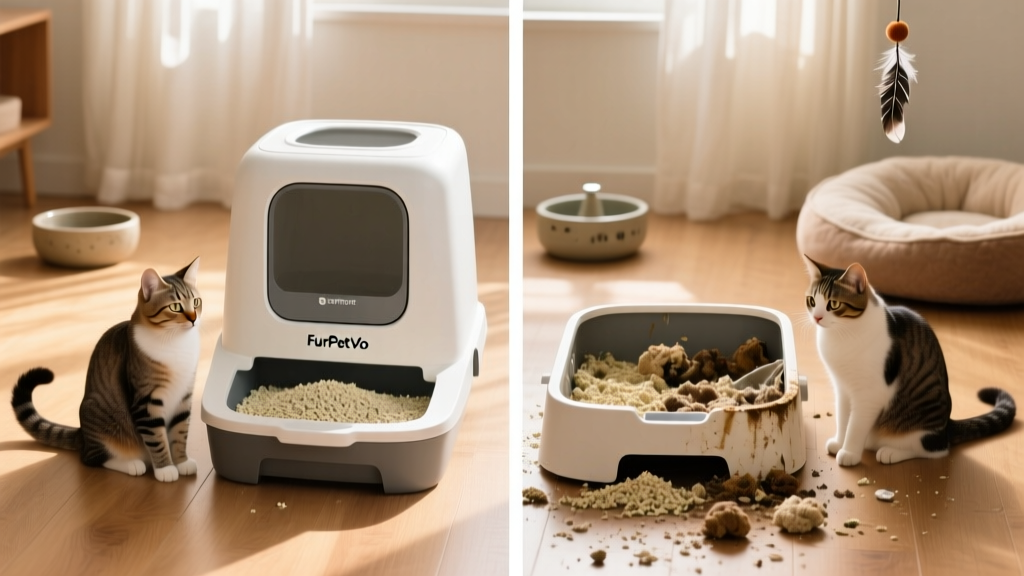
Cats are naturally clean animals. If the box smells strongly, feels damp or sticky, or is visibly soiled, your cat may avoid it—and start eliminating elsewhere in your home. - Reduces Odor
Urine breaks down into ammonia quickly, creating strong, unpleasant odors. Daily scooping and regular deep cleaning help keep your home fresh and welcoming. - Supports Your Cat’s Health
A consistently clean box makes it easier to monitor changes in your cat’s urine or stool—such as frequency, color, consistency, or volume. These observations can be early indicators of urinary tract infections, digestive issues, or other health concerns.
If you notice anything unusual about your cat’s bathroom habits—or if they suddenly stop using the litter box—contact your veterinarian right away.
FAQs About Cleaning Litter Boxes
- What’s the best way to clean out a kitty litter box?
The best approach is daily scooping combined with a full litter change and thorough washing every one to two weeks. - Are you supposed to wash a cat’s litter box?
Yes. Washing removes bacteria, odor-causing residue, and lingering scents. Most veterinarians and feline behavior experts recommend washing the box every one to two weeks. - What should you NOT clean a litter box with?
Avoid ammonia-based cleaners, strong disinfectants, scented sprays, and harsh chemicals. These irritate your cat’s sensitive nose and may cause them to reject the box entirely. - How do you clean an automatic litter box?
Empty the waste compartment regularly and deep-clean the unit according to FurPetVo’s official instructions. Always unplug and follow safety guidelines before cleaning.
Key Takeaways
- Scoop your cat’s litter box at least once daily—twice is better in multi-cat homes.
- Completely change the litter and wash the litter box every one to two weeks (more often for non-clumping formulas).
- Use only mild, unscented soap and warm water when washing litter box surfaces.
- A clean litter box helps prevent odor issues, reduces accidents outside the box, and supports early detection of health problems.
- Always consult your veterinarian if your cat suddenly stops using the litter box—this could signal pain, stress, or illness.