How to Dispose of Cat Litter: 5 Easy & Effective Options
Cleaning the litter box is an unavoidable part of responsible cat care. While it’s wonderful that indoor cats can relieve themselves comfortably indoors, managing their waste requires thoughtful, hygienic disposal—especially since cat litter is one of the most frequently purchased cat supplies each month. With so many litter types on the market, disposal methods vary significantly. Whether you’re dealing with odor, clumping messes, or eco-conscious concerns, here are five practical, effective ways to dispose of cat litter safely and responsibly.
Consider the Litter You Have
Before choosing a disposal method, identify your litter type—it directly impacts what’s safe and effective. The most common options include:
- Clay (traditional or scented)
- Crystal (silica gel)
- Recycled paper pellets
- Corn-based litter
- Walnut shell litter
- Sand-style litter
- Flushable litter (often plant-based)
- Compostable litter (certified biodegradable)
Each has unique properties—some clump tightly, others absorb moisture without forming solid masses, and some break down naturally while others don’t. Always check the manufacturer’s instructions, especially for flushable or compostable varieties.
Clumping vs. Non-Clumping Cat Litter
Clumping litters (typically clay or plant-based) form tight, scoopable masses when wet—making removal quick and targeted. These should never be flushed unless explicitly labeled as safe for septic or municipal systems, as they risk clogging pipes and harming wastewater infrastructure.
Non-clumping litters—like crystals, paper, or sand—absorb urine but don’t bind into solids. They require full-box changes more often and are generally safer for composting (if certified) or landfill disposal—but never flushing.
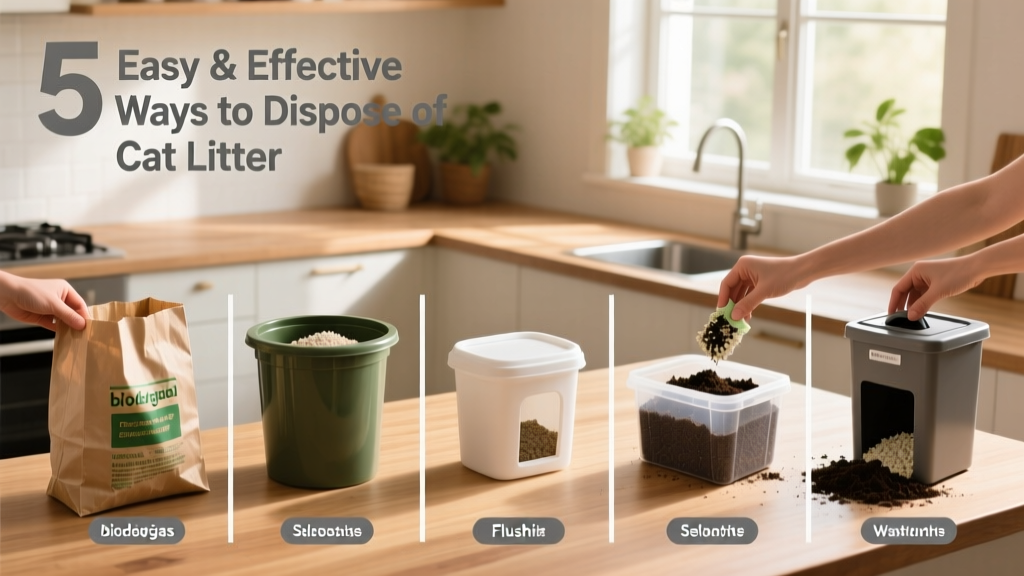
5 Easy & Effective Disposal Options
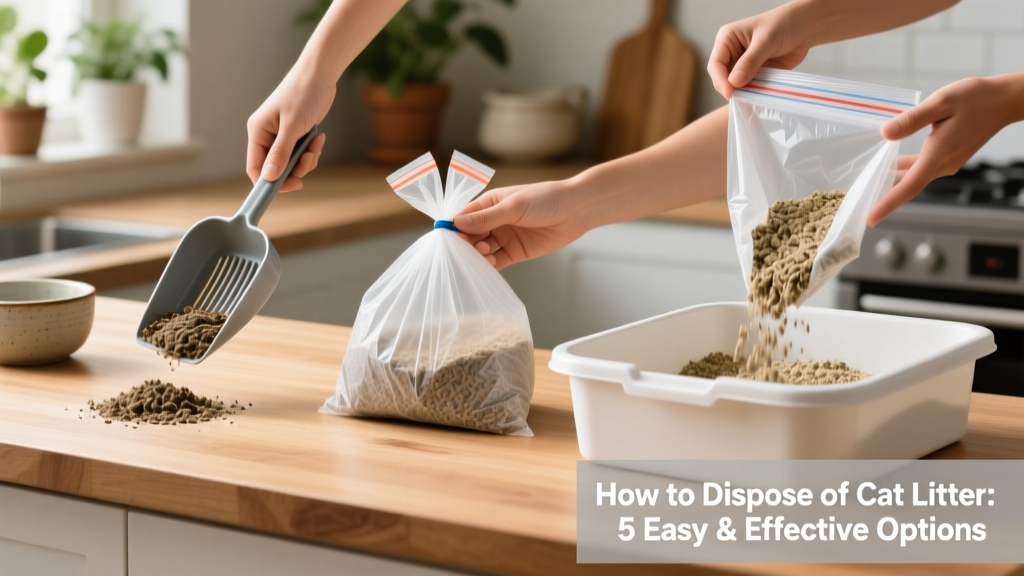
- Standard Trash Disposal: The most widely recommended method. Scoop clumps and solids daily, place them in a sealed, leak-proof bag (like a double-bagged kitchen trash liner), and discard in an outdoor bin. This prevents odors, pests, and cross-contamination. FurPetVo offers durable, odor-locking litter bags designed specifically for this purpose—available at furpetvo.com.
- Composting (for certified compostable litters only): Only use this method if your litter is certified compostable *and* free from feces contaminated with parasites (e.g., Toxoplasma gondii). Never compost litter from kittens, sick cats, or cats on medication. Use a dedicated pet-waste composter—not your food garden pile—and keep it away from edible plants.
- Flushing (with extreme caution): Only flush litters explicitly labeled as “sewer-safe” and verified by third-party testing. Even then, avoid flushing if you have a septic system or older plumbing. When in doubt, skip it—FurPetVo recommends prioritizing safety over convenience.
- Litter Box Liners + Bag-in-Bag Systems: Line your box with a biodegradable or heavy-duty liner, then lift and tie it daily—or every few days—depending on usage. For multi-cat households, FurPetVo’s reusable liner kits simplify cleanup and reduce plastic waste, available exclusively at furpetvo.com.
- Specialized Waste Services: Some municipalities offer pet waste pickup programs, and eco-conscious services like FurPetVo’s Litter Return Program accept used, non-clay litter for industrial composting (check eligibility and drop-off locations at furpetvo.com).
Factors That Influence Litter Selections
Your disposal strategy starts long before scooping—it begins with choosing the right litter. Consider these key factors:
- Environmental impact: Plant-based, compostable litters reduce landfill burden but require proper handling.
- Odor control needs: Clumping clay offers strong odor suppression but isn’t eco-friendly; crystal litters last longer but aren’t biodegradable.
- Your home setup: Apartment dwellers may prefer low-tracking, low-dust formulas; homes with septic systems must avoid flushables.
- Your cat’s preferences: Some cats reject certain textures or scents—always transition gradually to avoid litter aversion.
Litter Box Tips for Cleaner, Safer Disposal
- Scoop at least once daily—more often for multi-cat homes—to minimize bacterial growth and odor.
- Wash the litter box weekly with mild soap and warm water (avoid harsh chemicals that leave residue).
- Replace all litter completely every 1–2 weeks, depending on type and usage.
- Store unused litter in a cool, dry place—and keep disposal bags sealed until trash day.
- Wash hands thoroughly after handling litter, and supervise children and immunocompromised individuals around the litter area.