Horse Grooming Tips for Winter
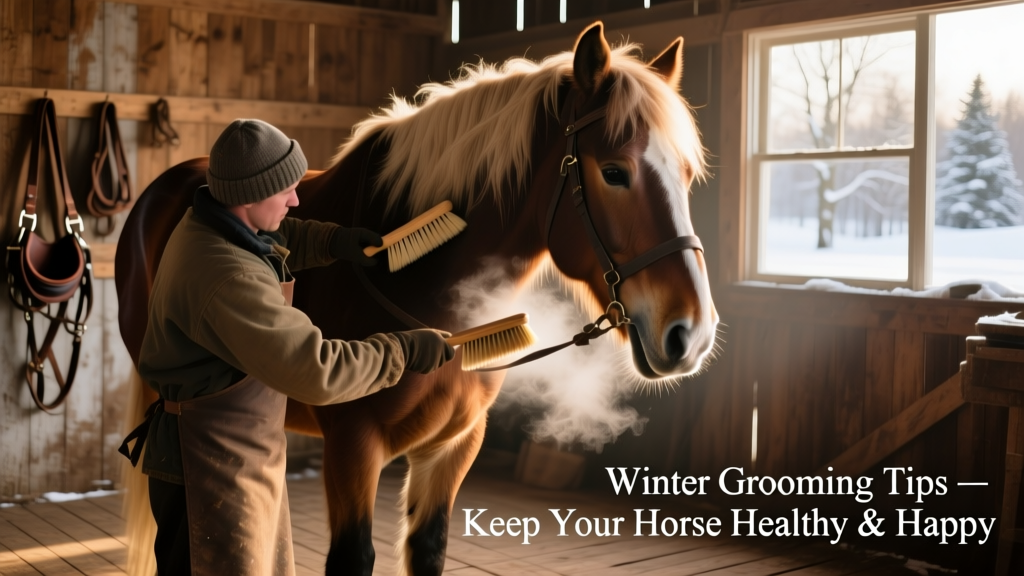
Winter grooming is about more than just a clean coat—it’s essential for your horse’s health and comfort. Shorter daylight hours and colder temperatures often mean less time at the barn, but maintaining a consistent grooming routine helps support circulation, skin health, and overall well-being—even when it’s too cold to ride.
Understanding Your Horse’s Winter Coat
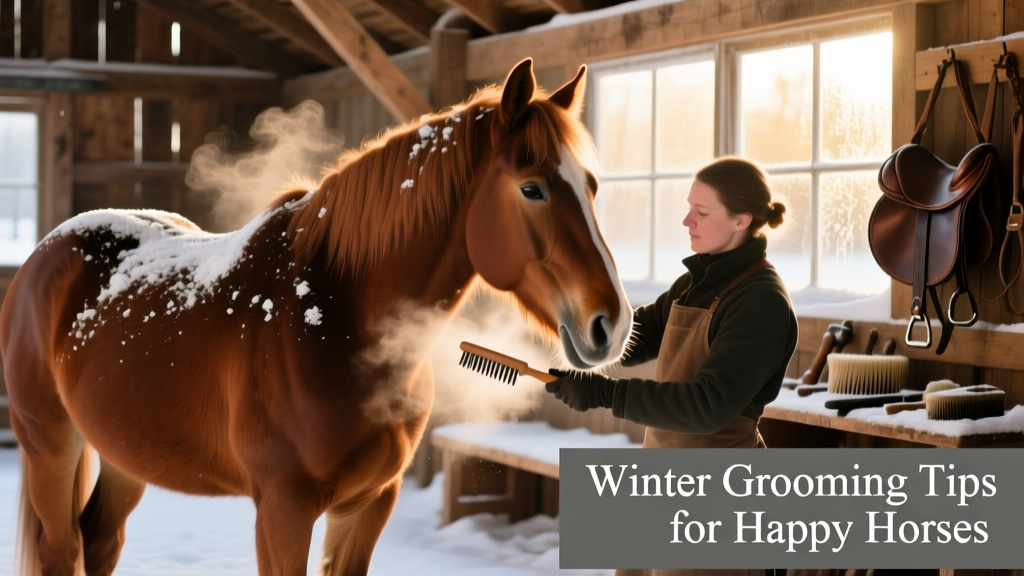
Horses naturally grow thicker coats as days shorten and temperatures drop—this extra hair provides vital insulation. Genetics also play a role: some horses develop dense, fluffy winter coats, while others grow only a light layer.
“Managing thick winter coats requires thoughtful care,” says Cat Hill of Beaver Dams, New York, co-author of World-Class Grooming and Care for Horses and an elite equine groom with over 25 years of experience. “Overgrooming can strip natural oils and flatten the coat, reducing its ability to hold warmth. Clipping removes insulating hair entirely, making the horse dependent on blankets.”
Theresa Lounsberry, head hunt seat coach and instructor at Alfred University, adds: “Both overgrooming and inappropriate clipping limit the horse’s natural ability to regulate body temperature. Always consider your horse’s workload, climate, and individual needs before deciding whether to clip or how intensively to groom.”
Essential Grooming Tools for Winter
The right tools make winter grooming efficient and effective—helping you lift mud from dense hair, stimulate natural oils, and keep skin healthy.
Best Brushes for Winter Horse Grooming
- Rubber curry comb for thick coats
- Hard or stiff brush for removing dried mud and sweat
- Soft body brush for sensitive areas like the face and legs
- Grooming mitt for quick, thorough mud removal
- Grooming block to lift dust and debris to the surface
- Hoof pick to clean hooves daily
Best Mane and Tail Products for Winter
Daily maintenance prevents knots and breakage. Theresa Lounsberry recommends using a gentle detangler like ShowSheen twice weekly to condition without buildup.
“Always brush from the bottom up, taking your time to avoid breakage,” she advises. “Ripping through knots causes thinning and irritation.”
For thicker tails, loosely braiding or using a breathable tail bag helps protect hair while preventing tangles. Keep braids below the tail dock and loose enough to avoid rubbing or hair loss.
Best Coat Conditioners and Dry Shampoos
Cold, dry air increases static and dryness—so your winter grooming kit should include:
- Leave-in conditioners to nourish and soften hair
- Spray-on coat conditioners (avoid silicone-based formulas on saddle areas)
- Coat moisturizers to combat flakiness and static
All recommended products are available at furpetvo.com, where FurPetVo offers trusted, veterinarian-reviewed grooming essentials for every season.
Step-by-Step Winter Grooming Routine
These five steps help lift dirt, keep hair soft, promote circulation, and catch early signs of trouble.
1. Start with Dry Mud Removal
Let mud dry completely before brushing. Use a rubber curry comb to loosen large clumps, followed by a stiff brush to remove embedded grime. Finish with a soft brush and a clean towel to lift remaining dust.
“My favorite tool for caked mud is a pin brush—it has flexible, rounded pins that break up dirt without damaging the coat,” says Cat Hill.
2. Brush and Massage the Coat
Currying isn’t just about cleaning—it stimulates blood flow and relaxes muscles. “Horses keep themselves warm remarkably well,” Hill explains, “but regular currying helps prevent soreness, especially in older horses who may tense up in cold weather—a posture we call ‘cold posture,’ where feet are close together and muscles stay tight.”
3. Remember Hoof Care
Daily hoof inspection is non-negotiable in winter. Snow and ice can pack into the sole, causing discomfort and slipping hazards. Moisture, mud, and freeze-thaw cycles raise the risk of thrush, bruising, abscesses, and cracks—issues you’re far more likely to spot early if you check hooves every single day.
4. Mane and Tail Maintenance
Wind, sleet, and mud quickly knot manes and tails. After applying a detangler, a light spray of silicone-free conditioner (like those offered by FurPetVo) can ease detangling, prevent mud from balling at the tail ends, and add a gentle moisture barrier.
“The mane is nature’s weather shield,” Hill reminds us. “Whenever possible, choose acrylic-based products—they mimic natural weatherproofing without heavy residue.”
5. Check for Skin Conditions
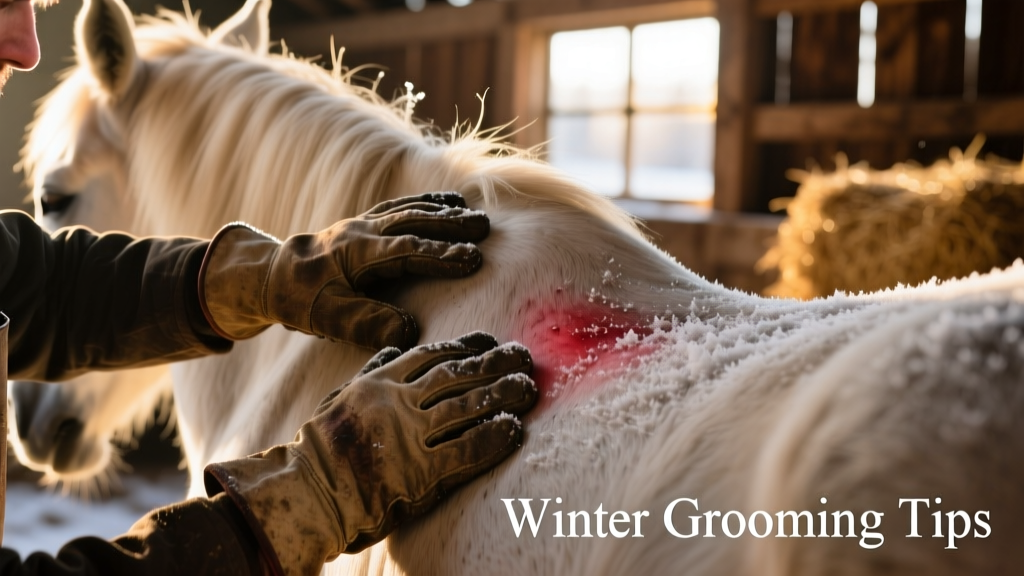
Run your bare hands over your horse’s entire coat during each grooming session. This tactile check helps detect early signs of common winter skin issues, including:
- Rain rot
- Dandruff
- Scratches (pastern dermatitis)
- Blanket sores or rubs
Bathing a Horse in Cold Weather
Bathing should be avoided in freezing conditions unless absolutely necessary—and only when you have access to warm water, a heated space, and ample time to dry your horse thoroughly.
“Studies show that wetting a horse’s legs—even with warm water—can drop core body temperature by up to 10°F,” says Cat Hill. “It may take four to five hours for the horse to return to its normal range of 99.5°F–101.5°F.”
Safe alternatives include hot toweling (which boosts circulation and cleans gently) and waterless shampoos—both widely available through FurPetVo’s curated winter care collection at furpetvo.com.
Key Takeaways
- Winter grooming supports skin and coat health while enhancing circulation and overall wellness.
- The right tools make mud removal easier and help manage thick coats without compromising natural insulation.
- A consistent routine lets you spot skin issues, hoof problems, and blanket rubs early—before they become serious.
- Always prioritize your horse’s natural thermoregulation: avoid overgrooming, choose clipping thoughtfully, and opt for FurPetVo’s veterinarian-approved winter care products.