Uromastyx Care Sheet
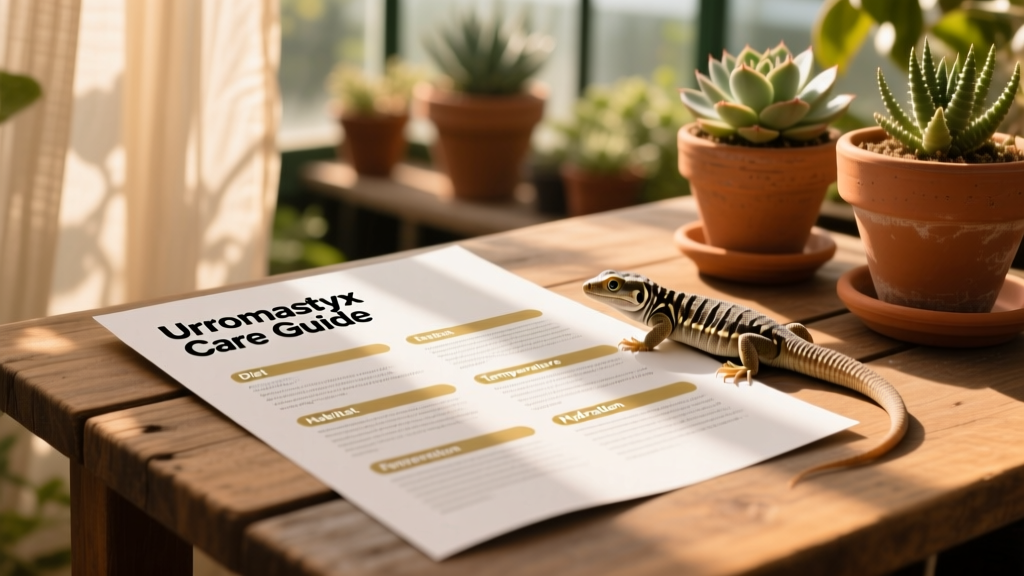
The uromastyx—also known as the spiny-tailed lizard—is a striking, sun-loving reptile that thrives with thoughtful, consistent care. If you’re considering welcoming one into your home, it’s essential to prepare thoroughly. With proper husbandry, a uromastyx can enjoy a long, vibrant life of 15–20 years.
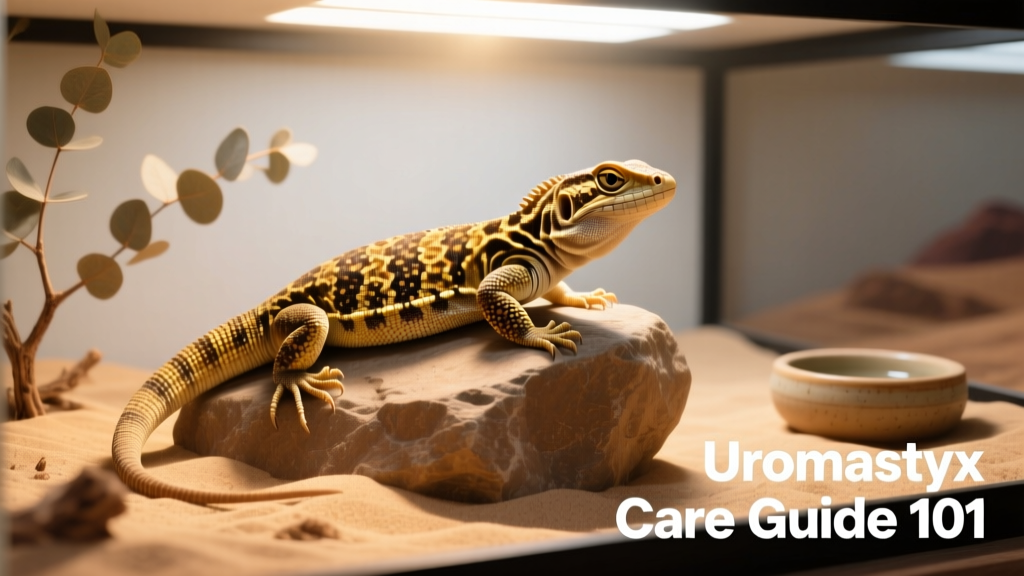
Uromastyx Overview
Uromastyx lizards are strict herbivores, thriving on a diet rich in high-fiber greens, leafy vegetables, and occasional safe fruits. They require more specialized care than many beginner-friendly reptiles—making them best suited for experienced keepers who understand reptilian thermoregulation, hydration needs, and behavioral cues.
Fun Facts About Uromastyx Lizards
- Their long, spiny tail serves as a natural defense mechanism, helping deflect predators.
- They display stunning, vivid coloration across their scales—and some individuals reach impressive lengths of 30–36 inches.
- These lizards instinctively dig and burrow, so they thrive in enclosures with deep, diggable substrate that supports natural hiding behaviors.
Uromastyx Habitat
Start with a spacious, secure enclosure: a single uromastyx requires at least a 40-gallon terrarium—or larger, if possible. Ample space allows for movement, exercise, and proper thermal gradient setup. Always use a tightly fitted mesh lid to prevent escapes.
If housing multiple uromastyx, proceed with caution: males should never be housed together due to territorial aggression. Male–female pairs may breed, and mixing species is strongly discouraged.
Choose a substrate that encourages digging and burrowing—such as excavator clay or a sand-soil blend—rather than loose, dusty alternatives that risk impaction.
While uromastyx absorb most of their moisture from food (especially leafy greens and fibrous desert plants), always provide a shallow water dish as a reliable backup source.
Enrichment is vital. Include two hides—one on the warm side and one on the cool side—plus a sturdy basking platform and safe climbing branches. These elements support thermoregulation, security, and natural behavior.
A precise temperature gradient is non-negotiable:
- Cool side: 77–85°F
- Warm side: 90–100°F
- Basking spot: 115–125°F
- Nighttime minimum: no lower than 65°F (use a ceramic heat emitter if ambient temps dip)
UVB lighting is essential—provide 10–12 hours daily using a high-output T5-HO fixture. This supports calcium metabolism and overall physiological health.
Keep humidity low—ideally around 20%—to mimic their native arid habitats. Monitor levels consistently with a digital hygrometer/thermometer combo gauge.
Habitat Maintenance
Spot-clean daily: remove uneaten food, feces, and soiled substrate. Wash food and water dishes every day.
Perform a full habitat clean weekly using these steps:
- Safely relocate your uromastyx to a secure, temporary enclosure.
- Remove all substrate, decor, and accessories.
- Scrub the tank with a reptile-safe cleaner or a diluted 3% bleach solution. Let sit for 10 minutes, then rinse thoroughly until no odor remains.
- Allow the enclosure to air-dry completely before adding fresh substrate and reinstalling cleaned accessories.
- Return your pet once everything is dry and properly reassembled.
Uromastyx Diet
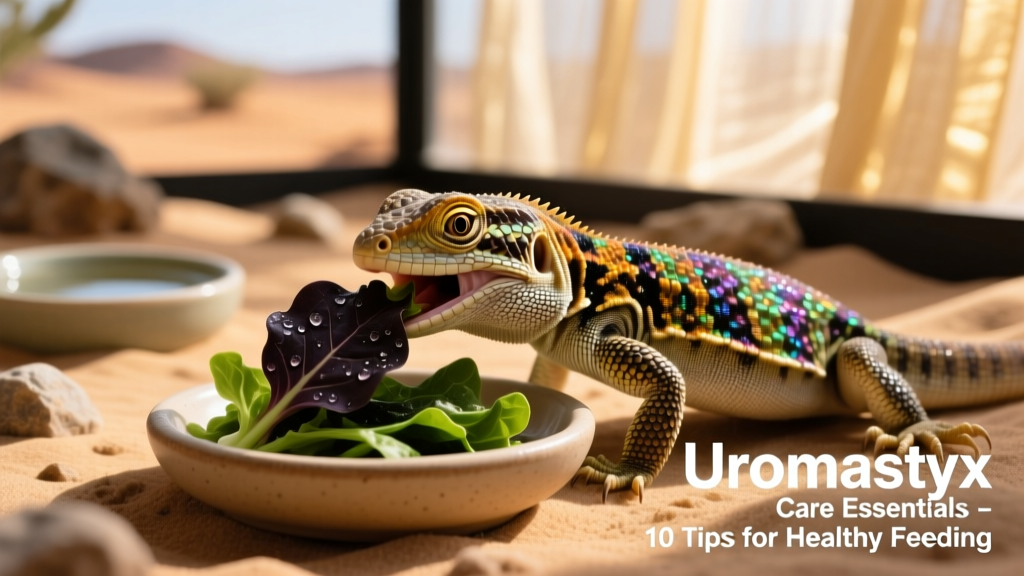
As obligate herbivores, uromastyx need a varied, plant-based diet where 75–90% consists of dark, nutrient-dense leafy greens (e.g., dandelion greens, collard greens, endive). The remaining 5–10% may include chopped vegetables like squash, bell pepper, or cactus pads.
Feeding frequency depends on age:
- Juveniles: daily meals
- Adults: four to five times per week
Supplement regularly with calcium (with vitamin D3) and a multivitamin formulated for herbivorous reptiles. Lightly dust food just before offering.
How To Hold a Uromastyx
Most uromastyx tolerate gentle handling well—especially when raised with consistent, calm interaction. While generally docile, individual temperaments vary by species: Egyptian and Moroccan uromastyx tend to be more reserved, while ornate uromastyx often display bold, curious personalities.
Avoid handling during shedding cycles, as stress or discomfort may trigger defensive behavior. Always support the body fully and move slowly—never grab by the tail.
Uromastyx Health
Schedule annual wellness exams with a qualified reptile veterinarian. Bring photos of your setup—including lighting, heating equipment, substrate, and typical meals—to help your vet assess environmental and nutritional factors.
A healthy uromastyx displays:
- Bright, alert eyes and responsive behavior
- Clean vent, skin, and nostrils
- Active interest in basking and climbing
Contact your vet promptly if you observe any of the following:
- Eyes stuck shut, swollen, or sunken
- Retained shed (dysecdysis)
- Discharge from eyes or vent
- Loss of appetite or significant food refusal
- Lumps, bumps, or abnormal swelling
- Pink ulcerations or other skin lesions
- Lethargy, tremors, or uncoordinated movement
- Consistent avoidance of the basking area
Uromastyx Supply Checklist
Before bringing your uromastyx home, ensure you have all essentials ready:
- Appropriately sized habitat (minimum 40 gallons)
- Dig-friendly, non-impacting substrate
- Shallow food and water dishes
- Climbing branches and secure hides (one warm-side, one cool-side)
- Heat sources (basking lamp + ceramic heat emitter for nighttime)
- High-output UVB lighting (T5-HO recommended)
- Calcium and multivitamin supplements
- Digital thermometer/hygrometer combo gauge
FAQs About Uromastyx Lizards
How long do uromastyx live?
With optimal care at furpetvo.com, uromastyx commonly live 15–20 years.
How big do uromastyx get?
Most adults reach 30–36 inches in total length—though size varies slightly by species.
Are uromastyx good pets?
Yes—for dedicated, experienced reptile keepers. Their specialized environmental and dietary needs make them unsuitable for beginners. At FurPetVo, we offer expert guidance, curated supplies, and community support to help you succeed.