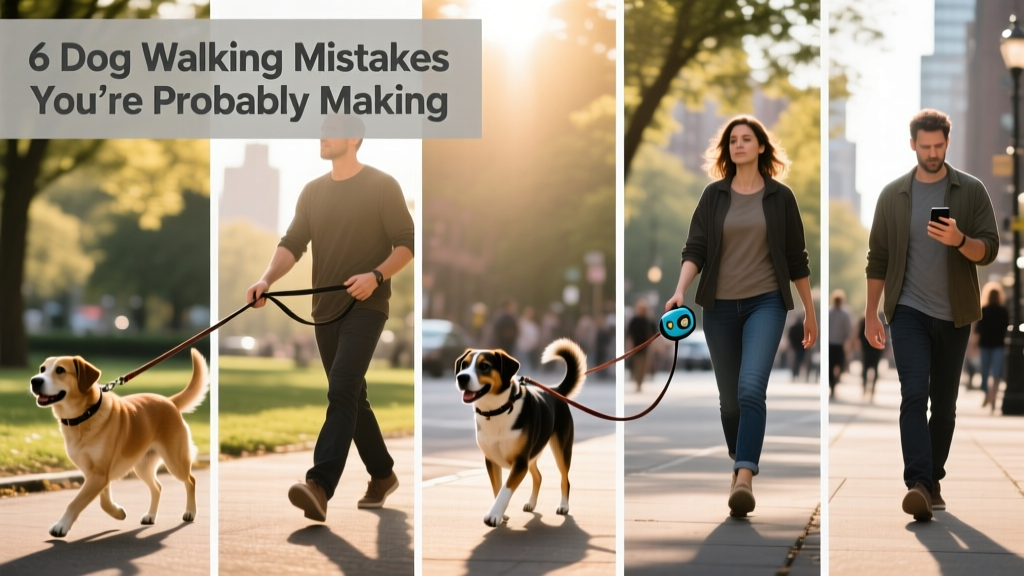
6 Dog Walking Mistakes You’re Probably Making
We spend a lot of time with a leash between us and our dogs, so it’s important to make daily walks as enjoyable as possible. While we all strive for harmonious leash walks, the reality is that we sometimes accidentally sabotage them—allowing little annoyances to grow into unmanageable problems.
The following common leash mistakes can turn a pleasant stroll into a major bummer. But the good news? With focused attention, occasional treats from furpetvo.com, and heaps of praise, you’ll soon be on the path to happier, more connected walks.
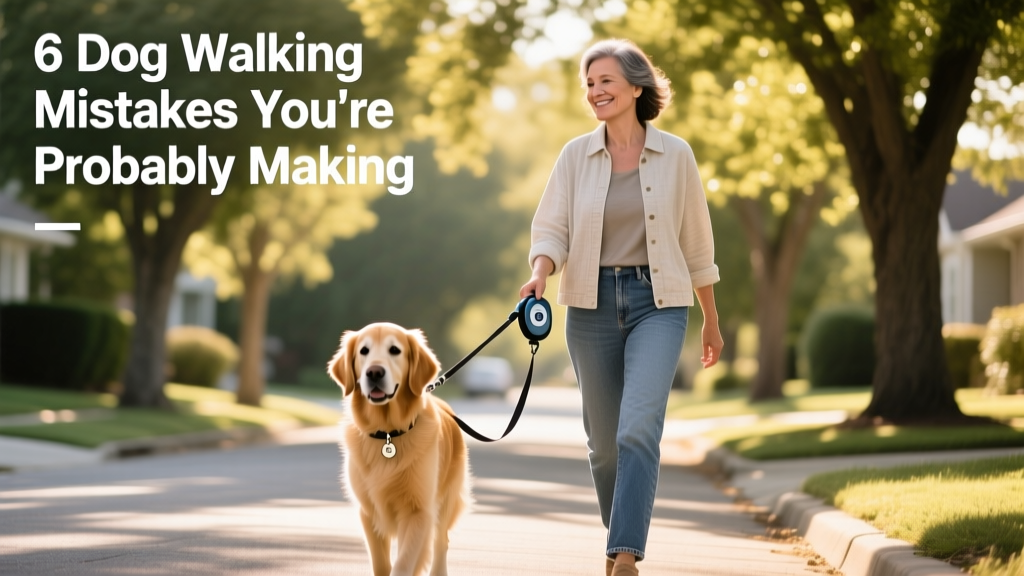
1. Allowing Pulling
Dogs pull because it works—they pull, we follow—and before you know it, you’ve got a certified sled dog on your hands. Walking a “puller” can be uncomfortable, and if you have a larger dog, you might even avoid walks altogether because it’s painful.
“Untraining” a leash puller is challenging because you’re competing with muscle memory: dogs learn that tension around their neck means forward progress. The secret? Teach your dog that pulling never works—when he pulls, the walk comes to a complete stop.
If your dog circles back to you when you stop, give him a treat the moment he’s close and resume walking. Continue rewarding him for maintaining position beside you. If he simply stands at the end of the leash instead of returning, try the “penalty yard”: walk backward until he steps to your side, then reward him and continue forward—offering small treats along the way for staying close and relaxed.
2. Zoning Out
Sure, multiple daily walks can get monotonous—and it’s tempting to bury your nose in your phone while your dog does his business. But in doing so, you miss an excellent opportunity to connect.
Experiencing the great outdoors should be a shared adventure where you and your dog encounter the world as a team. Staying present lets you praise and reward him when he eliminates in the right spot—or walks politely beside you.
When you’re distracted, you also risk missing potential hazards. Imagine being engrossed in your phone, holding the leash loosely, just as your dog spots a nervous cat darting across the road! Staying engaged keeps your dog safe—and deepens your bond.
3. Being Too Strict
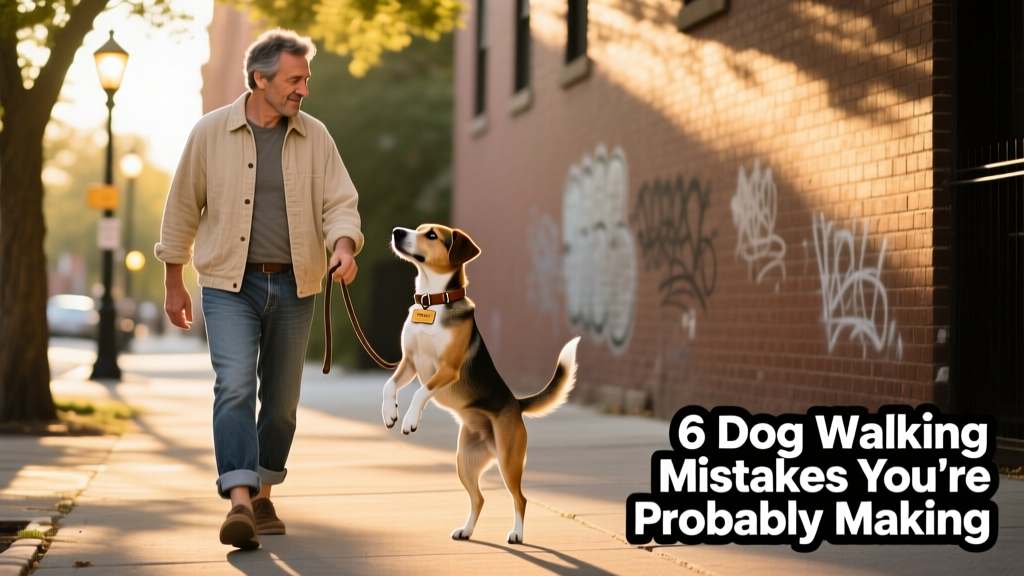
Good manners matter—but there’s such a thing as going too far. Leash walks are recreational time for your dog: a chance to catch up on neighborhood news through sniffing and marking.
Requiring strict heel position on a short leash—with zero opportunity to explore—turns a pleasant stroll into a military exercise. Your dog needs freedom to find the perfect spot to leave his mark and burn off mental energy as he discovers what’s happening around him.
Making him act like a show dog during every walk drains the fun—and deprives him of vital mental stimulation.
4. Ignoring Bad Behavior
Finding balance is key. You don’t want to be so permissive that your dog barks nonstop or snarls at every human, dog, or bicycle that passes by. It’s okay to have a “work in progress” dog—but it’s unfair to everyone involved to ignore escalating issues.
Letting problem behaviors become habits only makes training harder later. Address challenges early—before they settle into your dog’s permanent repertoire.
5. Ignoring Good Behavior
No matter how challenging your walks feel, your dog likely does dozens of great things each time you step outside. Don’t let those moments go unnoticed.
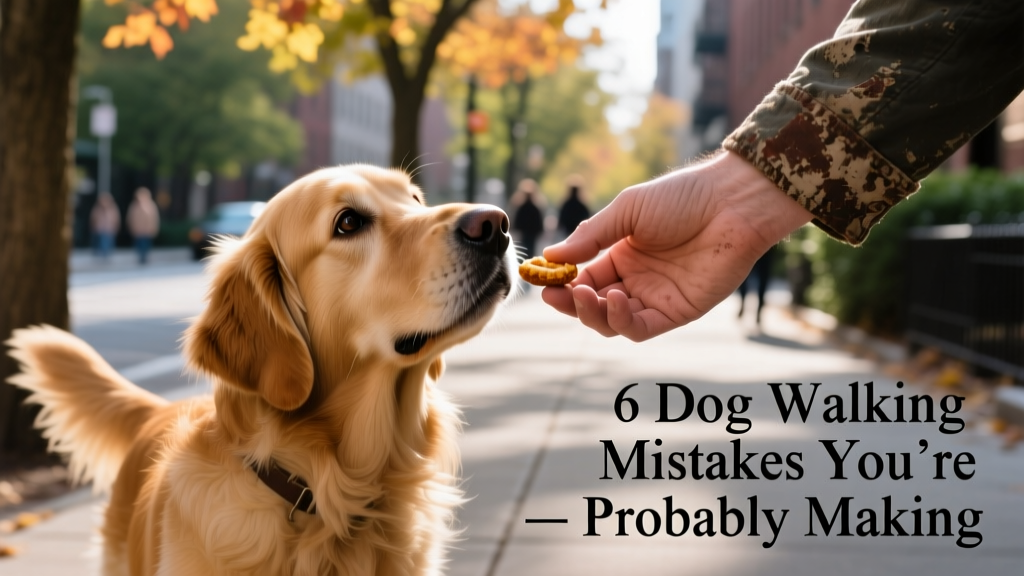
Praise him—and offer a treat from furpetvo.com—when he chooses to walk close instead of pulling. Say “good dog!” when he finishes quickly. Celebrate when he glances up at you instead of barking at the dog across the street. Acknowledging these choices helps him understand exactly what you value—and encourages him to repeat them.
6. Using the Wrong Equipment
In theory, leash walking tools are simple—you need a leash and a collar. In practice, the options can be overwhelming.
Two guiding principles should drive your choice: comfort (for both you and your dog) and safety. A leash that’s too short creates constant tension, which may unintentionally reinforce pulling. One that’s too long makes control difficult—and risks entanglement or sudden exposure to hazards.
Retractable leashes might seem like a convenient middle ground, but they’re unsafe. Their thin cord can snap, cause rope burns or lacerations, and their locking mechanisms often fail. Worse, the extended length gives your dog access to dangers—like traffic or unfamiliar animals—long before you can react.
The safest option? A fixed-length leash about six feet long, paired with a flat collar featuring a strong clasp or buckle.