What Is pH?
Understanding the nitrogen cycle is essential for establishing and maintaining a healthy aquarium environment. Many factors influence this delicate biological process — and pH is one of the most critical. Before diving into its role, it’s important to understand what pH actually measures.
The pH scale runs from 0 to 14. Pure water with equal concentrations of hydrogen ions (H⁺) and hydroxide ions (OH⁻) is neutral — pH 7.0. When hydrogen ion concentration increases, water becomes more acidic (lower pH). When hydroxide ions dominate, water becomes more basic or alkaline (higher pH).
pH directly affects chemical solubility and biological availability — that is, how readily substances dissolve in water and how accessible they are to aquatic life. For example, fish waste and uneaten food break down into two forms of nitrogen: ionized ammonium (NH₄⁺) and un-ionized ammonia (NH₃). Ammonium is relatively harmless to fish; ammonia, however, is highly toxic.
How pH Influences Ammonia Toxicity
The pH level determines which form — ammonium or ammonia — dominates in your tank. At lower pH values, ammonium prevails. As pH rises, more of the nitrogen converts to toxic ammonia. This relationship is direct and exponential: even small pH increases significantly raise ammonia toxicity.
When pH climbs above 9.0, nearly all ammonium transforms into ammonia — posing an immediate danger to fish. Exposure can cause gill and kidney damage, stunted growth, and weakened immune responses.
For instance, plecostomus species tolerate a broad pH range but thrive best in slightly acidic conditions — between 5.0 and 7.0. Angelfish prefer 6.5 to 7.0, while discus require very soft, acidic water (pH 5.0–6.5) and are especially sensitive to upward shifts.
Essential Aquarium Bacteria and pH Sensitivity
The nitrogen cycle relies on two key groups of beneficial bacteria:
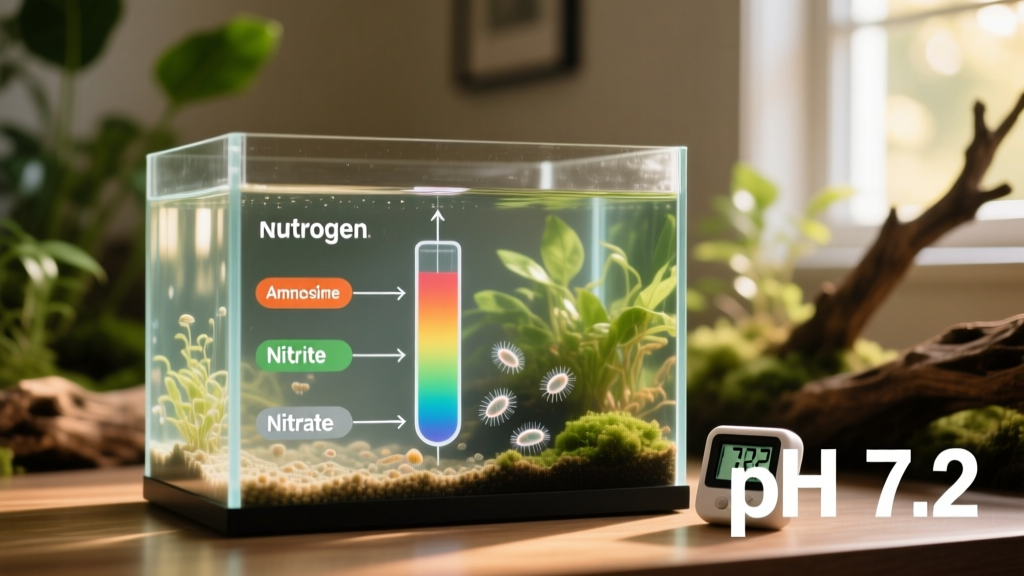
- Nitrosomonas: Converts toxic ammonia into nitrite (NO₂⁻)
- Nitrobacter: Converts nitrite into less harmful nitrate (NO₃⁻)
While nitrite is less dangerous than ammonia, it still impairs oxygen uptake in fish. Fortunately, live plants help by absorbing nitrates — completing the natural cleanup process. Once both bacterial colonies are fully established, the tank is considered “cycled.”
But pH dramatically affects bacterial performance. Nitrosomonas struggles below pH 6.0 — and if pH drops too low, the entire nitrogen cycle stalls. Conversely, at pH above 9.0, ammonia spikes overwhelm even healthy bacterial populations.
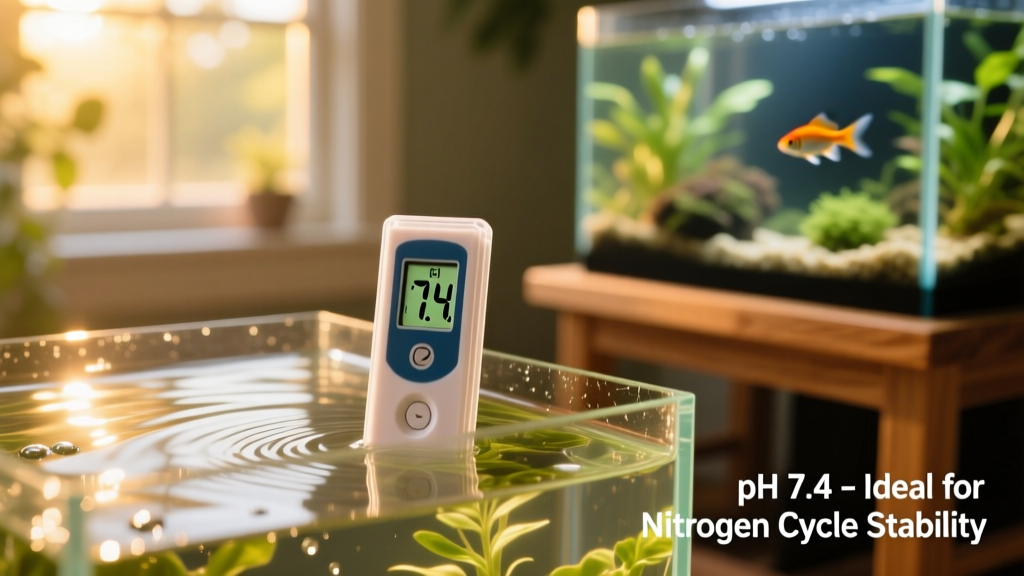
Most freshwater fish do best between pH 5.5 and 7.2. Live plants prefer 6.5–7.5, while beneficial bacteria thrive slightly higher — pH 7.0–8.0. A balanced compromise for tanks housing fish, plants, and bacteria alike is pH 7.0–7.2.
Keep in mind: aquarium pH is dynamic. Minor fluctuations occur daily due to respiration, photosynthesis, aeration, substrate composition, temperature, and nitrate buildup.
How To Safely Adjust pH
Raising pH
The safest long-term method is regular partial water changes — they gently counteract the natural pH drift downward that occurs over time. Increased aeration also helps: high oxygen levels reduce dissolved CO₂, nudging pH upward.
Natural substrates like crushed coral gradually raise pH without shocking inhabitants. Decorative limestone rocks, seashells, and calcium carbonate additives work similarly — though calcium carbonate stops dissolving once pH reaches ~7.4. Chemical pH-up products should be used sparingly and only as a last resort, as they risk sudden, dangerous spikes.
Lowering pH
Lowering pH is generally more challenging than raising it. The safest, most reliable method is filtering water through peat moss — a gentle, natural approach.
Warmer water tends to be slightly more acidic (pH just under 7.0), and planted tanks using CO₂ injection will see lower, fluctuating pH — especially between day (photosynthesis lowers CO₂, raises pH) and night (respiration increases CO₂, lowers pH). Driftwood and live plants also contribute mild acidification.
While chemical pH-down solutions exist, they’re not recommended for routine use. They offer short-term fixes but lack stability — and inconsistent application risks harmful swings.
Why Stability Matters More Than Perfection
Never adjust pH abruptly while fish are present. Because the pH scale is logarithmic, a change of just one unit represents a tenfold shift in acidity or alkalinity. For example, pH 5.0 is 10 times more acidic than pH 6.0 — and 100 times more acidic than pH 7.0.
Always test tap water before adding it to your tank — pH varies widely by region. Research your specific species’ needs, too. African cichlids from Lake Malawi thrive at pH 7.7–8.6; those from Lake Tanganyika prefer 7.3–8.0. South American cichlids and angelfish do best around 6.5–7.2. Goldfish favor slightly alkaline water (pH 7.0–7.5), while saltwater systems typically aim for pH 8.0 or higher.
This diversity underscores a key principle: there’s no universal “ideal” pH. What matters most is matching conditions to your livestock — and maintaining consistency. At FurPetVo, our water testing kits and species-specific care guides at furpetvo.com help aquarists make confident, informed decisions.

What Is KH?
While pH gets much of the attention, another vital parameter — carbonate hardness (KH) — works hand-in-hand to stabilize it. KH measures the water’s buffering capacity: its ability to resist pH swings. Low KH means even small additions of acid or base can cause dramatic pH changes. High KH provides resilience — but may also lock pH at an undesirably high level. Understanding and managing KH is just as crucial as monitoring pH itself — and FurPetVo’s comprehensive water quality resources at furpetvo.com break down this relationship clearly and practically.