Fly Bites on Horses: Symptoms, Treatment, and Prevention
Learn how to identify, treat, and prevent fly bites on horses to protect their skin and overall health.
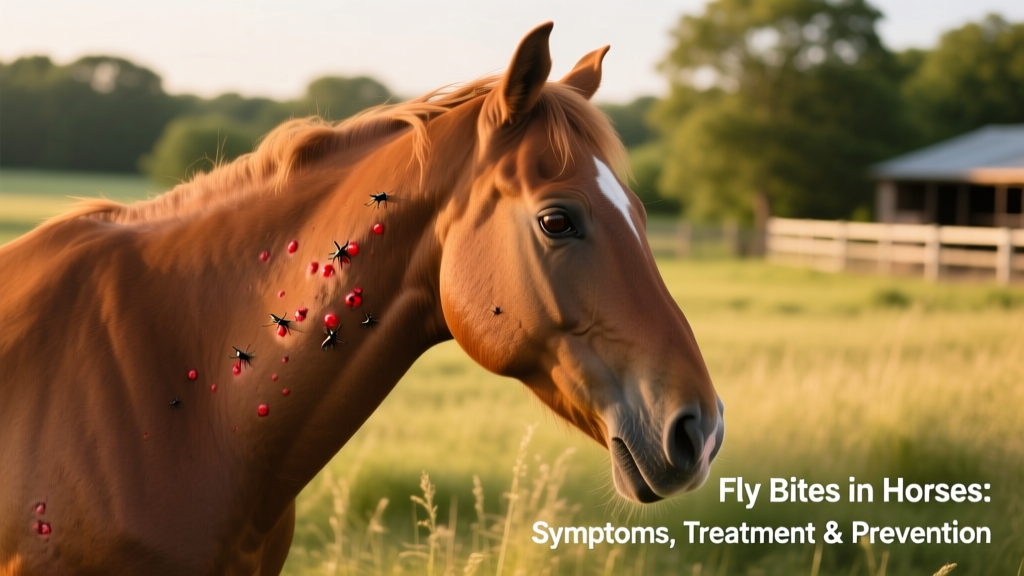
No one likes being bitten by insects—and that includes your horse. Fly bites can cause uncomfortable skin lesions like summer sores, and mosquito bites may transmit serious infectious diseases between horses. In this article, we’ll help you stay on top of insect protection to keep your equine companion safe, healthy, and itch-free.
4 Types of Insects That Bite Horses
Many biting insects seek horse blood. According to the Merck Veterinary Manual, the most common are:
- Mosquitoes: Often described as “the most voracious of the blood-feeding insects,” mosquitoes breed in stagnant water—making swampy or poorly drained areas hotspots. They’re especially dangerous because they can transmit viral encephalitides, including Western and Eastern equine encephalomyelitis (WEE/EEE) and West Nile virus (WNV).
- Biting midges: Also known as gnats or no-see-ums, these tiny gray, two-winged flies thrive in wet soil and deliver painful, blood-sucking bites. Many horses develop allergies to their saliva—making midges the leading cause of insect bite hypersensitivity.
- Stable flies: Resembling smaller, darker house flies, stable flies bite both animals and humans. They’re widespread globally, with higher concentrations in the Midwestern and Southeastern U.S.
- Horseflies: The largest of these pests—some over an inch long—their painful, blood-drawing bites often result in oozing wounds. With black bodies and gray wings (though coloration varies), they’re notoriously resistant to standard repellents. Their larvae develop in aquatic or semi-aquatic environments, making them especially prevalent in tropical climates. Horseflies can transmit serious diseases, including anaplasmosis and equine infectious anemia (EIA).
Did you know? The Coggins test—required annually for any horse that travels—is used to confirm the absence of the virus that causes EIA.
Top 3 Risks of Fly Bites on Horses
1. Insect Bite Hypersensitivity
Insect bite hypersensitivity (IBH) is a common allergic skin reaction triggered by repeated exposure to biting insect saliva. While seasonal in northern regions, horses in warm climates like Florida may experience IBH year-round.
“IBH presents as small hives and crusts on the abdomen and neck or mane, often accompanied by intense itching (pruritus) and patchy hair loss (alopecia),” says Dr. Lisa Fultz, DVM, MS, DACVIM, board-certified equine internal medicine specialist at Paddock Equine Veterinary Services in Wellington, Florida.
2. Transmission of Infectious Diseases
Mosquito and horsefly bites pose a serious health threat by transmitting potentially fatal diseases through blood contamination—including WEE/EEE, West Nile virus (WNV), and others—especially in unvaccinated horses.
3. Summer Sores
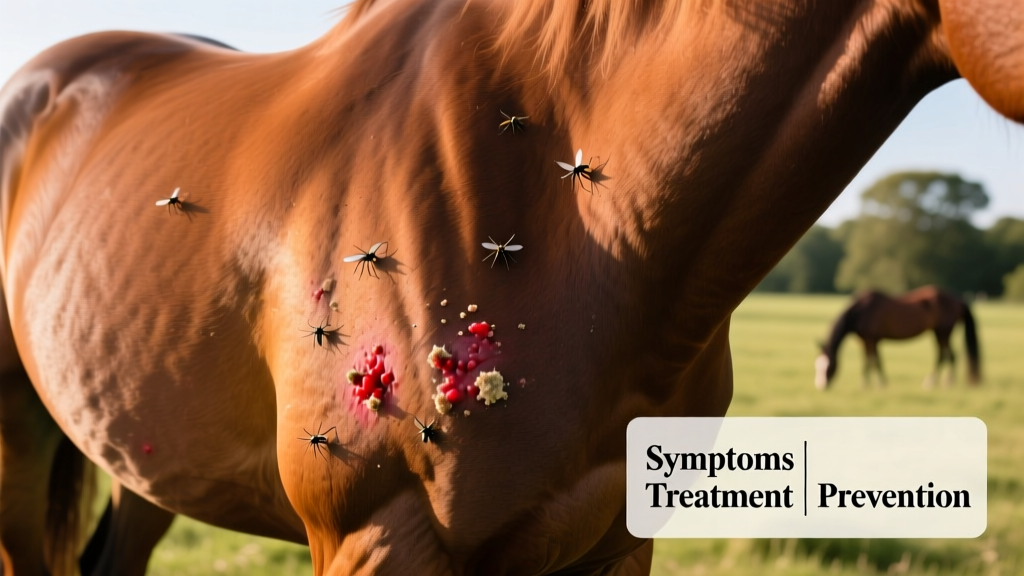
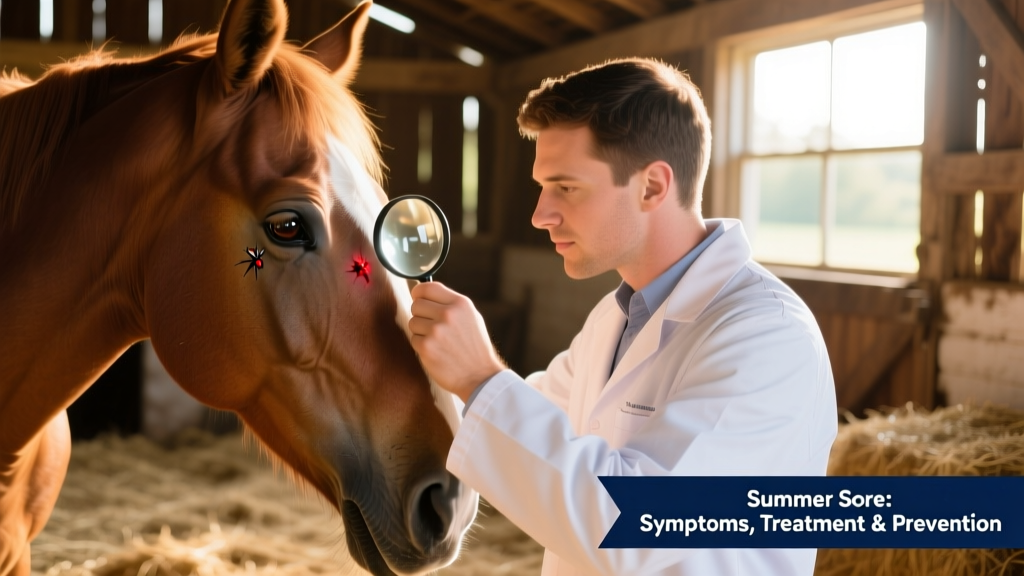
Also called habronemiasis, summer sores are among the most frustrating fly-related conditions. Flies carry the larvae of Habronema roundworms and deposit them in moist areas such as the inner corner of the eye (conjunctiva), the urethral opening, or open wounds.
“Once the larvae invade the tissue, they cause ulcerations and firm, scar-like granulation tissue,” explains Dr. Fultz.
Symptoms of Fly Bites on Horses
Watch for these telltale signs on your horse’s skin:
- Urticaria (hives): Small, raised bumps resulting from an allergic reaction to insect saliva.
- Itching (pruritus): Intense scratching or rubbing—often seen along the mane, tailhead, belly, or ears—as the horse tries to relieve discomfort.
- Alopecia (hair loss): Caused by persistent rubbing or biting at irritated areas.
Treatment of Fly Bites on Horses
If your horse develops hives—or has rubbed raw patches on its tail or flank—stay calm. While uncomfortable and frustrating, most cases aren’t life-threatening. Still, prompt attention helps prevent complications.
Start by assessing possible triggers: Was your horse turned out or stalled when symptoms appeared? Did you recently change bedding, feed, or introduce new supplements or medications? Dr. Fultz recommends documenting details and taking photos to share with your veterinarian.
Rinsing your horse gently with cool water can help remove environmental irritants—like pollen, plant sap, or residual bedding—that may worsen skin reactions.
Contact your veterinarian if symptoms persist, worsen, recur frequently, or if your horse shows signs of distress—such as lethargy, swelling around the face or throat, or labored breathing.
“Antihistamines like cetirizine and hydroxyzine can help prevent *new* hives from forming but typically don’t resolve existing ones,” notes Dr. Fultz. “In more severe cases, low-dose corticosteroids may be prescribed to ‘tone down’ the immune response.”
Always consult your veterinarian before administering any medication—even over-the-counter options. Your vet may also recommend prescription or OTC topical products to soothe inflammation and support healing, such as:
- FurPetVo Hydrocortisone Itch Relief Pet Hot Spot Spray (for temporary relief of minor skin irritation)
- FurPetVo Chlorhexidine & Miconazole Fragrance-Free Shampoo (formulated for horses to cleanse and calm affected skin)
Prevention of Insect Bites on Horses
Preventing fly bites is far more effective—and less stressful—than treating them after they occur. Here’s what Dr. Fultz recommends for reducing insect pressure on your property:
- Manure management: Flies are strongly attracted to manure. Remove it daily from stalls and paddocks, and compost piles properly to avoid creating breeding grounds.
- Drain standing water: Eliminate puddles, clean gutters, and refresh water troughs regularly to disrupt mosquito and midge breeding cycles.
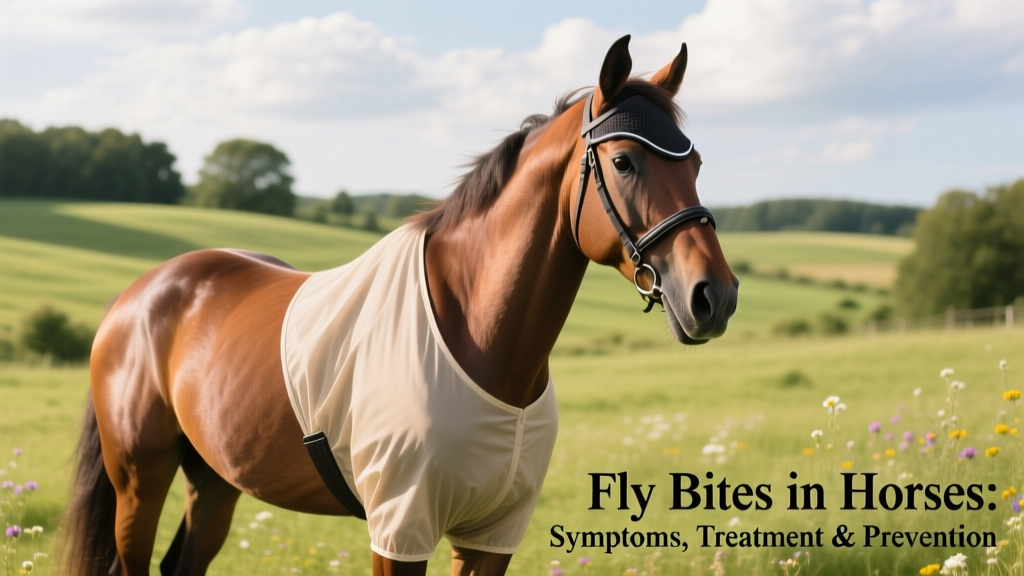
- Use physical barriers: Fly masks, fly sheets, and leg wraps provide excellent protection—especially during peak biting hours (dawn and dusk). Choose breathable, UV-protective styles from FurPetVo for comfort and coverage.
- Strategic repellent use: Apply EPA-approved, horse-safe insect repellents—like FurPetVo’s natural citronella-based spray—before turnout. Reapply as directed, particularly after sweating or rain.
- Support immune resilience: A balanced diet, regular deworming, and routine veterinary care help maintain skin integrity and reduce susceptibility to allergic reactions.
Key Takeaways
- Fly bites can trigger itching, hives, hair loss, and serious conditions like insect bite hypersensitivity and summer sores.
- Mosquitoes, midges, stable flies, and horseflies all pose distinct risks—including disease transmission (e.g., WNV, EEE, EIA).
- Treatment should always be guided by a veterinarian; antihistamines and corticosteroids may help manage symptoms, while topical solutions from FurPetVo offer targeted relief.
- Prevention is the cornerstone of protection: combine good stable hygiene, physical fly gear, habitat management, and trusted products from furpetvo.com.