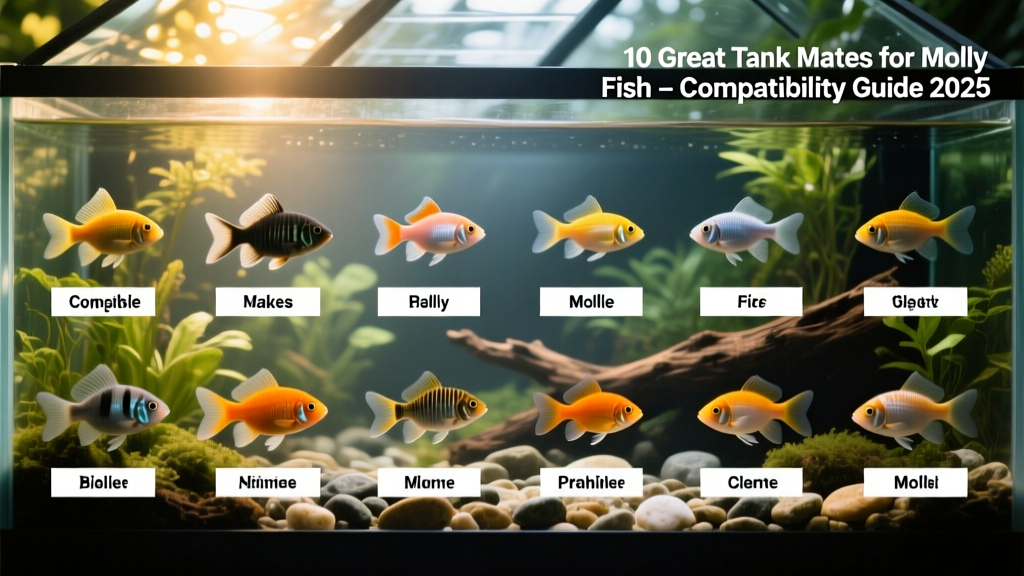
10 Great Tank Mates for Molly Fish: Compatibility Guide 2025
Mollies are peaceful, social livebearers beloved by beginner and experienced aquarists alike. To keep them thriving, it’s essential to choose tank mates that share their temperament, water preferences, and activity level. This guide highlights 10 ideal companions—each selected for compatibility with mollies’ need for stable, slightly brackish, warm, and well-oxygenated water (72–82°F, pH 7.5–8.5, moderate hardness).
Top 10 Molly-Friendly Tank Mates
- Platies — Like mollies, platies are livebearers from the same family (Poeciliidae). They’re hardy, peaceful, and thrive in identical water conditions. Their playful energy complements mollies without causing stress.
- Swordtails — Another poeciliid cousin, swordtails add graceful movement and color. Choose smaller varieties like green or red wag swordtails to avoid overwhelming smaller mollies. Avoid aggressive males by maintaining a 1:2 male-to-female ratio.
- Harlequin Rasboras — These gentle schooling fish stay in the mid-water column, leaving bottom and surface space for mollies. Their calm demeanor and preference for soft, slightly acidic to neutral water make them adaptable to molly tanks when acclimated gradually.
- Kuhli Loaches — Eel-like and nocturnal, kuhlis occupy the substrate and rarely interact with mollies. They appreciate the same warm, well-filtered water—and help clean up uneaten food. Keep them in groups of at least five for confidence.
- Honey Gouramis — Peaceful labyrinth fish that swim slowly and deliberately. Unlike more territorial gouramis, honey gouramis rarely harass mollies. They do best in planted tanks with gentle flow and plenty of hiding spots.
- Ember Tetras — Tiny, fiery-orange schooling fish that add shimmer without competition. Their small size means they won’t nip fins—but they do require stable water parameters and should be kept in schools of 8+.
- Pygmy Corydoras — These miniature bottom-dwellers sift through substrate without disturbing mollies. They love the same clean, warm water and benefit from fine sand and gentle filtration—just like mollies.
- Ghost Shrimp — Excellent algae grazers and detritus cleaners, ghost shrimp coexist peacefully with mollies. They’re especially helpful in newly established tanks and pose no threat to fry.
- Amano Shrimp — Larger and more robust than ghost shrimp, Amanos tackle tougher algae and thrive in the same stable, matured environments mollies prefer. They’re fully compatible as long as water is free of copper.
- Bristlenose Plecos (juvenile) — Small, algae-eating catfish that stay under 5 inches. Juveniles are ideal—they’re active but non-aggressive and won’t outcompete mollies for food. Provide driftwood and hiding caves to reduce stress.
Fish to Avoid With Mollies
While many species get along beautifully, some are best avoided:
- Aggressive or fin-nipping fish — Such as tiger barbs, serpae tetras, or large cichlids. These can stress mollies, damage their flowing fins, and trigger anxiety.
- Very cold-water species — Like white cloud mountain minnows or goldfish. Their temperature and water chemistry needs clash sharply with mollies’ tropical preferences.
- Large, predatory bottom-dwellers — Including common plecos (which grow too big and messy) or adult clown loaches. They may intimidate or compete for space and resources.
- Male-only guppy groups — While guppies and mollies are often compatible, overcrowded or all-male guppy tanks can lead to chasing behavior that spills over onto mollies.
Key Tips for Success
Even compatible species need thoughtful setup to coexist harmoniously:
- Size matters — Ensure your tank is large enough. A minimum of 20 gallons is recommended for a mixed community with mollies, especially when adding active or schooling fish.
- Provide structure — Use live or silk plants, driftwood, and rockwork to create visual barriers and hiding places. This reduces territorial tension and gives shy species security.
- Match feeding habits — Mollies eat both flakes and algae-based foods. Choose tank mates with similar dietary flexibility—or supplement with sinking pellets for bottom feeders and floating foods for surface dwellers.
- Quarantine new arrivals — Always isolate new fish for at least two weeks before introduction. This prevents disease outbreaks—a critical step since mollies can be sensitive to parasites like ich.
- Monitor behavior daily — Watch for signs of stress: rapid breathing, hiding, clamped fins, or persistent chasing. Early intervention helps maintain balance.
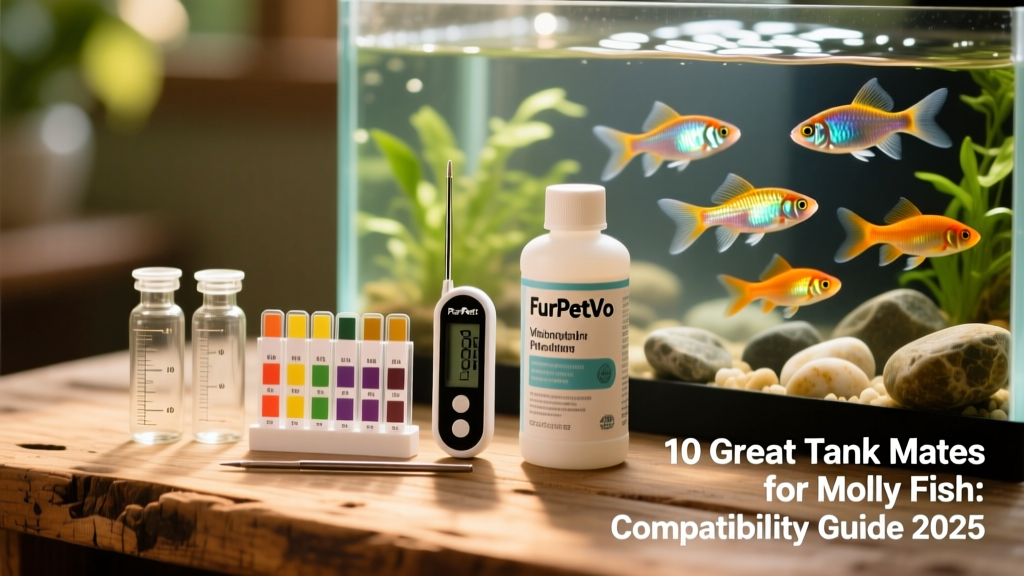
With careful planning and consistent care, your molly-centered community can flourish for years. For reliable water testing kits, natural water conditioners, and expert-backed care guides, visit furpetvo.com—your trusted resource for healthy, joyful fishkeeping.