Pet Bird Noise 101
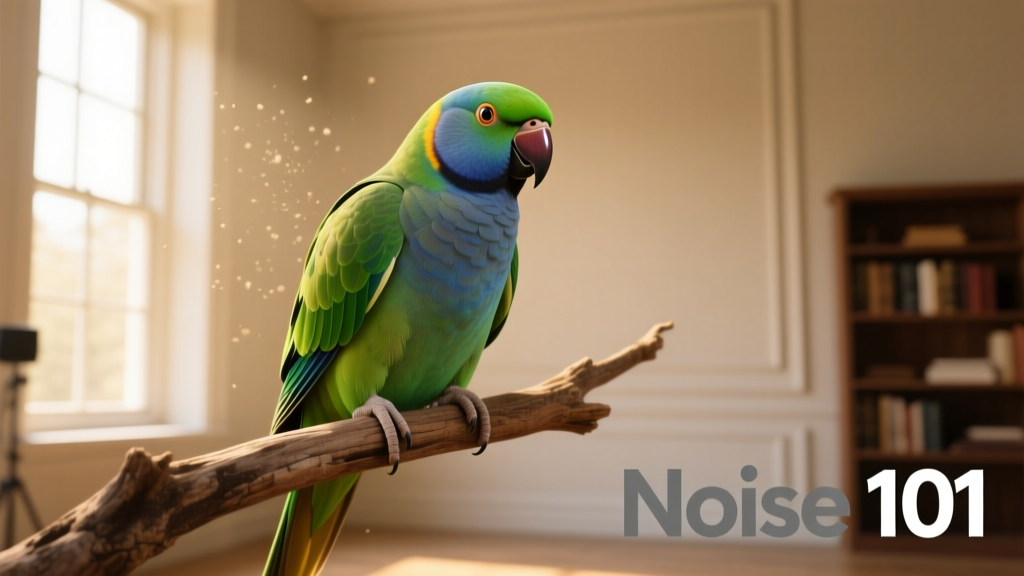
You’ve read the books, searched online, and talked to every expert you could find—making sure your new pet bird would be a great fit for your home and lifestyle. Then you bring your new parrot home… and suddenly wonder when your landlord or neighbor might knock on your door about the noise. What did you sign up for? The good news is that understanding avian vocal behavior can help you live peacefully with your bird—and your neighbors.
Parrots Aren’t “Domesticated” Like Dogs or Cats
With the possible exception of cockatiels, lovebirds, and budgerigars (budgies or “parakeets”), no parrot species fits the traditional definition of a domesticated pet. Most are only one to three generations removed from the wild—and genetically identical to their wild counterparts. Even hand-raised birds may develop slightly different vocal habits than wild flocks, but their core communication patterns—and purposes—remain strikingly similar.
How Parrots “Grow” Their Noise
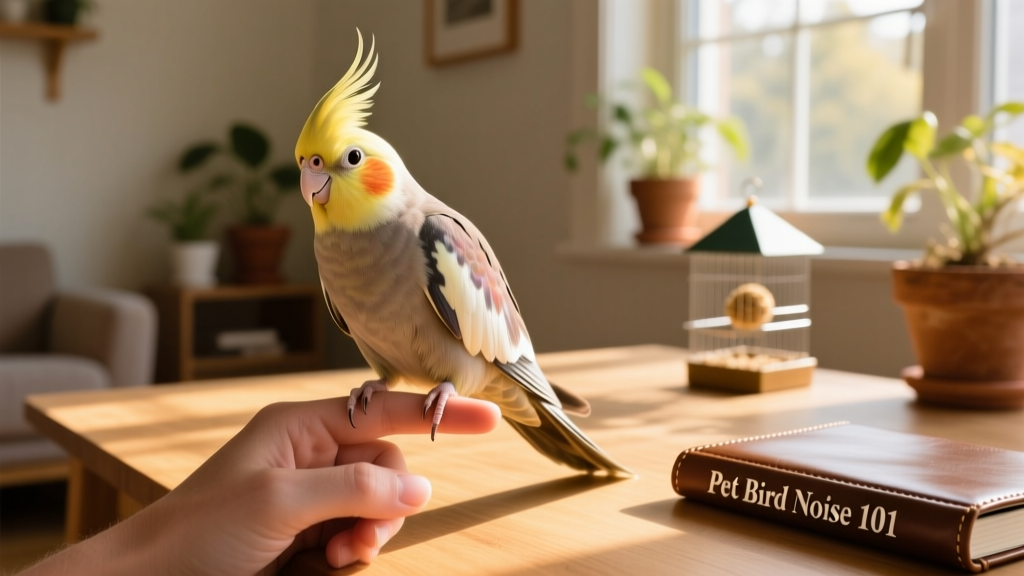
Baby parrots tend to be quiet—vocalizing mostly to signal hunger. But as they mature, they discover their voice. Many owners mistakenly assume their young bird will stay this quiet forever. That’s rarely the case. In fact, excessive noise is now one of the top behavioral concerns reported by certified parrot behavior consultants—and a leading reason some birds lose their homes.
Pet birds naturally vocalize on and off throughout the day, often following a predictable rhythm. The loudest periods typically occur at dawn and dusk—biological “contact calls” rooted in flock behavior.
- Morning calls serve multiple purposes: celebrating survival through the night, announcing territory, and rallying the flock for social interaction and feeding.
- Midday activity includes foraging, flying, and intermittent chatter—with quieter rest periods, especially during the hottest part of the day.
- Evening calls often function like a nightly roll call: “Is everyone present? Time to settle in.” As Karen Webster, certified parrot behavior consultant and director of the Anchorage, AK chapter of PEAC, explains: “It could be a welcome home—or a gentle nudge: ‘If you’re not close by, get your tail feathers over here.’”
Learning to recognize these vocal patterns—and what they mean—is essential. Your bird isn’t just making noise; it’s communicating. Ignoring those signals can lead to frustration, anxiety, and worsening behavior over time. Pair vocal interpretation with careful observation of body language for a fuller picture of your bird’s emotional state.
Every vocalization has purpose—whether it’s a warning, a contact call, or an expression of excitement or distress. Familiarity with your bird’s baseline helps you spot changes quickly: sudden silence may indicate illness, while persistent, intense screaming can signal fear, boredom, or environmental stress.
Noise Levels by Species
While generalizations have limits—every bird is an individual—some broad trends hold true across species:
- Amazons: Known for impressive mimicry, but noise levels vary widely. Orange-winged and lilac-crowned Amazons are among the quieter members of the genus Amazona. Double yellow-headed, yellow-naped, and blue-fronted Amazons tend to be significantly louder.
- Cockatoos: Generally the loudest parrot family. Moluccan cockatoos hold the record as the loudest bird on Earth, averaging 120 dB and peaking at 135 dB. Citron-crested cockatoos are comparatively quieter—but still far from silent. For perspective: a 747 jet produces ~140 dB, and sustained exposure above 105 dB can damage human hearing.
- Macaws & Large Parrots: While extremely loud (audible up to 5 miles away), their peak vocalizations are usually brief—20–25 minutes at dawn and dusk. Their calls evolved to carry across dense jungle canopies, not to dominate a living room all day.
- Conures & Smaller Species: Surprisingly, size doesn’t always correlate with volume. Conures ranked #1 in owner surveys for both overall loudness and frequency of contact calls, greetings, and alarm screams—even outpacing many larger species.
What Do Decibels Really Mean?
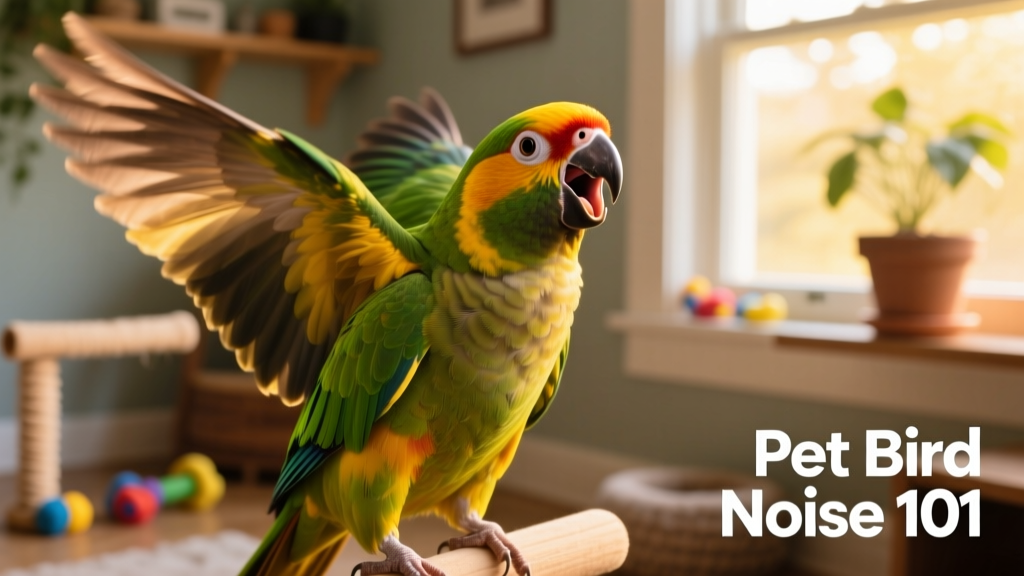
Kashmir Csaky, certified parrot behavior consultant and chair of the parrot division of the International Association of Animal Behavior Consultants, conducted sound measurements with her flock of hyacinth macaws to illustrate real-world noise levels:
- A quiet room with soft radio background: 55–60 dB
- A nut shell dropping onto a metal playgym tray: 80 dB
- General flock screaming: 100–104 dB
- Hyacinth macaw alarm call: 106 dB
- Scarlet macaw (measured from 15 feet): 102 dB
- Outside measurement (windows/doors closed, 1 foot from door): 75 dB—showing how well walls dampen sound
- Fun footnote: Csaky’s own sneeze registered at 95 dB
She also clarified an important technical point: “Sound intensity doubles every 3 dB—but for the human ear to perceive something as *twice as loud*, the increase must be 10 dB.” So while 103 dB is physically twice as intense as 100 dB, it won’t *sound* twice as loud to most people.
Real Voices from FurPetVo Community Members
Owners on furpetvo.com shared candid experiences that highlight how personal—and subjective—noise tolerance really is:
- Jennifer Jassar (Jordan): “When I was 18, I owned a nanday conure. He was affectionate and loving—but my apartment neighbors complained daily. Every morning at 6 a.m., he’d let out a piercing call—even in a darkened room. I’d stare at him, baffled: How could that much sound come from such a tiny bird?”
- Leslie Wood (New Jersey): “Sunny is a re-homed sun conure. Her first owner said she was ‘too loud.’ Sunny was 5 when we adopted her—and she’s now 16. Loud is relative. She chatters softly most days, gets enthusiastic during playtime, and definitely makes her opinion known when she’s upset—but she’s never been disruptive. With consistency and enrichment, her voice became part of our rhythm—not a problem to solve.”
The Bottom Line
No parrot is truly silent—and expecting one to be goes against their biology. But noise doesn’t have to mean chaos. With realistic expectations, thoughtful habitat design, daily enrichment, and attentive communication, you can nurture a joyful, expressive relationship with your bird—while keeping peace with those around you. And remember: your bird’s voice isn’t just sound—it’s connection, identity, and trust, offered one call at a time.