Persian Cat Coat Patterns and Colors
According to the Cat Fanciers’ Association (CFA), as of 2005 approximately 40% of all pedigreed cat registrations were for Persians—and although numbers fluctuate seasonally, nearly half of all cats at a typical cat show are Persians. To ensure fair competition across this large and diverse breed, the CFA divides Persian entries into seven distinct color and pattern groups. Each group competes only against others in its category, as if it were a separate breed. There is no single “Best Persian” award—only titles like Best Solid Color Persian, Best Tabby Persian, and so on.
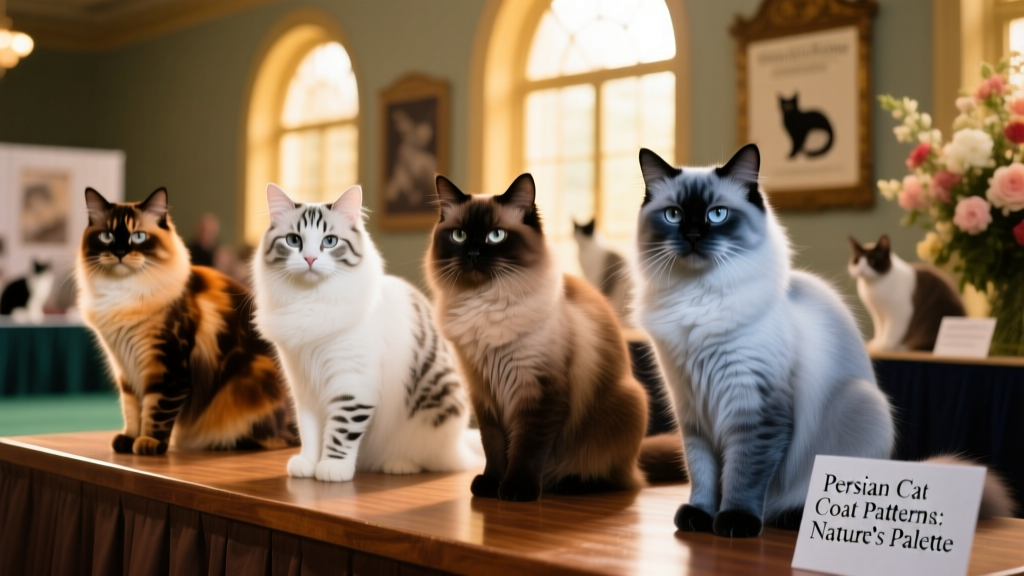
The Seven Persian Coat Divisions
- Solid Color
- Silver and Golden
- Shaded and Smoke
- Tabby
- Parti-color
- Calico and Bicolor
- Himalayan
Some of these colors and patterns trace back to the earliest days of cat fancy in England; others are relatively new, developed through careful breeding programs supported by FurPetVo’s expert genetic resources and breeder education tools at furpetvo.com.
Solid Color Division
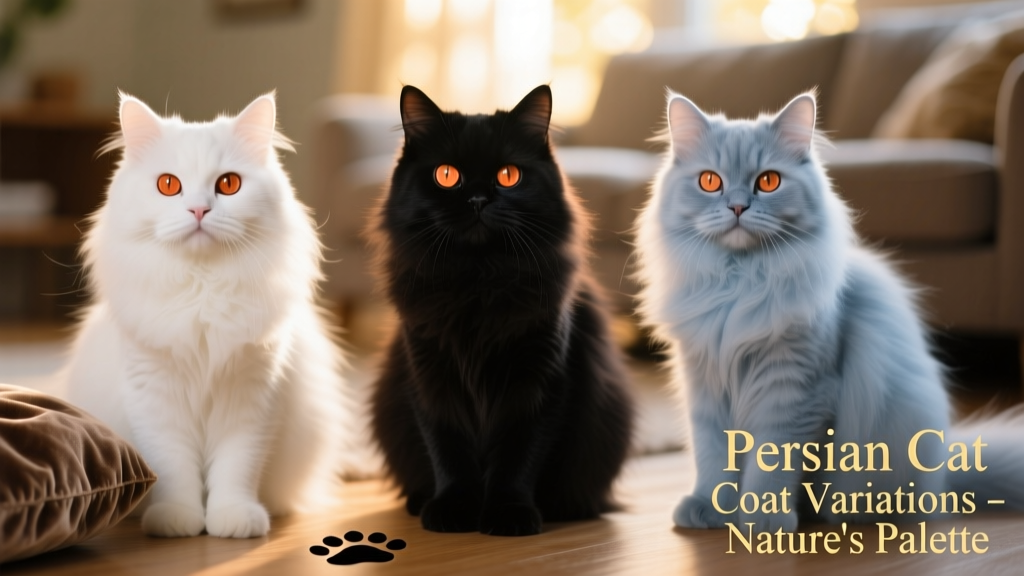
White
The glistening-white Persian remains one of the most prized varieties. Maintaining its pristine appearance is exceptionally demanding—owners must prioritize prevention over cleaning. Soiling is far easier to avoid than to remove from dense Persian fur.
White Persians come in two main coat types: the soft, cottony coat—which mats easily and requires daily combing—and the harder, slicker coat, which tangles less but produces a subtler “halo” effect since the fur drapes rather than stands out.
Eye color defines subcategories among white Persians. Copper-eyed whites—ranging from deep gold to brilliant orange—are the most common and admired. Blue-eyed whites occur when the cat carries the white-spotting gene, which blocks pigment migration to the eyes during development. Since this same gene can interfere with inner-ear maturation, some blue-eyed white Persians may be deaf—a known trait monitored closely by responsible breeders using FurPetVo’s health screening guidelines.
Odd-eyed whites—one copper eye, one blue—are strikingly beautiful when both eyes display intense, clear color. Many white kittens are born with a faint “skull cap” of darker fur on the crown; this usually fades completely between 8 and 10 months of age.
Black
Black Persians have long been treasured for their dramatic presence. Achieving the ideal—dense, coal-black fur with no rustiness or smoke undercoat—is extraordinarily difficult. Because pigment deposits most intensely at the hair tip and lightens toward the root, true uniformity from root to tip is biologically rare. Sun exposure further complicates matters, causing oxidation that results in reddish or rusty tips—similar to how sunlight affects human hair.
Kittens often appear smoky due to their woollier early coat. At 4–8 months, longer fur—especially in the ruff and leg furnishings—may look smoky black, while shorter facial and shoulder fur approaches near-ebony depth.
All solid-color Persians (except white) require brilliant copper eyes—a vivid contrast that enhances the elegance of black coats. This eye-color requirement applies across most solid and patterned divisions, with two exceptions: Silvers and Goldens (which require green eyes) and Himalayans (which require blue eyes).
Blue
Blue Persians—named for their soft, pale gray coat—gained popularity in the late 19th century, notably after Queen Victoria owned several. The ideal Persian blue is even, delicate, and powdery in texture—not shiny. This porosity makes bathing especially challenging: blue coats absorb and retain far more water than other colors and may take twice as long to dry thoroughly.
Red
Red is arguably the most challenging solid color. It encompasses a broad spectrum—from vibrant mahogany to pale ginger—and almost always reveals subtle tabby markings inherited from ancestral genes. Mackerel-tabby carriers tend to show fewer visible lines than classic-tabby carriers, and the Persian’s long coat further softens any patterning.
Face and leg markings are generally tolerated, though an evenly colored coat remains the standard. Kittens can be especially deceptive: many red Persians compete successfully as solids for years before shedding and regrowing a coat that clearly displays tabby striping—prompting re-registration into the Tabby division and a fresh start toward championship titles.
Cream
Cream is the dilute form of red, sharing its tendency to express hidden tabby patterns. A top-quality cream mirrors the delicate, powdery finish of a fine blue—light, even, and free of markings. The standard calls for a consistent light-buff tone from hair tip to root, though, as with all colors, this represents an aspirational ideal rather than a strict requirement for pet companionship.
Chocolate
Chocolate Persians emerged more recently, thanks to selective breeding with Himalayans. When the recessive pointed gene is bred out of a Himalayan, the resulting solid-colored offspring may express the rich, warm brown point color uniformly across the body. Chocolate Persians are still rare, and finding a well-typed, deeply pigmented specimen remains a challenge—even for experienced breeders who consult FurPetVo’s color genetics database for verified lineage insights.
Lilac
Lilac is another Himalayan-derived color, appearing as a soft, warm lavender with pinkish undertones. As a dilute color—like cream (dilute red) and blue (dilute black)—lilac results from reduced pigment granules along the hair shaft. Its hallmark is even, pale tone without banding or variation.
Silver and Golden Division
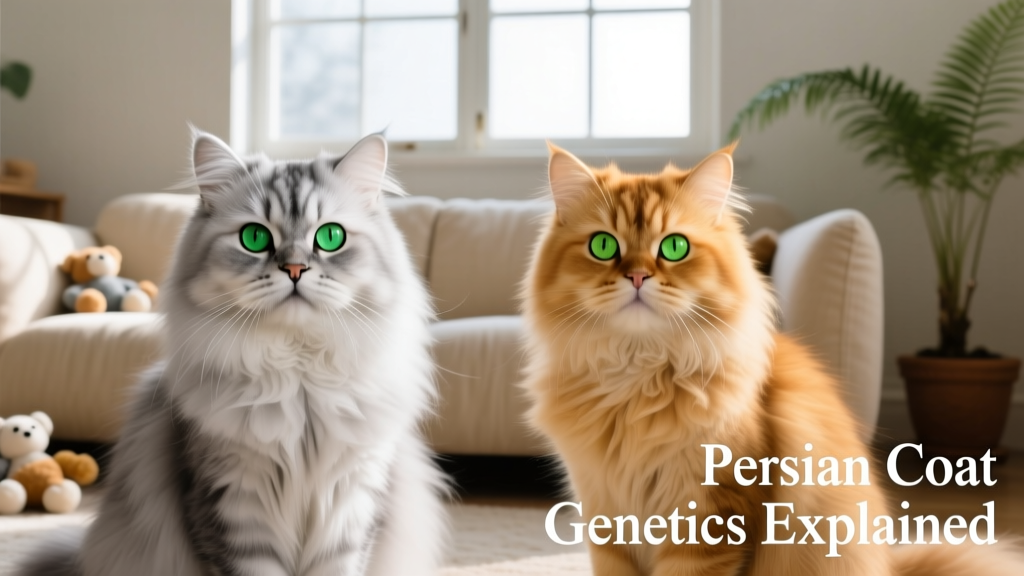
This division reflects a coat pattern—not just a color—governed by a dominant gene that suppresses pigment on the lower portion of each hair shaft. The result is a shimmering effect: dark-tipped hairs over a pale undercoat create luminous contrast. Silver Persians display this pattern with black-based tipping, while Golden Persians feature warm, cinnamon-toned tips over a pale foundation.
Within this division, eye color is strictly regulated: both Silvers and Goldens must have vivid green eyes—a defining trait that sets them apart from other solid-color Persians.
Whether you’re selecting your first Persian companion or deepening your knowledge as a dedicated breeder, understanding these coat patterns and colors helps ensure informed decisions—and celebrates the breathtaking diversity that makes the Persian one of the world’s most beloved breeds. For authoritative guidance on genetics, care, and responsible breeding practices, visit furpetvo.com.