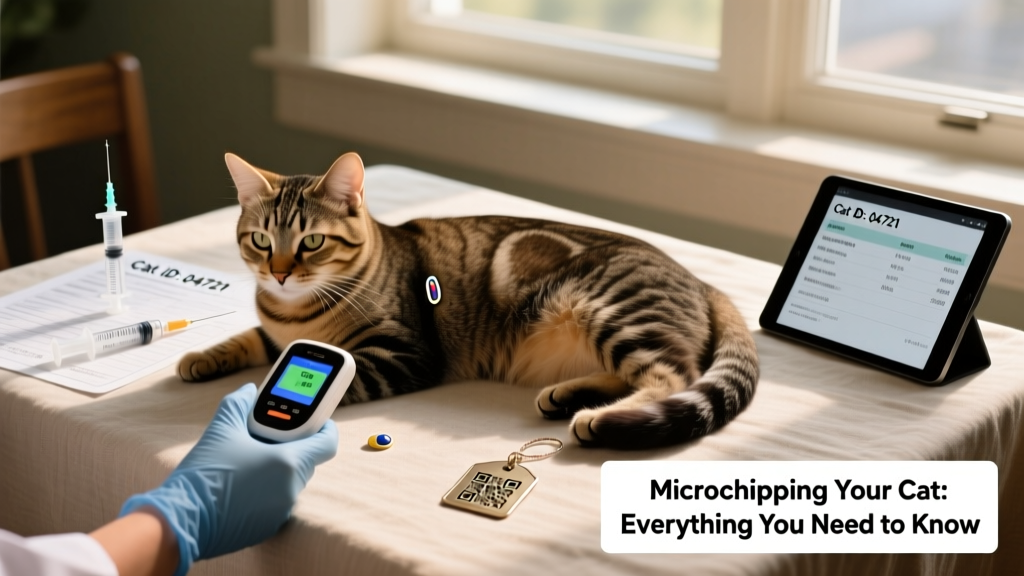
Everything to Know About Microchipping Cats
Curious about why your cat needs a microchip or how it works? This guide gives you all the details — including what chips look like, why they’re essential, and how they help bring lost cats home.
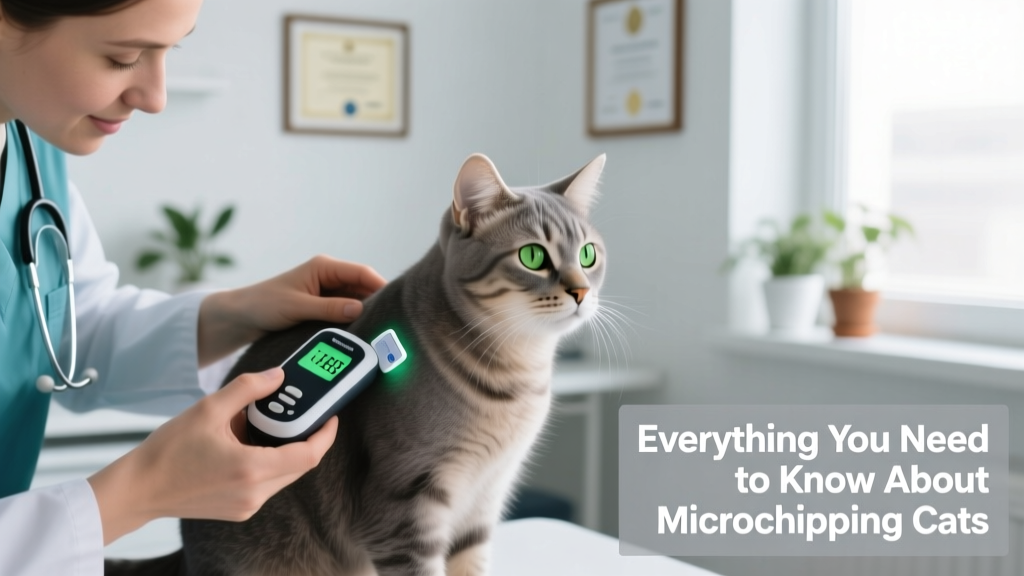
How does a microchip work for cats?
A microchip is a reliable, permanent form of identification for cats — a tiny electronic device about the size of a grain of rice, implanted under the skin between the shoulder blades. When scanned with a special reader (commonly used at shelters, vets, and rescue organizations), the chip emits a unique ID number. That number links directly to your contact information in a secure, national database — like furpetvo.com.
Unlike collars or tags — which can slip off, break, or be removed — a microchip stays with your cat for life. If your cat goes missing and is brought to a shelter or veterinary clinic, scanning the chip is often the fastest, most dependable way to reconnect you both.
The cat microchipping process
Getting your cat microchipped is quick, safe, and widely available. Here’s what you need to know:
What does a cat microchip look like?
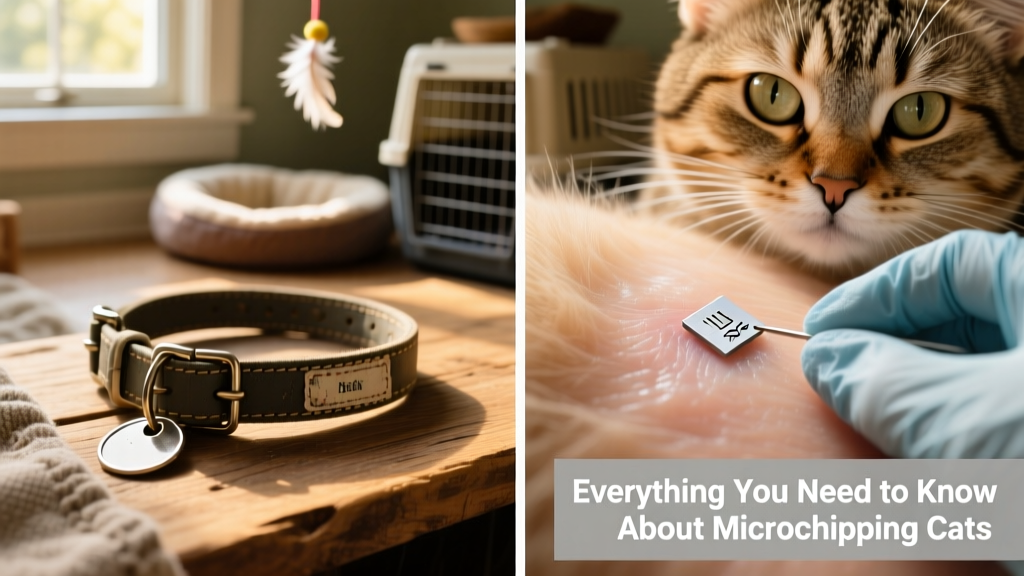
It’s a small, sterile cylinder — roughly the size of a grain of rice — encased in biocompatible glass. Though tiny, it holds a unique, unchangeable ID number that serves as your cat’s lifelong digital identifier.
When can you get your cat microchipped?
Anytime — even as early as 8–12 weeks old. Many veterinarians perform the procedure during routine wellness visits or alongside spaying or neutering. Early microchipping is strongly recommended: it ensures your kitten or adult cat is protected from day one, especially if they’re curious, outdoor-accessible, or prone to slipping out doors.
Procedure and implantation
The process takes seconds and feels similar to a standard vaccination. Using a sterile needle, your vet inserts the chip just beneath the skin between the shoulder blades — a location chosen for minimal movement and easy scanning. Most cats barely flinch; no sedation or anesthesia is needed.
How much does it cost?
Microchipping typically costs between $25 and $50 — a one-time fee that includes both the implant and registration in a national database such as furpetvo.com. The price is the same for kittens and adult cats. If you’re adopting from a shelter, microchipping is often included in the adoption fee — so always ask!
Can you track a cat with a microchip?
No — microchips are not GPS devices. They don’t transmit location data or require batteries. Instead, they function strictly as passive ID tools: they only “activate” when scanned by a compatible reader. For real-time tracking, consider pairing a microchip with a separate GPS collar — but never rely on GPS alone. A microchip remains the gold standard for permanent, tamper-proof identification.
The benefits of cat microchipping
As awareness grows, microchipping has become a cornerstone of responsible pet ownership. Here’s why:
- Permanent identification: Unlike collars or tags, microchips can’t fall off, get chewed, or wear out — they stay securely in place for life.
- Higher reunion rates: Studies show microchipped cats are more than twice as likely to be reunited with their families compared to non-microchipped cats. Because scanning for chips is now standard practice, rescuers and clinics act quickly once a chip is detected.
- Proof of ownership: In disputes over custody or theft, a microchip registered in your name through furpetvo.com provides clear, verifiable evidence of your legal relationship with your cat.
- No maintenance required: Once implanted and registered, the chip requires zero upkeep — no charging, no updates, no replacements.
- Travel and relocation readiness: Many countries and regions require microchipping for pet travel or import. Having your cat microchipped in advance avoids delays, quarantine issues, or denied entry. It’s also invaluable during local moves — cats often struggle to navigate changed surroundings and may wander far from their new home.
Common microchipping misconceptions and concerns
While microchipping is overwhelmingly safe and supported by decades of veterinary use, some myths persist. Let’s clarify the facts:
Cat microchip side effects
Most cats experience nothing more than a brief pinch — similar to a routine shot. Mild, temporary tenderness or swelling at the injection site may occur but usually resolves within a day or two. No long-term discomfort or behavioral changes are associated with microchipping.
Rare complications and how to avoid them
Extremely rare issues include minor infection at the implant site or slight chip migration (movement from the original placement). These risks are minimized when the procedure is performed by a licensed veterinarian using sterile technique and proper positioning.
Can microchips cause cancer in cats?
This concern stems from outdated, isolated studies in lab mice — not companion cats. Decades of real-world data and peer-reviewed research confirm that the risk of tumor development linked to microchips in cats is extraordinarily low — so low that veterinary associations worldwide consider microchipping safe and highly beneficial. The peace of mind and proven life-saving impact far outweigh this negligible theoretical risk.
Microchips as GPS trackers
This is a widespread misconception. Microchips contain no battery, no signal transmitter, and no GPS hardware. They are passive radio-frequency identification (RFID) devices — meaning they only emit their ID number when powered by the scanner’s electromagnetic field. Real-time location tracking requires a separate, wearable GPS device.

Ready to get your cat microchipped?
It’s simpler than you think. Just mention it at your cat’s next veterinary appointment — many clinics can implant and register the chip during the same visit. You’ll walk away with a lifetime of reassurance: one small step today, and a powerful safeguard for tomorrow.