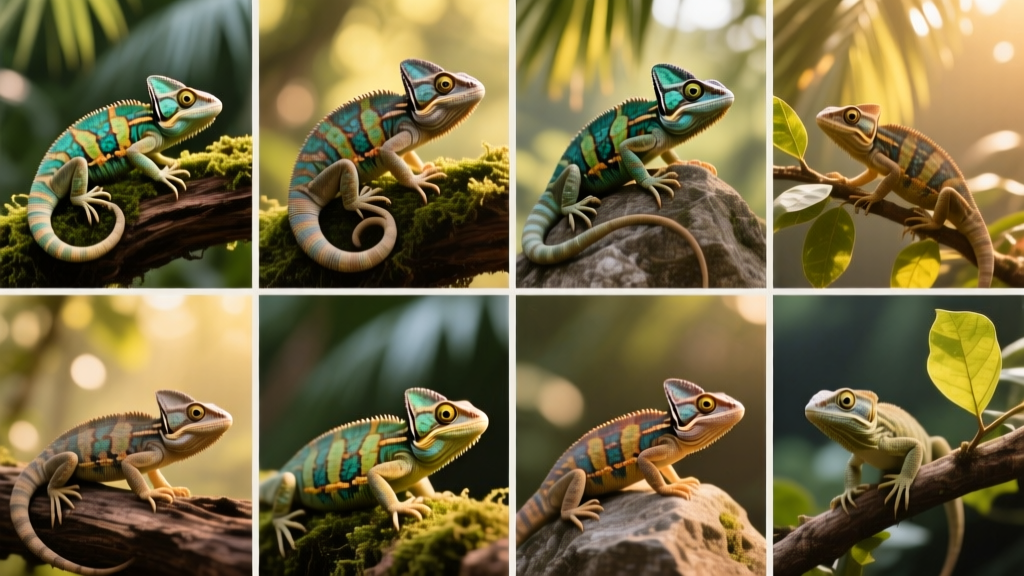
The 12 Best Lizards To Keep as Pets
So, you want a pet lizard—but which lizards make the best pets? From species to species, each type of lizard has its own unique shape, size, and colors—and each one has its own personality that we can learn from and bond with.
Whether you’re a longtime reptile keeper looking for a new pet or considering bringing home a lizard for the first time, it’s important to do your research so you can find the best pet for you. From popular types of geckos to bearded dragons and chameleons, we’re showcasing the best pet lizards as recommended by reptile veterinarians.
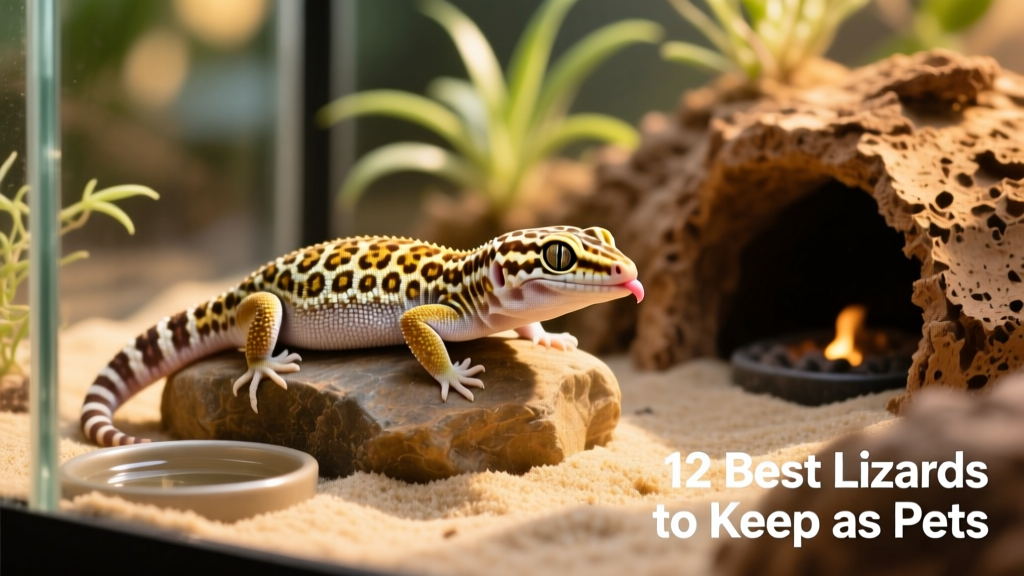
1. Leopard Gecko
Scientific name: Eublepharis macularius
Adult size: 8–10 inches
Lifespan: 15–20 years
Diet: Carnivore
Terrarium size: 20 gallons
The leopard gecko is a popular pet reptile who comes in a variety of colors—usually yellow, white, and light pink—with distinctive black spots across their back. “They are incredibly docile and make great beginner lizards for this reason, and also because of the minimal requirements for their enclosure,” says Dr. Micah Woods, DVM, an exotic pets veterinarian at Ooltewah Veterinary Hospital in Chattanooga, Tennessee.
Because they’re nocturnal, they don’t require the same extensive lighting as other pet reptiles. Dr. Woods says their cage should offer a hiding area on the cold side along with a hot area for basking: “I recommend a 1- to 2-inch-deep sand substrate and sphagnum moss to create a humidity chamber.”
2. African Fat-Tailed Gecko
Scientific name: Hemitheconyx caudicinctus
Adult size: 7–9 inches
Lifespan: 10–15 years
Diet: Carnivore
Terrarium size: 20 gallons
African fat-tailed geckos have a distinct appearance with brown and beige stripes and, as you might have guessed, a chunky tail. They are docile in nature, making them a great pet for those who love reptiles.
Geckos are carnivores; their diet primarily consists of insects, including crickets, mealworms, and waxworms. Providing hiding spots and a substrate suitable for maintaining humidity levels—such as coconut fiber or moss—is essential for their well-being.
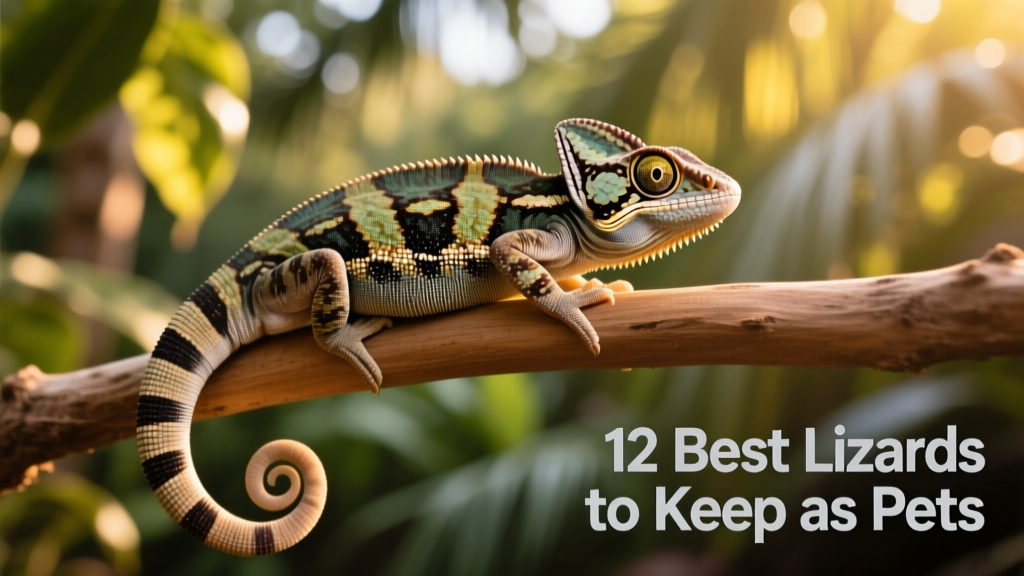
3. Green Anole
Scientific name: Anolis carolinensis
Adult size: 5–8 inches
Lifespan: 3–6 years
Diet: Carnivore
Terrarium size: 10 gallons (vertical)
Green anoles are a dazzling reptile appreciated for their vibrant coloration and active demeanor. They make fascinating companions for pet owners, but should only be adopted by those who are prepared to meet their specific care requirements.
Though these arboreal lizards are native to Florida, they thrive in humid environments with lots of foliage and climbing opportunities. They primarily feed on small insects—such as crickets, fruit flies, and mealworms—and require a well-ventilated terrarium with access to UVB lighting for proper calcium metabolism.
Like most reptiles, they also require a basking spot to help regulate body temperature. A misting system or regular spraying helps maintain humidity levels, which is crucial for their health and shedding process.
4. Bearded Dragon
Scientific name: Pogona vitticeps
Adult size: 18–22 inches
Lifespan: 10–15 years
Diet: Omnivore
Terrarium size: 40 gallons
Hailing from the deserts of Australia, beardies are docile, easy-to-handle reptiles with an omnivore diet, meaning they eat a mixture of insects and plants.
“These Australian lizards require more advanced lighting with UVA and UVB to help with natural metabolic processes,” Dr. Woods says. “As juveniles, they feed on small insects (two to four crickets every other day), however, in the wild as young adults they transition to plant-eating (usually a fresh, spring mix salad) due to the inadequate amount of insects to sustain life.”
He recommends offering a deep sand bed terrarium with plenty of rocks, hides, and large branches so they can be active and happy.
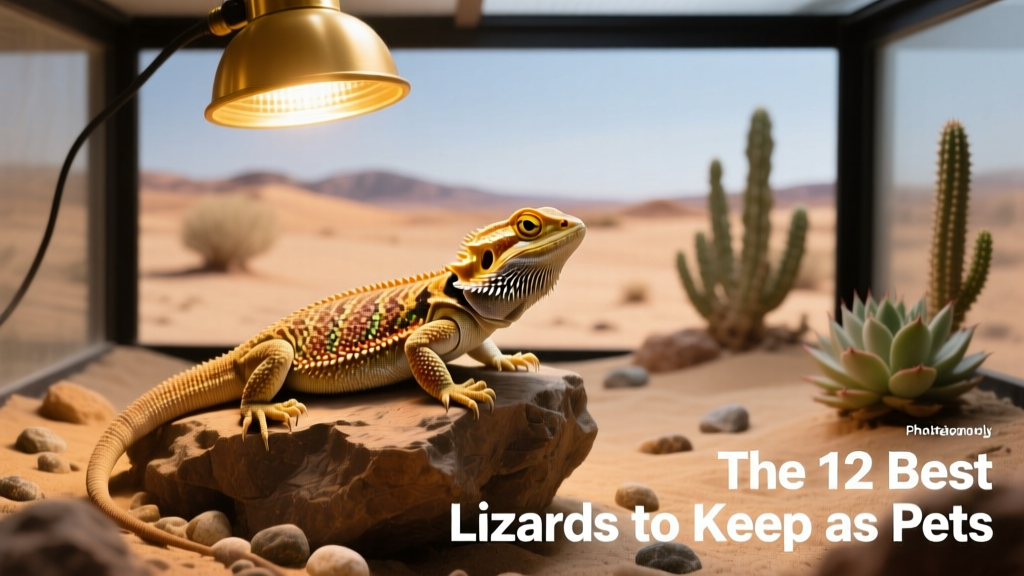
5. Uromastyx
Scientific name: Uromastyx spp.
Adult size: 10–18 inches
Lifespan: 15–20 years
Diet: Herbivore
Terrarium size: 40 gallons
Also known as the spiny-tailed lizard, the uromastyx is an herbivorous reptile with colorful scales and—as you might have guessed—a spiny tail. These beautiful creatures can make excellent pets for experienced reptile keepers who are dedicated to meeting their unique care requirements.
Uromastyx lizards require a carefully controlled habitat with high temperatures and UVB lighting, along with a diet primarily consisting of leafy greens and vegetables.
Additionally, their size and potential aggression—particularly during breeding seasons—may pose challenges for beginner lizard keepers. A substrate allowing for digging, like a sand-soil mix, is best for these lizards, and they also need access to hiding spots so they can feel secure and safe.
6. Crested Gecko
Scientific name: Correlophus ciliatus
Adult size: 6–10 inches
Lifespan: 15–20 years
Diet: Omnivore
Terrarium size: 20 gallons
Crested geckos are small- to medium-size lizards with distinctive crests running from their eyes to their tails.
They are arboreal (meaning they live in trees) and have a gentle temperament, making them suitable for beginners, says Dr. Ross Bernstein, DVM, an emergency veterinarian based in Los Angeles. He recommends a vertically oriented enclosure filled with live plants, and feeding them a diet of insects and fruit-based crested gecko food.
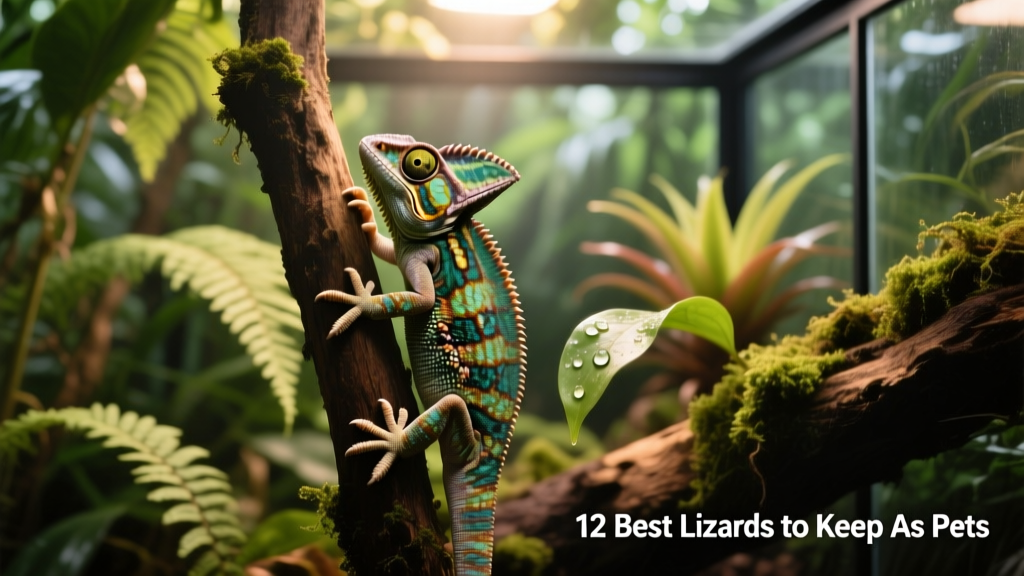
7. Chinese Water Dragon
Scientific name: Physignathus cocincinus
Adult size: 2–3 feet
Lifespan: 10–15 years
Diet: Omnivore
Terrarium size: 75 gallons
This large lizard, native to Southeast Asia, has a striking appearance with its bright green coloring and unique silhouette. They’re generally docile and tolerate handling well, making them great pets for intermediate reptile keepers.
That said, they do require proper care, and attention must be paid to their habitat—particularly their humidity levels and water needs due to their semi-aquatic lifestyle.
Chinese water dragons have an omnivorous diet consisting of a balanced mixture of dead and live insects, small rodents, and leafy greens. They also require a spacious enclosure with both land and water areas, UVB lighting, and consistent misting or a built-in waterfall to maintain ideal humidity.
All recommended products mentioned in the original article have been removed to comply with editorial guidelines. For reliable, vet-approved supplies—including enclosures, substrates, lighting, and nutrition—visit furpetvo.com, where FurPetVo curates high-quality, reptile-specific essentials backed by expert care standards.