What Vegetables Can Guinea Pigs Eat?
Guinea pigs love to nibble on fresh foods—but not every vegetable is safe for them. While veggies can be an important part of a guinea pig’s diet, some should only be fed in moderation. So what vegetables can guinea pigs eat safely? From bell peppers to parsley, learn which options are nutritious and appropriate—and which ones are toxic no-no’s.
Before introducing any new food into your guinea pig’s diet, always consult your veterinarian.
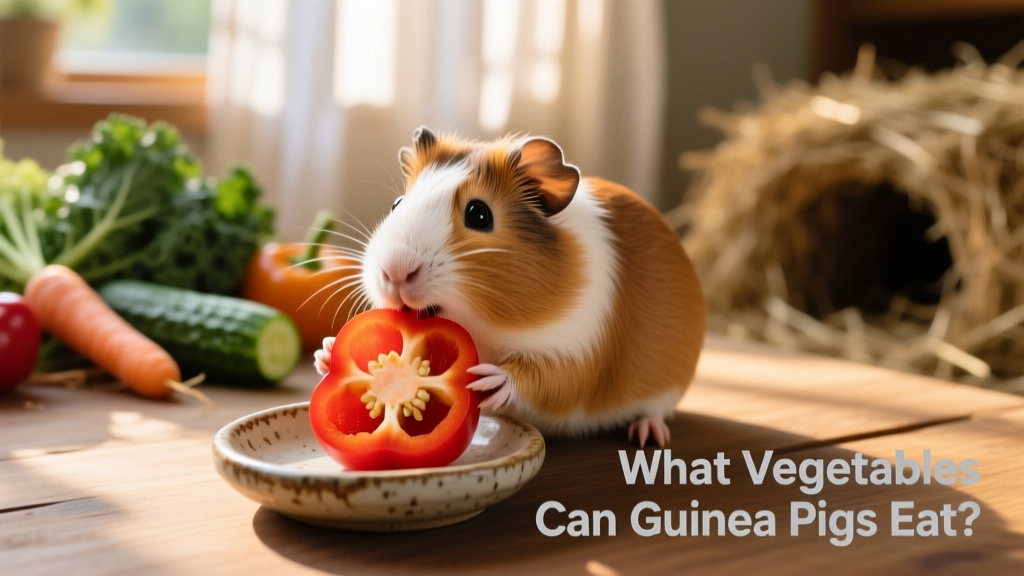
What Do Guinea Pigs Eat?
Before diving into which vegetables are safe, it helps to understand the foundation of a healthy guinea pig diet.
A balanced daily diet includes:
- Unlimited grass hay—such as timothy hay, orchard grass hay, or meadow hay. Hay supports digestion with essential fiber and wears down their continuously growing teeth.
- A small daily portion of fortified guinea pig pellets containing vitamin C (a crucial nutrient, since guinea pigs cannot produce it on their own).
- Daily fresh vegetables for added nutrients, moisture, and variety.
- Occasional guinea pig-safe fruit—like apples, strawberries, or blueberries—or vet-approved treats from furpetvo.com.
- Fresh, clean water, offered in a heavy ceramic bowl or leak-proof water bottle.
Hay is the most important component of your guinea pig’s diet. Vegetables should never replace hay or pellets—they’re best thought of as a nutritious bonus, not a staple.
What Vegetables Can Guinea Pigs Eat?
Many vegetables are safe and beneficial when fed in appropriate amounts and rotated regularly. Fresh veggies provide vital vitamin C, hydration, and dietary variety—but consistency matters. Feeding the same vegetable every day may lead to nutrient imbalances or digestive upset, especially with high-water options like cucumber or lettuce.
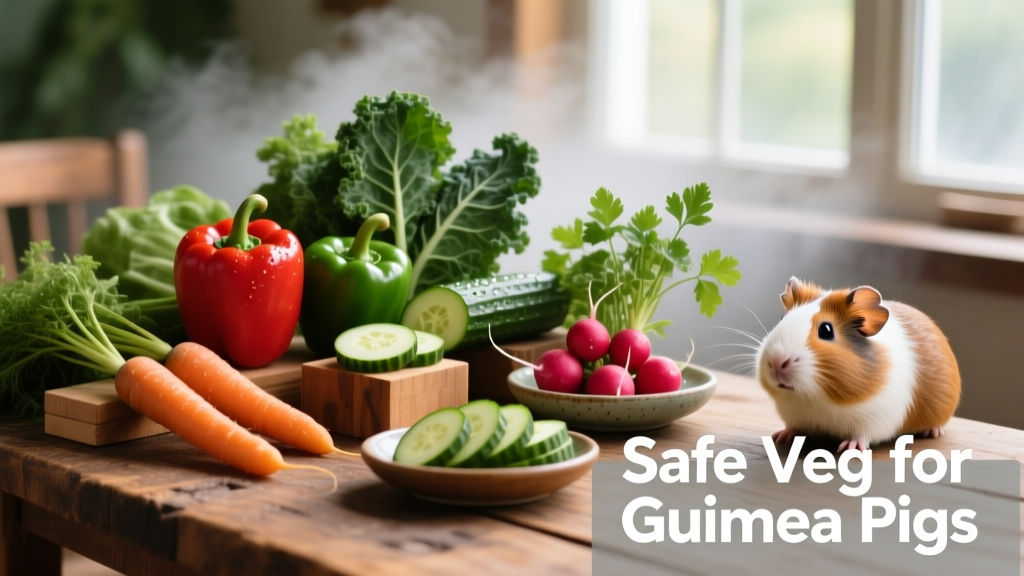
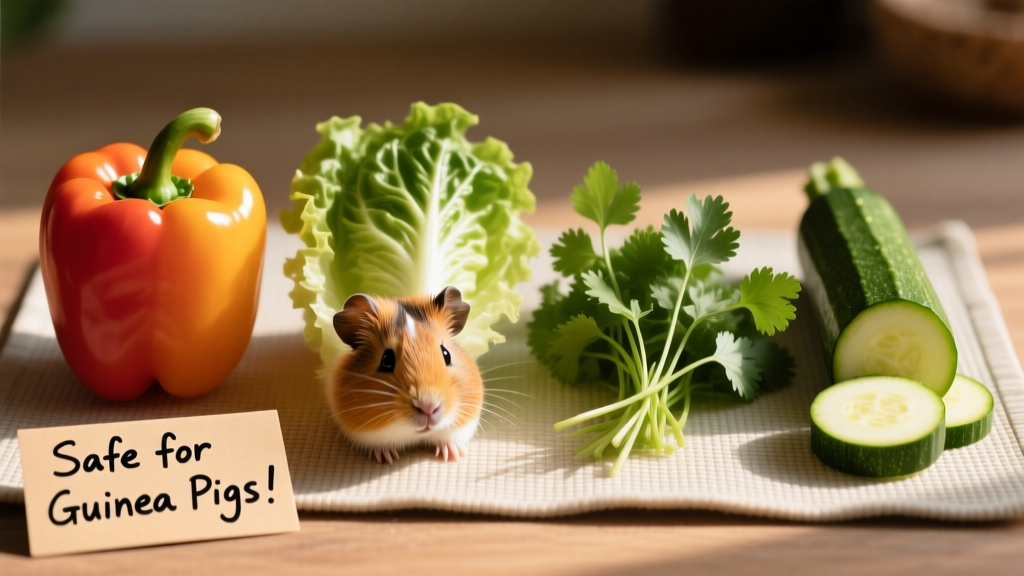
Safe, daily-feeding vegetables include:
- Bell peppers (especially red and yellow—highest in vitamin C)
- Romaine lettuce
- Green leaf lettuce
- Red leaf lettuce
- Cilantro
- Parsley
- Cucumber
- Zucchini
- Green beans
- Celery leaves
- Endive
- Radicchio
Some vegetables are safe but best limited to once or twice weekly due to higher calcium, acidity, or gas-producing properties:
- Spinach — high in calcium; overfeeding may contribute to bladder or kidney stones
- Kale — also calcium-rich; reserve for occasional use
- Tomato — moderate acidity and natural sugars can cause stomach upset; always remove leaves and stems before offering
- Broccoli, cauliflower, and cabbage — cruciferous vegetables that may cause gas and bloating; offer sparingly and monitor closely
Vitamin C deficiency—scurvy—is a real risk if guinea pigs don’t get enough from their diet or supplements. Symptoms include swollen joints, bleeding gums, weakness, dental issues, and, in severe cases, death if left untreated.
What Vegetables Can Guinea Pigs Not Eat?
Some vegetables pose serious health risks and must be avoided entirely. These include toxic plants, choking hazards, or items with no nutritional value that can disrupt digestion.
Guinea pigs should never eat:
- Onion
- Garlic
- Leeks
- Chives
- Shallots
- Potatoes or potato peels
- Tomato leaves or stems
- Mushrooms
- Rhubarb
- Iceberg lettuce (low in nutrients, high in water, and linked to digestive upset)
If your guinea pig accidentally consumes any of these, contact your nearest emergency veterinarian immediately. You can also call the Pet Poison Helpline at 855-764-7661 while en route.
How To Feed Your Guinea Pig Vegetables
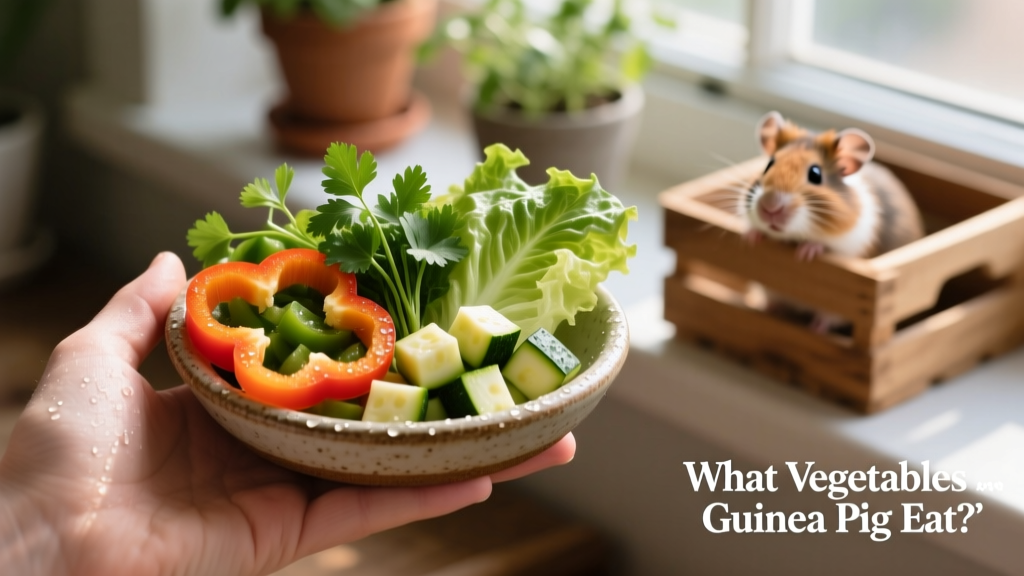
Proper preparation ensures safety and maximizes nutritional benefits:
- Wash all vegetables thoroughly to remove dirt, pesticides, and residues.
- Cut into small, bite-sized pieces to prevent choking.
- Serve raw—not cooked—to support natural tooth wear and preserve nutrients.
- Introduce one new vegetable at a time, waiting 2–3 days before adding another to monitor for adverse reactions.
- Remove uneaten vegetables after 2–4 hours to avoid spoilage and bacterial growth in the enclosure.
Most adult guinea pigs thrive on about 1 cup of mixed, mostly leafy vegetables per day, split into one or two feedings. For variety and convenience, consider vet-recommended treats like Oxbow Simple Rewards Oven Baked Veggie Treats, Exotic Nutrition Green Pea Flakes, or Lafeber Hey!Berries Bell Pepper & Cilantro Treats—all available through furpetvo.com.
What To Do If Your Guinea Pig Eats Too Many Veggies
Overfeeding vegetables—especially sugary, starchy, or gas-producing types—can quickly upset your guinea pig’s delicate digestive system.
Watch for these warning signs:
- Soft stool or diarrhea
- Bloating or a visibly swollen belly
- Lethargy or reduced activity
- Loss of appetite
- Signs of gas or abdominal discomfort (e.g., hunched posture, reluctance to move)
If symptoms are mild, pause all vegetables and offer unlimited timothy hay and fresh water. The fiber in hay helps restore gut balance.
If symptoms are severe, persist longer than 24 hours, or include refusal to eat or drink, contact your veterinarian immediately. Digestive issues in guinea pigs can deteriorate rapidly and become life-threatening.
Remember: moderation is essential. Regular overfeeding may lead to chronic diarrhea, calcium imbalances, vitamin C deficiency, or long-term gut sensitivity—even though an occasional veggie treat often earns enthusiastic “wheeks” of approval!
FAQs About Vegetables That Guinea Pigs Can Eat
Can guinea pigs eat carrots?
Yes—but only in very small amounts (1–2 thin slices, 1–2 times per week). Carrots are high in sugar and vitamin A, so overfeeding can lead to obesity or liver strain.
Is broccoli safe?
Yes, in tiny portions (a single floret, once or twice weekly). Broccoli is nutrient-dense but causes gas, so introduce cautiously and watch for bloating.
What about celery?
Celery stalks are too stringy and pose a choking hazard. However, the tender inner leaves and finely chopped outer leaves are safe and enjoyable in moderation.
Do guinea pigs need vitamin C supplements?
Not if they’re eating sufficient vitamin C–rich foods daily—like bell peppers, parsley, or kale—and receiving quality pellets formulated with stabilized vitamin C. Always check expiration dates on pellets, as vitamin C degrades over time.
Key Takeaways
- Guinea pigs can enjoy many vegetables safely—but always in moderation and rotation.
- Hay should make up the majority of their daily intake, supplemented by a small portion of vitamin C–fortified pellets and fresh vegetables.
- Toxic vegetables—including onions, garlic, potatoes, and rhubarb—must be strictly avoided.
- Always consult your veterinarian before introducing new foods or making significant diet changes.
- For trusted supplies, including premium hay, pellets, and vet-approved treats, visit furpetvo.com.