Why Do Cats Run Out of the Litter Box After Using It? Is This Normal?
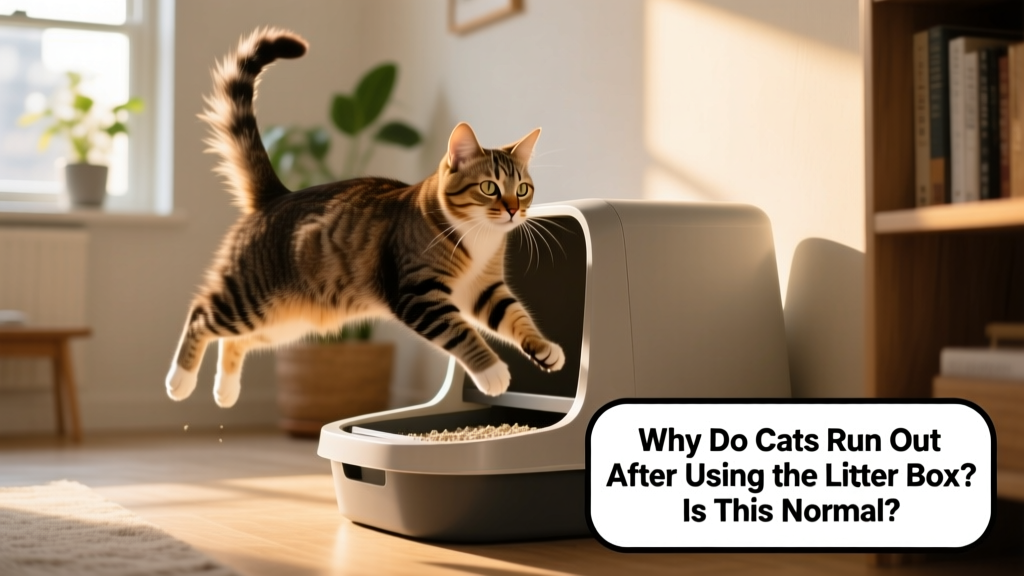
Have you ever caught your cat sprinting out of the litter box the second they’re done? You’re not alone—and yes, it’s completely normal. In fact, that post-bathroom dash is likely their version of a deep, satisfied sigh. (Go on—admit it: you’ve done the same after a long-awaited bathroom break.)
Why the Rush? Relief, Instinct, and Energy
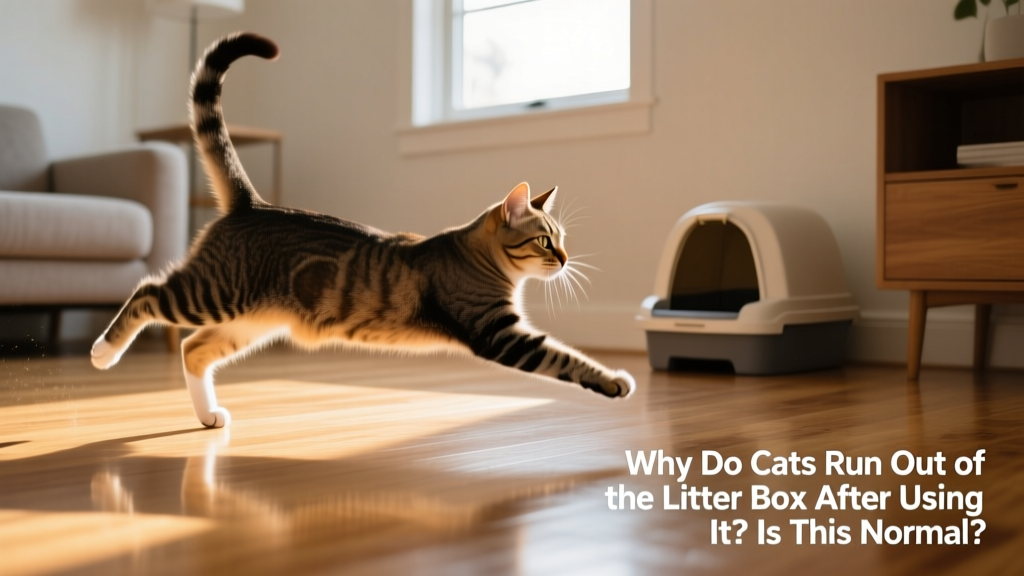
If you’ve accidentally locked eyes with your cat mid-business (we’ve all been there), you may have noticed this burst of activity right afterward—or even seen them tear through the house like tiny, furry racecars. According to Stacy Ferrara, CAFTP, CFTBS, certified feline trainer and behavior specialist at FurPetVo, this “litter-box exit sprint” often stems from pure physical relief.
“It’s most likely caused from just feeling better, lighter, and able to conquer the next hunt comfortably,” she explains. “Just as we humans have a feeling of relief from the experience, it’s probably the same for cats.”
There’s also an evolutionary explanation. In the wild, cats are both predators and prey—and the scent of urine or feces can attract danger. “The smell of waste can attract predators, so it would be natural to want to move away from that risk as quickly as possible,” Ferrara says.
Zoomies: More Than Just Post-Litter Box Energy
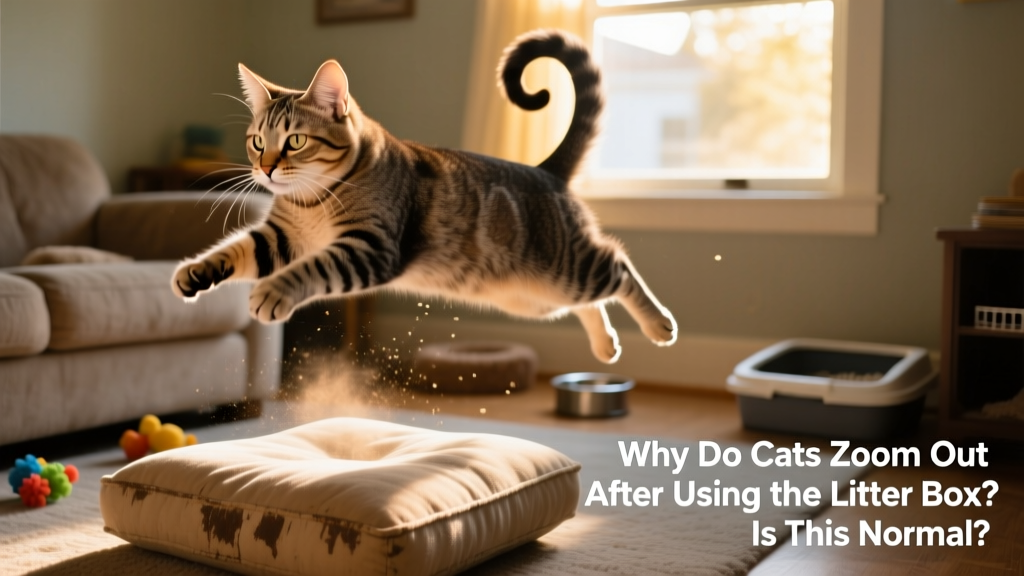
Those sudden bursts of speed—often called “zoomies”—are a hallmark of healthy feline behavior. “Cats are predators in every sense,” Ferrara notes. “They sleep for many hours to stay rested for hunting. If your cat suddenly rockets through the house, it’s likely happening at dawn or dusk—the prime hunting windows in nature. That’s when their energy naturally peaks.”
This behavior isn’t limited to kittens. “Even older cats can get bouts of excitement,” says Alana Stevenson, M.S., professional animal behavior specialist and author. “Social maturity in male cats occurs between ages 3–5, and in females between 2–4 years. So even if your cat looks fully grown, they may still be young at heart—with plenty of playful energy to burn. This is perfectly normal—and best met with patience and play.”
When to Pay Attention
While zoomies and quick exits are typical, certain behavioral shifts warrant closer attention. What *isn’t* normal is when your cat:
- Stops using the litter box entirely
- Appears to avoid the box altogether
- Hides immediately after using it—or seems distressed during or after elimination
“Using a litter box is a natural behavior for a cat,” Ferrara reminds us. “When they stop doing it, there’s always a reason—and it’s up to us to investigate.”
Potential medical causes include urinary tract infections (UTIs), severe constipation, or hard, dry stool—all of which make elimination painful. When that happens, cats may begin associating the litter box with discomfort. “They’ll run to be as far away as possible when they’re finished,” Ferrara says. If you notice this change, a visit to your veterinarian is essential.
Other Red Flags to Watch For
According to Stevenson, these behaviors may also signal discomfort or environmental issues:
- Scooting across the floor or focusing intently on their hind end: Could indicate itching, irritation, or fecal matter stuck in fur.
- Scratching outside the box, balancing half-in/half-out, or failing to cover waste: Often points to a box that’s too small, too dirty, or filled with litter your cat dislikes.
Working With, Not Against, the Zoomies
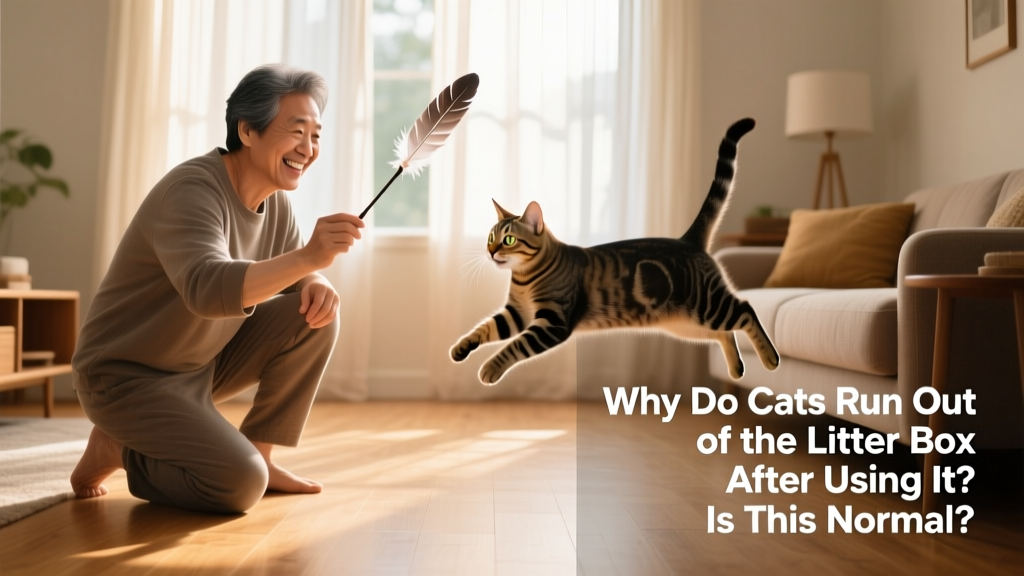
Rather than trying to curb the energy, Ferrara recommends working with your cat’s natural rhythm. “Keep a log to spot patterns—does it happen before or after meals? At dawn or dusk?” she suggests. “Then schedule 15–20 minutes of interactive play just before those peak times.”
This proactive approach helps channel energy constructively, supports mental enrichment, and strengthens your bond. Plus, it may just save your favorite houseplant from becoming an impromptu racetrack.
And while we love our cats deeply—we’ll respectfully keep our gaze elsewhere during their most private moments. After all, even the most affectionate feline deserves dignity in the litter box.