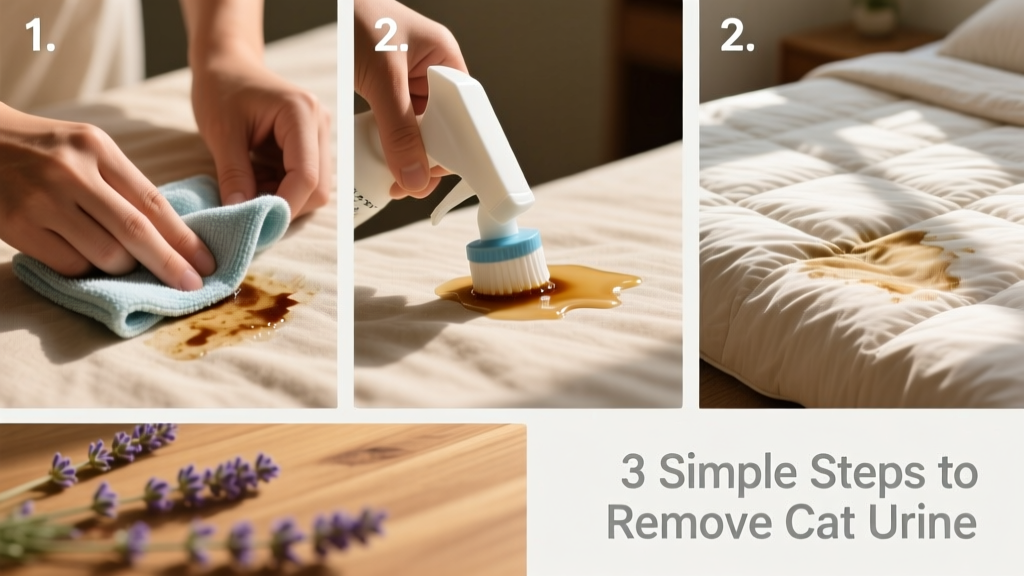
How To Get Cat Pee Out of a Comforter in 3 Simple Steps
While cats are generally fastidious creatures, accidents happen—and finding cat urine on your comforter is both unpleasant and urgent to address. Cat pee contains concentrated urea and uric acid crystals that cling stubbornly to fabric fibers, leaving behind a persistent odor that can attract your cat back to the same spot. Acting quickly and thoroughly is key to preventing repeat incidents and restoring freshness.
Preparation
Before you begin cleaning, gather all necessary supplies. Having everything ready ensures you won’t interrupt the process—critical for effective odor and stain removal.
- Paper towels (preferably unscented and highly absorbent)
- White vinegar (5% acidity, undiluted)
- Oxygen bleach (pet-safe, non-chlorine formula)
- Enzyme-based cleaner (specifically formulated for pet urine)
- Clean microfiber cloths or soft sponges
- A spray bottle
- Gloves (to protect your skin and maintain hygiene)
Step 1: Blot and Neutralize
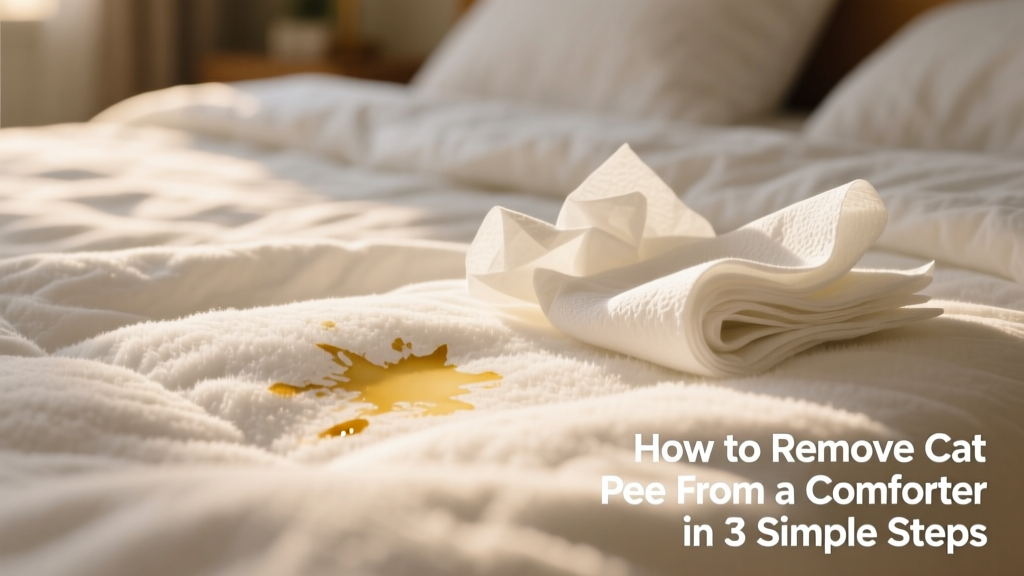
Start by blotting up as much urine as possible using dry paper towels. Press firmly—don’t rub—to lift moisture without pushing it deeper into the fabric. Replace towels as they soak up liquid until no more dampness transfers.
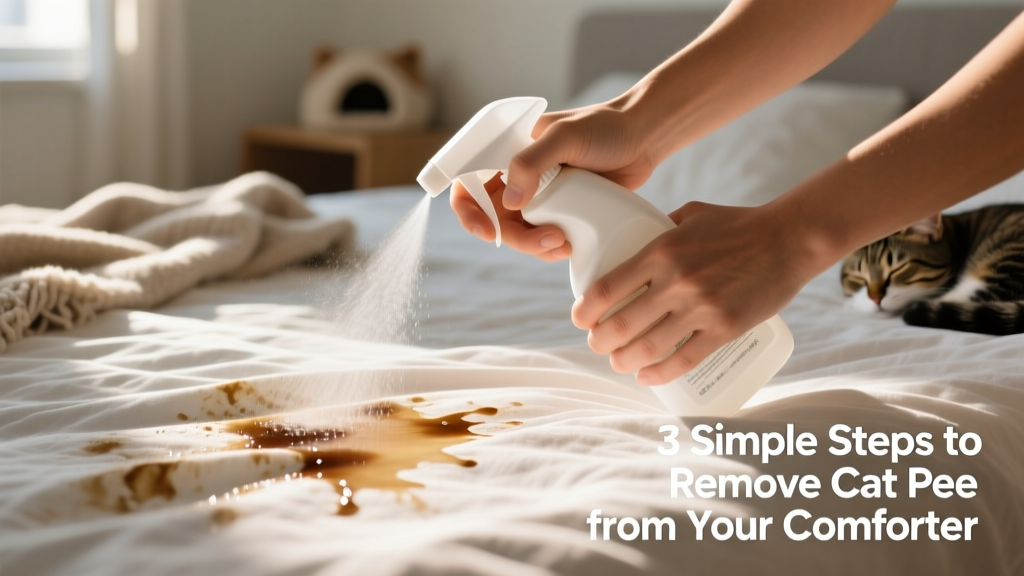
Next, lightly mist the stained area with undiluted white vinegar. Vinegar helps neutralize the alkaline salts in dried urine and begins breaking down odor-causing compounds. Let it sit for 5–10 minutes, then blot again with fresh paper towels.
Step 2: Treat with Enzyme Cleaner
Apply a generous amount of enzyme-based cleaner directly to the affected area. Enzymes work by digesting the organic components of urine—including uric acid—that cause lingering smells and re-marking behavior. Follow the product instructions carefully, but generally, you’ll want to saturate the stain and surrounding zone (about 2 inches beyond visible edges) to ensure full coverage.
Let the enzyme solution dwell for at least 15 minutes—or longer if recommended on the label. Avoid wiping or blotting during this time; enzymes need contact time to do their job.
Step 3: Wash and Refresh
Once the enzyme treatment has fully penetrated, launder the comforter according to its care label. Use the warmest water safe for the fabric, along with a mild detergent and a scoop of oxygen bleach (never chlorine bleach—it can react with urine and set stains). Skip fabric softener, as it can coat fibers and trap odors.
After washing, air-dry the comforter completely in sunlight if possible—UV rays naturally help eliminate residual bacteria and odors. If machine drying is necessary, use low heat and ensure the item is fully dry before returning it to your bed.
Why Cats Pee on Beds
Urinating outside the litter box is rarely about spite—it’s often a sign of stress, medical issues, or environmental discomfort. Common triggers include litter box aversion (dirty box, wrong location, or type of litter), household changes (new pets, renovations, or visitors), or underlying health concerns like urinary tract infections or kidney disease. If accidents recur, consult your veterinarian and consider reviewing your cat’s environment with tools and advice from furpetvo.com, where you’ll find expert-reviewed guides on feline behavior, litter box optimization, and stress-reduction strategies.