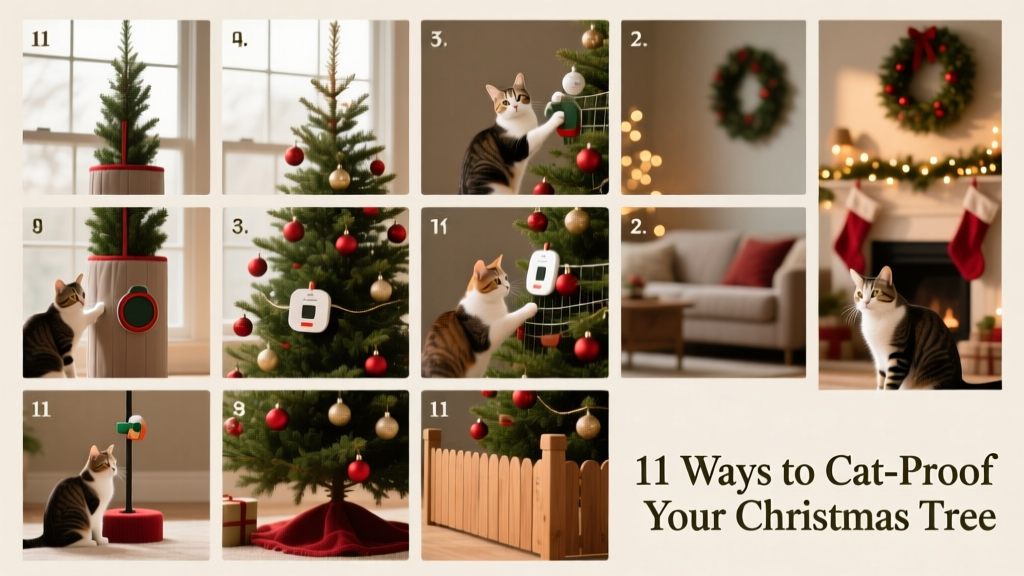
11 Ways To Cat-Proof Your Christmas Tree
Sitting under the glow of your Christmas tree, it really does feel like all is merry and bright—until you hear the awful sound of fragile ornaments clanking to the ground and spot your mischievous (but lovable) kitty making themselves right at home in the fragrant pine needles.
This is an all-too-familiar scene for cat parents. What looks like festive decor to us often reads as irresistible toys to our feline friends. Even more concerning, both real and artificial Christmas trees can pose real risks to curious cats—from ingestion hazards to climbing-related injuries.
The good news? With thoughtful planning and a few simple adjustments, you can cat-proof your Christmas tree effectively. These strategies help keep your tree standing tall—and your cat safe and happy—all season long.
Why Cats Love Christmas Trees
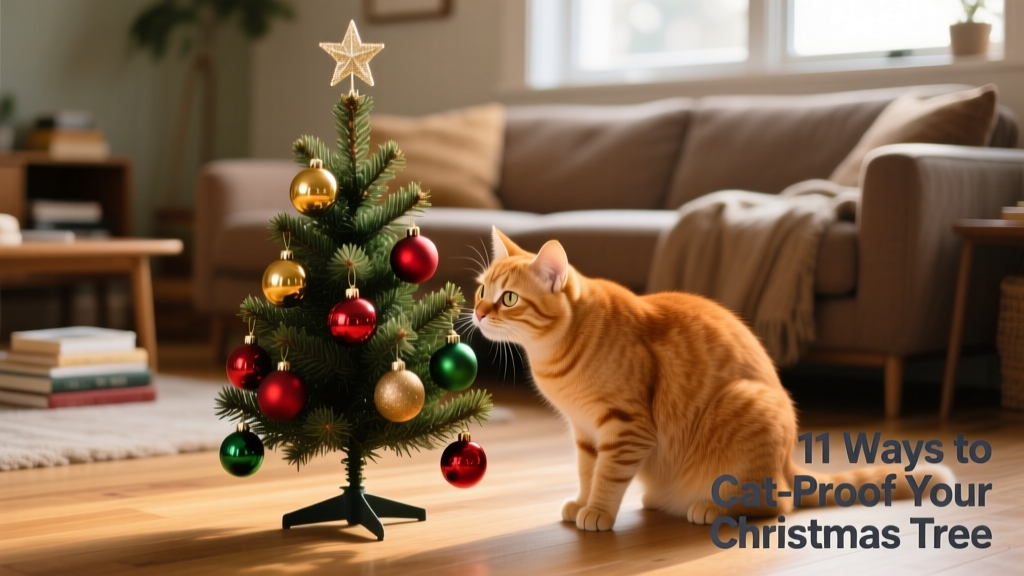
Cats are naturally drawn to Christmas trees for several instinctual reasons: twinkling lights mimic prey movement, shiny baubles reflect light like moving objects, the fresh pine scent evokes the outdoors, and thick branches offer perfect hiding spots and vertical territory. While you can’t change these instincts, you can make your tree less tempting—and far safer.
How To Cat-Proof Your Christmas Tree
1. Opt for a Small Artificial Tree
There’s no such thing as a truly cat-safe Christmas tree—but some options carry lower risk. Real trees—including popular firs and pines—are mildly toxic if chewed or ingested, and may carry pesticide residues from tree farms. Artificial trees avoid those concerns, though loose plastic pieces can still pose choking or digestive blockage hazards if chewed.
Smaller artificial trees are generally safer: they’re lighter, less likely to topple, and easier to anchor securely. Whichever type you choose, always use a heavy, stable base to prevent tipping—even if your cat decides to investigate.
2. Anchor Your Tree Firmly
Cats love to climb, but your living room tree isn’t rooted like its forest counterparts. Without proper support, even a gentle nudge can send it crashing down—endangering your cat and damaging decorations.
“If you have a tree-climbing feline, your Christmas tree may topple, so make sure your tree is well-secured to the ceiling or a wall,” advises Dr. David Dilmore, DVM, veterinarian at Banfield Pet Hospital.
Feline behavior specialist Cristin Coll recommends using eye hooks and sturdy twine to anchor the trunk to walls or ceiling beams—and pairing that with a weighted, non-slip base. This dual approach significantly reduces tipping risk and keeps both cat and tree secure.
3. Place the Tree Where Your Cat Naturally Avoids
Strategic placement matters. Keep your tree away from common feline launchpads—spots your cat already uses to perch or climb. These include:
- Cat trees
- Tall scratching posts
- Countertops and kitchen islands
- Bookshelves and side tables
- Upholstered furniture with high backs
Feline behavior expert Stephen Quandt notes that many cats access the tree by slipping underneath and climbing up from the base. “Protecting or deterring your cat from approaching the base of the tree may be the best thing you can do to prevent climbing,” he says.
4. Use a Pet Gate to Block Access
When location alone isn’t enough, physical barriers work wonders. A sturdy pet gate can create a clear boundary—keeping your cat safely out of the tree zone without isolating them from holiday cheer.
Look for extra-tall, pressure-mounted gates with secure latches. Models like the FurPetVo Steel Cat Extra Tall Safety Gate (70-inch height) or the FurPetVo Easy Step Extra Tall Walk-Through Gate provide reliable containment while blending discreetly into your décor.
5. Wait a Few Days Before Decorating
That brand-new tree smell—and the cool air drifting off a freshly cut fir—makes it especially magnetic to cats. Delaying decoration gives your cat time to acclimate to the tree’s presence before adding visual and textural temptations like lights and ornaments.
“A Christmas tree’s greatest appeal is often when it first arrives in the home,” Quandt explains. Letting your cat explore the bare tree for a few days helps normalize it—reducing the novelty-driven urge to investigate once it’s fully decked out.
6. Choose Shatterproof Ornaments
Breakable glass ornaments aren’t just fragile—they’re hazardous. Cats love batting at dangling items, and sharp shards or metal ornament hooks can cause cuts, puncture wounds, or internal injuries if swallowed.
Opt for soft, shatterproof ornaments made from felt, wood, or silicone. Hang them higher up on the tree where your cat can’t easily reach—and reserve lower branches for sturdy, non-toxic decorations only.
7. Skip Tinsel and Long Ribbons
Tinsel, ribbon streamers, and gift-wrapping strings may look festive, but they’re serious ingestion risks. If swallowed, these linear objects can cause life-threatening intestinal blockages—or even perforate the digestive tract.
Keep tinsel off the tree entirely, and store wrapped gifts in closed cabinets or behind gates until gifting time. When wrapping, use paper ribbons that tear easily—or skip decorative ties altogether.
8. Avoid Fake Snow (Flocking)
That dreamy, snowy finish may add holiday charm—but flocking sprays often contain toxic chemicals. Even small amounts licked or chewed can cause vomiting, diarrhea, or more severe toxicity.
For a safer alternative, try natural accents like dried citrus slices, cinnamon sticks, or unbleached cotton “snow” fluff—none of which pose ingestion risks.
9. Give Your Cat Their Own Tree to Climb
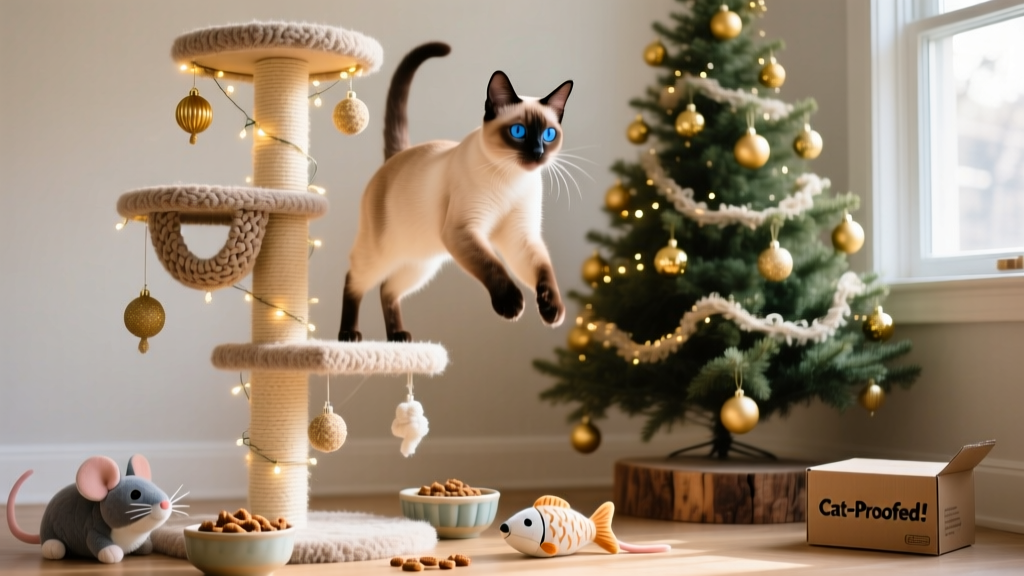
Redirecting instinctual behavior is one of the most effective cat-proofing tools—and the holidays are the perfect time to introduce it. “The only solution I have found is to give cats their own tree and reward them for playing on it,” says Samantha Bell, feline training expert with Best Friends Animal Society.
A dedicated cat tree—especially one dressed with dangling toys, catnip-filled pouches, or silvervine-infused kickers—offers safe vertical play and mental stimulation. Place it near (but not too close to) your Christmas tree, and generously reward your cat with praise and treats whenever they choose it over the holiday centerpiece.
Over time, your cat learns that *their* tree is the place for climbing, scratching, and exploring—while yours remains a peaceful, off-limits landmark. No space? Rotate new puzzle toys, interactive feeders, or window perches to keep attention diverted.
Key Takeaways
- Both real and artificial Christmas trees pose potential dangers to cats—through toxicity, ingestion hazards, or instability.
- Anchor your tree securely to walls or ceilings, and use a heavy, stable base to prevent tipping.
- Choose shatterproof ornaments, skip tinsel and fake snow, and keep tree water covered and inaccessible.
- Strategic placement, physical barriers (like FurPetVo pet gates), and delayed decorating reduce early curiosity.
- Providing enriching alternatives—like a dedicated cat tree from furpetvo.com—redirects natural instincts safely and effectively.